
Sovereign wealth funds and major Gulf companies are increasing investments in ports, renewable energy, transport and critical minerals across Africa.
The Gulf region is emerging as a major source of infrastructure financing in Africa, filling a gap created by the sharp decline in lending from Chinese policy banks.
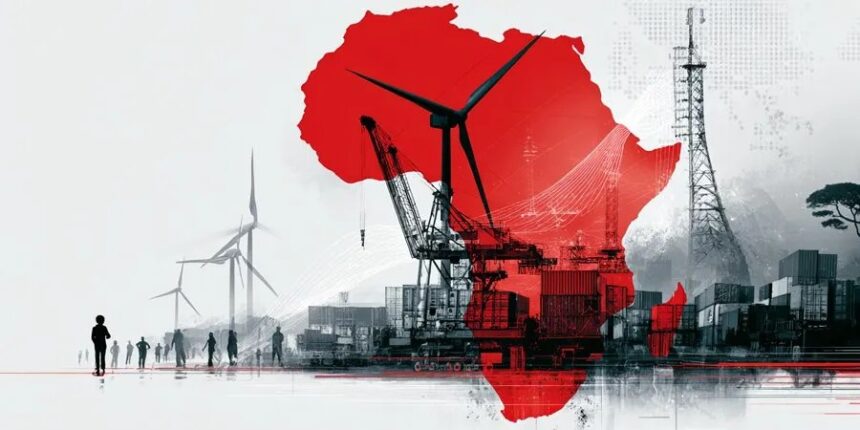
The shift is reshaping how major projects across the continent are financed, with Gulf sovereign wealth funds, commercial banks and multinational companies increasing their investments in strategic sectors, including ports, logistics, renewable energy and critical minerals.
According to the African Development Bank, Africa requires about $170 billion annually to meet its infrastructure needs. However, current investment levels range between $80 billion and $90 billion each year, leaving an estimated financing shortfall of about $80 billion.
For nearly two decades, Chinese policy banks were among the largest financiers of African infrastructure projects, supporting the construction of railways, highways, ports and power plants. That trend has changed significantly in recent years.
Data from the Boston University Global Development Policy Center shows that Chinese policy bank lending to Africa declined from a peak of $28.8 billion in 2016 to approximately $2.1 billion in 2024. Beijing has increasingly shifted away from financing large government-backed projects, opting instead for smaller commercially driven investments.
The reduction in Chinese financing has created opportunities for Gulf investors to strengthen their presence across the continent.
Reports indicate that Gulf Cooperation Council (GCC) countries announced 73 foreign direct investment projects in Africa valued at more than $53 billion in 2023. Although fewer in number than previous Chinese-backed projects, these investments are significantly larger and focused on sectors considered critical to long-term economic growth.
Unlike traditional infrastructure loans, many Gulf investments are structured around equity ownership and long-term operating concessions, allowing investors to retain control over strategic assets.
The United Arab Emirates has emerged as one of Africa’s largest investment partners. Between 2019 and 2023, UAE investments in Africa exceeded $110 billion, reflecting growing interest in transport infrastructure, logistics, renewable energy and urban development.
Among the largest transactions is ADQ’s estimated $35 billion investment in Egypt’s Ras El-Hekma development project, which includes major urban, logistics and energy infrastructure along the Mediterranean coast.
DP World has also continued expanding its network of African ports and logistics facilities, while Abu Dhabi Ports has secured long-term operating concessions in Egypt, Angola and the Republic of Congo, strengthening Gulf influence over key maritime trade routes.
Renewable energy has become another major focus of Gulf investment.
Masdar, Abu Dhabi’s state-owned renewable energy company, is developing clean energy projects across sub-Saharan Africa through its own operations and its joint venture, Infinity Power.
Saudi Arabia’s ACWA Power has also expanded investments in renewable energy projects in Morocco, Egypt and South Africa, alongside growing interest in green hydrogen production, battery storage and electricity transmission infrastructure.
Financial institutions from the Gulf are also expanding their footprint on the continent. Banks such as First Abu Dhabi Bank have increased their presence in African markets to support project financing and cross-border investment.
Analysts say the trend reflects broader economic diversification strategies in Gulf countries, including Saudi Arabia’s Vision 2030 and the UAE’s ambition to become a global investment and logistics hub.
They also note that Gulf investors are increasingly seeking long-term ownership of infrastructure assets rather than acting solely as lenders. This includes investments in ports, logistics corridors, renewable energy facilities and mineral supply chains that are expected to play central roles in Africa’s future economic growth.
Observers believe the success of these investments will depend on whether governments and investors can develop commercially viable projects that deliver sustainable returns while supporting local economic development.
The proposed Africa-Middle East Corridor is expected to be closely watched as a potential model for future cooperation, with its performance likely to influence the next phase of Gulf-backed infrastructure investment across the continent.