The United States has stepped up pressure on China to fulfil its commitments under a trade agreement reached in Busan, South Korea, warning that the future of the fragile economic understanding between the two countries depends on Beijing delivering concrete results.
With another round of high-level engagements between Presidents Donald Trump and Xi Jinping expected later this month, Washington is increasingly concerned about what it considers China’s slow implementation of key provisions of the agreement, particularly those relating to rare earths, critical minerals and agricultural purchases.
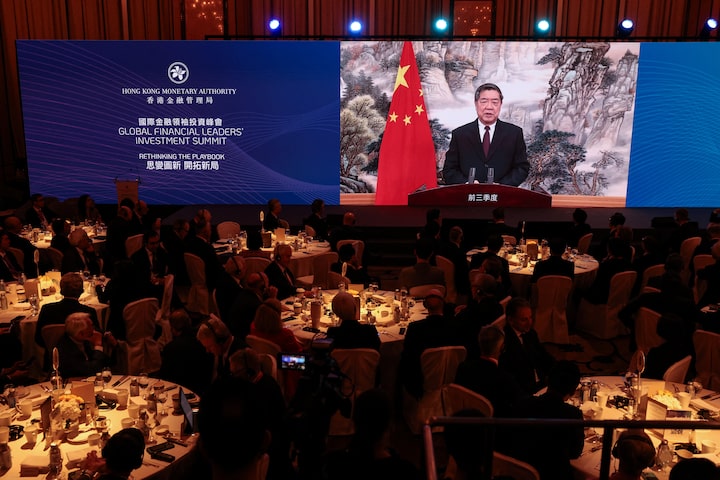
US Treasury Secretary Scott Bessent and United States Trade Representative Jamieson Greer raised the concerns during a telephone conversation with Chinese Vice Premier He Lifeng on Friday, urging Beijing to immediately honour the commitments made under the October 2025 Busan trade arrangement.
In a statement, the US Trade Representative’s Office said Greer stressed the need for China to take concrete steps towards implementing its obligations, particularly regarding purchases of American agricultural products and the supply of rare earths and other critical minerals.
Bessent also warned that Washington would closely monitor China’s compliance, arguing that continued progress in trade relations would depend on tangible results rather than assurances.
The renewed pressure reflects persistent disagreements over the implementation of the agreement, which was negotiated to ease escalating trade tensions between the world’s two largest economies following successive rounds of tariff increases and restrictions on strategic technologies.
Under the Busan arrangement, the United States agreed to cap certain tariffs imposed on Chinese goods during Trump’s second administration at approximately 20 per cent, while China undertook to relax restrictions on critical mineral exports and increase purchases of American agricultural products.
Beijing also committed to purchasing 25 million metric tonnes of US soybeans annually for three years, alongside an additional $17 billion in American agricultural goods.
However, Washington has repeatedly complained that American businesses are still experiencing difficulties obtaining adequate supplies of rare earths and other critical minerals from China, raising questions about the extent to which Beijing has implemented its side of the agreement.
The dispute is particularly significant because rare earth elements are essential to several strategic industries, including electric vehicle manufacturing, electronics, renewable energy and defence production. China’s dominance in the global supply chain gives it considerable leverage in trade negotiations with Washington.
For the Trump administration, securing reliable access to these materials is not merely an economic concern but also a national security priority, particularly as the United States seeks to strengthen domestic manufacturing and reduce its dependence on Chinese-controlled supply chains.
China, however, has indicated that Washington must also demonstrate commitment to the agreement, particularly regarding reciprocal tariff reductions.
On Thursday, Chinese Ministry of Commerce spokesperson Huang Ling said Beijing remained open to expanding purchases of American agricultural products but insisted that both countries must implement their agreed reciprocal tariff-reduction arrangement.
She referred to the proposed ’30 billion for 30 billion’ arrangement, suggesting that China’s willingness to increase imports from the United States was tied to corresponding concessions from Washington.
The position highlights the continuing disagreement over the terms of the trade understanding, with both countries appearing reluctant to make additional concessions without guarantees that the other side will fulfil its obligations.
The disagreement follows a September meeting between Trump and Xi, during which the two governments proposed a package of reciprocal tariff reductions worth $60 billion, including approximately $17 billion in American agricultural products.
The proposal was intended to build on the Busan agreement and provide further relief for businesses affected by the prolonged trade confrontation. However, the package has yet to be finalised.
The White House had earlier announced in May that China agreed to purchase $17 billion worth of American agricultural products annually from 2026, with this year’s target to be adjusted on a prorated basis. The commitment was in addition to China’s earlier soybean purchase agreement.
The latest diplomatic exchanges come ahead of expected meetings between Trump and Xi at the Asia-Pacific Economic Cooperation summit in Shenzhen, China, on November 18 and 19, and the Group of 20 summit in Miami, scheduled for December 14 and 15.
The meetings are expected to provide another opportunity for both leaders to address outstanding trade issues and prevent renewed economic confrontation.
For Washington, however, the immediate challenge is ensuring that the Busan agreement produces measurable benefits for American farmers, manufacturers and businesses. For Beijing, securing reciprocal tariff concessions remains central to its approach.
With the agreement due to expire on January 10, the coming weeks could prove decisive in determining whether the two economic powers can consolidate their fragile trade truce or return to another cycle of economic retaliation.