Malaysia’s King, Sultan Ibrahim, has warned against attempts to obstruct or challenge his decision allowing jailed former Prime Minister Najib Razak to serve the remainder of his prison sentence under house arrest, insisting that his royal pardon order is clear and must be implemented.
The warning followed the suspension of Najib’s planned transfer from prison to his residence on Friday, despite a court order authorising the move.
The latest disagreement has therefore raised questions about the relationship between royal authority, executive responsibilities and judicial interpretation, particularly over the implementation of decisions granted through the constitutional pardon process.
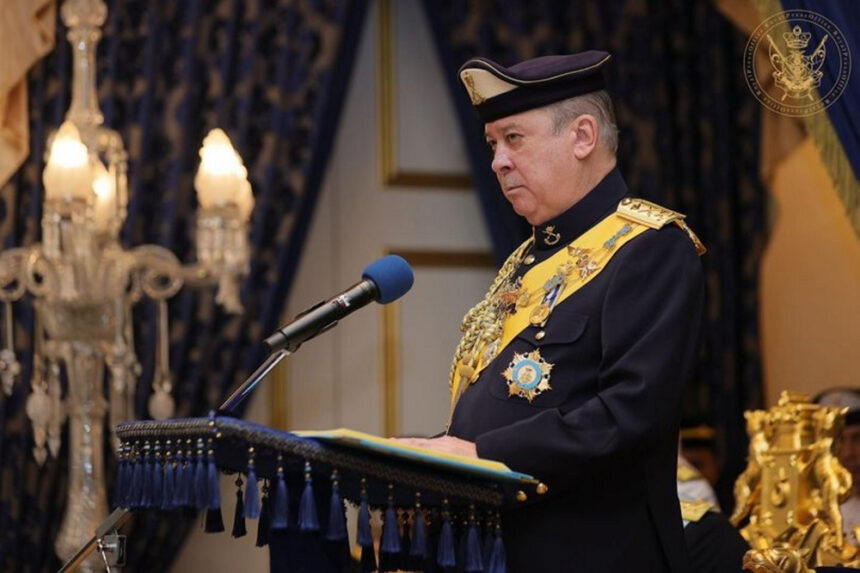
In a statement issued by the national palace on Saturday, Sultan Ibrahim expressed concern over the uncertainty surrounding the implementation of his decision, warning that attempts to disregard the royal directive could amount to defiance of his authority.
He maintained that the pardon order was “clear, explicit and without any ambiguity”, adding that both the Attorney-General and the Federal Territories Minister had attended the Pardons Board meeting at which the decision was made.
“There should therefore be no confusion over its interpretation, nor should there be prolonged uncertainty over the implementation of the decision that has been granted,” the monarch said.
Najib, who has been imprisoned since 2022 after being convicted of corruption and money laundering in connection with the multibillion-dollar 1Malaysia Development Berhad (1MDB) scandal, was expected to return home on Friday to complete the remaining two years of his sentence.
His transfer was, however, suspended after the Attorney-General’s Chambers (AGC) raised questions about the legal interpretation of the royal pardon and the court order permitting his release to house arrest.
The development triggered a dispute between Najib’s legal team and the government, with his lawyers accusing the authorities of exceeding their powers by delaying the implementation of the royal decision.
The AGC rejected the allegation, insisting that it had neither challenged nor attempted to suspend the conditional pardon granted by the king.
Instead, it said it was seeking legal clarification and maintained that the matter should be referred to the court for a definitive interpretation and appropriate directions.
Najib’s house arrest arrangement followed a conditional royal pardon granted in September, which allowed him to serve the remainder of his reduced sentence at home.
According to report, his party had also paid a 50 million ringgit ($12 million) fine, fulfilling a condition attached to the arrangement.
Najib has consistently denied wrongdoing in the 1MDB scandal, which involved the diversion of billions of dollars from the state investment fund and triggered investigations across several countries.
Although Malaysia’s king largely performs ceremonial duties, the constitution grants the monarch discretionary powers to grant pardons. The position rotates among the country’s nine hereditary state rulers.