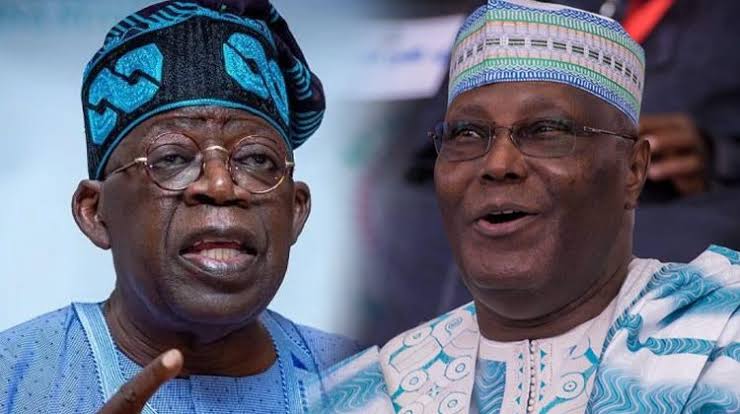
The presidential candidate of African Democratic Congres (ADC), Atiku Abubakar has criticised President Bola Tinubu over the administration’s handling of fuel subsidy removal, accusing the Federal Government of worsening economic hardship while celebrating increased Federation Account Allocation Committee, FAAC, revenues.
This is as the former vice president revealed that he will restore fuel subsidy if he is elected Nigeria president in the 2027 general election.
In a statement issued by his Senior Special Assistant on Public Communication, Phrank Shaibu, Atiku described the President’s criticism of his proposed petroleum-sector intervention as misplaced and economically inconsistent.
Atiku argued that economic policies must respond to prevailing conditions, saying the economic environment has changed significantly since Tinubu announced the removal of petrol subsidy.
According to him, the policy triggered sharp increases in fuel prices, transportation and production costs, while the naira’s depreciation and rising food prices further reduced Nigerians’ purchasing power.
He maintained that his proposed intervention was not a return to the previous open-ended subsidy regime but a targeted, capped and time-bound production-support mechanism.
Atiku said such a mechanism would be budgeted, independently audited and linked to domestic production, with safeguards against arbitrage and abuse.
He accused the Tinubu administration of announcing subsidy removal without adequate measures to cushion its impact on households and businesses.
Atiku also questioned the government’s claim that subsidy had been completely eliminated, citing what he described as energy-security costs and petroleum under-recoveries reportedly contained in NNPC’s audited accounts.
He questioned why Nigerians were still bearing opaque petroleum-related costs if subsidy had truly been abolished.
The former vice president argued that Nigerians had therefore been left with the burden of higher fuel prices and living costs, while government continued to incur petroleum-related expenses.
Atiku also criticised the Federal Government’s celebration of increased FAAC allocations to states, arguing that larger allocations should not be presented as a major economic achievement when citizens are struggling with rising living costs.
He said the increase in government revenues should translate into improved living standards rather than simply providing larger monthly allocations to state governments.
According to Atiku, transferring resources from households to government treasuries does not amount to genuine economic development if citizens continue to face food inflation, high transportation costs, unemployment and declining purchasing power.
He further warned that growing dependence on FAAC could discourage states from developing productive economies, attracting investment and broadening their internally generated revenue bases.
Atiku said states should instead be encouraged to exploit their comparative advantages, expand productive activities and create sustainable sources of wealth.
He also demanded explanations over what he described as approximately N30 trillion in Federation Account revenues, deductions, savings and transfers, as well as the N12.8 trillion Service-Wide Vote contained in the 2026 budget.
The former vice president accused the Presidency of responding aggressively to criticism of its policies while failing to provide adequate explanations on questions surrounding public finances and expenditure.
He said the administration’s decision to remove subsidy, float the naira and impose additional taxes and levies had increased government revenues but had not translated into corresponding improvements in citizens’ welfare.
Atiku maintained that the success of economic reform should not be measured solely by the size of government revenues or allocations but by improvements in the living conditions of ordinary Nigerians.
He accused the Tinubu administration of making citizens bear the cost of its economic policies while government finances improve, describing the situation as a transfer of financial pressure from households to public treasuries.
Atiku concluded that Nigerians had endured enough hardship and should not be subjected to what he described as another four years of failed economic experimentation, insisting that genuine reform must ultimately improve the welfare and purchasing power of citizens.