President Donald Trump’s declaration that the United States does not need Canada may sound politically powerful, but the economic reality is far more complicated.
The United States and Canada have built one of the world’s most integrated economic relationships. Their industries, workers, consumers and supply chains depend heavily on one another.
Canada sends roughly four million barrels of crude oil to the United States every day. That oil feeds American refineries and helps power cars, trucks, airplanes and industries.
Canada also supplies the United States with aluminium, potash, electricity, natural gas and automobile parts. These are not insignificant commodities that Washington can simply replace overnight.
Trump’s tariff strategy therefore carries risks for both countries. A tariff designed to punish Canada can ultimately increase production costs for American companies and prices for American consumers.
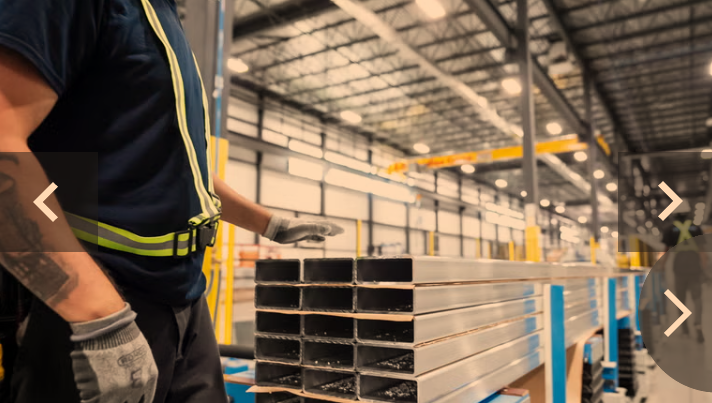
The 50 per cent tariff on Canadian aluminium illustrates the contradiction. Trump has imposed the tariff while admitting that America desperately needs aluminium because domestic production is insufficient.
If American manufacturers have to pay more for Canadian aluminium, the additional cost will not necessarily disappear. It can be transferred to businesses and eventually consumers.
The same principle applies to Canadian potash. With more than 80 per cent of U.S. potash imports coming from Canada, American agriculture is deeply exposed to any disruption.
Higher fertilizer costs could increase the cost of farming, putting additional pressure on food prices and household budgets.
The automobile industry presents another challenge. Canadian and American manufacturers have created supply chains in which components cross the border several times before a vehicle is completed.
A tariff on Canadian parts can therefore become a tax on American manufacturing itself.
This is the central weakness in the argument that America does not need Canada. Economic interdependence means that hurting your biggest supplier can also mean hurting yourself.
But Canada should not make the mistake of believing that its own dependence on the American market gives it unlimited power.
Alberta Premier Danielle Smith is right to warn against using oil exports as a weapon in the dispute. Alberta sends about four million barrels of crude to the United States daily, making America its overwhelmingly important customer.
Smith has argued that taxing or cutting off Alberta oil exports would be disastrous for Canada because Washington could retaliate against Canadian industries and potentially threaten the livelihoods of hundreds of thousands of people.
Her warning deserves serious consideration. A trade war is not a game in which the side with the most ammunition automatically wins. Sometimes the weapon can damage the person holding it.
If Canada deliberately disrupted oil supplies, the United States would undoubtedly search for alternatives. Venezuela may not be capable of replacing Canadian crude quickly or completely, but Washington would have a powerful incentive to develop alternative suppliers and accelerate domestic production.
Canada could then lose market share that might be difficult to recover.
There is also the danger of retaliation against Canadian consumers. If Washington responded by restricting refined petroleum products or imposing wider tariffs, provinces and industries already dependent on American supplies could suffer.
Therefore, Ottawa should resist calls for an indiscriminate economic war while remaining prepared to respond proportionately to American actions.
Canada’s strongest strategy should be strategic diversification, not economic self-destruction.
At the same time, Trump should recognise that a trade deficit does not automatically mean that America is being exploited. Much of the U.S. trade deficit with Canada reflects American purchases of Canadian energy.
America is buying something it needs. That is commerce, not charity.
Instead of threatening tariffs against an essential trading partner, Trump should have pursued negotiations aimed at reducing genuine trade barriers while protecting North American supply chains.
He could have used America’s economic influence to negotiate better terms without deliberately destabilising industries on both sides of the border.
The two governments should also be looking at the future. Artificial intelligence is driving enormous growth in electricity demand, and Canada’s energy resources could become increasingly valuable to the United States.
That creates an opportunity for cooperation at precisely the moment when political rhetoric is pushing the two countries apart.
For ordinary Americans and Canadians, this dispute is ultimately about the cost of living. Tariffs can affect the prices of fuel, vehicles, food, electricity and manufactured goods.
Politicians may exchange accusations on social media, but families and businesses eventually pay the bills.
Trump should therefore rethink the idea that economic toughness means imposing the maximum possible pressure on a neighbour. True economic strength is knowing when to negotiate, when to compromise and when cooperation serves the national interest better than confrontation.
Canada, for its part, must defend its interests without recklessly weaponising resources on which its own economy depends.
The sensible path is not surrender for Canada or submission for the United States. It is a negotiated North American economic partnership in which both countries recognise their mutual dependence.
Trump should not ask whether America needs Canada. He should ask how America can make the relationship work better for Americans. And Canada should ask the same question for Canadians.
Trump’s Canada Gamble and the High Cost of Economic Warfare



Leave a Comment