Taiwan’s central bank has kept its key interest rates unchanged for a 10th consecutive quarter while easing selected housing credit restrictions, signalling that it believes property lending has cooled sufficiently to permit a targeted relaxation without threatening financial stability.
The bank left its discount rate at 2 per cent, the collateralised lending rate at 2.375 per cent and the short-term lending rate at 4.25 per cent.
However, it raised the maximum loan-to-value ratio for buyers purchasing a second home to 70 per cent from 60 per cent and removed restrictions on loans for land purchases.
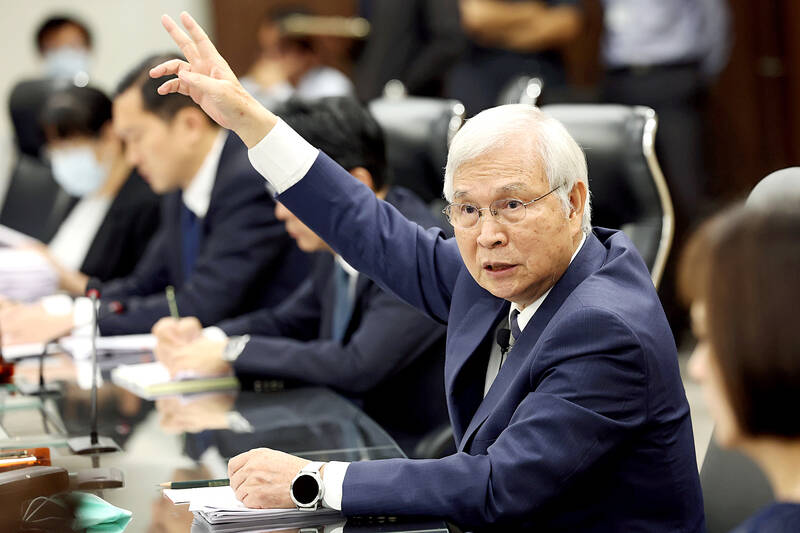
Central bank Governor Yang Chin-long said monetary policy had remained relatively tight since 2024, helping to stabilise domestic prices and anchor inflation expectations.
“We still have time to observe,” Yang said at a news conference in Taipei, adding that two central bank board members dissented while the majority supported maintaining the existing policy stance.
He said some board members remained concerned about inflation and stressed the need for continued monitoring, particularly amid uncertainty surrounding the global economic outlook.
According to Yang, conflicts in the Middle East could also affect Taiwan’s prices and economic performance, making a cautious monetary-policy approach necessary.
Domestic inflation remains manageable this year and is expected to fall below 2 per cent next year, while economic growth is projected to remain strong.
The central bank raised its full-year economic growth forecast to 11.48 per cent, but expects growth to moderate to 5.82 per cent next year.
It also revised upward its forecasts for consumer price inflation and core inflation this year to 2.03 per cent and 2.16 per cent, respectively, placing both above its 2 per cent inflation watch level.
The easing of housing restrictions comes as property-related lending continues to moderate. Real-estate loans accounted for 34.44 per cent of total bank lending at the end of July, down from 35.56 per cent in March and 37.61 per cent in June 2024.
Yang said credit flows into the property sector had declined, while first-time buyers now make up a growing proportion of residential mortgage borrowers.
He added that loans for urban renewal and the reconstruction of ageing or unsafe buildings had also increased as a share of construction lending.
Housing transactions have cooled, with speculative activity declining and expectations of further home-price increases becoming less pronounced, Yang said.
The central bank also abolished a requirement introduced in December 2021 under which land loans had to be accompanied by a commitment to begin construction within a specified period.
Yang cited labour shortages and difficulties in disposing of excavated soil among the factors capable of delaying construction projects.
He said commercial banks had also gained greater experience in managing property-related credit risks after several years of tighter controls, giving the central bank greater room to relax land-financing restrictions selectively.
Meanwhile, the bank expects broad money supply growth to exceed its 2.5–6.5 per cent reference range this year and raised the upper limit to 6.75 per cent.
It attributed the expected increase to strong artificial-intelligence-related exports and investment, buoyant stock-market activity and a low comparison base from the previous year.
Global stock markets mostly advanced after the United States Federal Reserve raised interest rates in a widely anticipated move, while falling oil prices and easing bond yields helped reduce concerns about inflation.
The Fed raised borrowing costs for the first time since 2023 despite US President Donald Trump’s calls for rate cuts, while Fed Chairman Kevin Warsh said inflation remained “too high” for “too long.”
Stock markets in Taipei, Tokyo, Sydney, Singapore, Wellington, Mumbai, Bangkok and Jakarta recorded gains, while Hong Kong and Shanghai declined and Seoul was broadly flat.