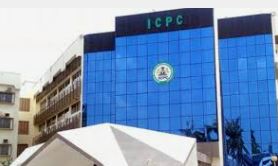
The Independent Corrupt Practices and Other Related Offences Commission (ICPC) has pledged to publicly disclose details of recovered assets, including their ownership and current status, as pressure mounts on anti-corruption agencies to demonstrate greater transparency and accountability in the management of confiscated wealth.
The commission’s assurance comes amid growing efforts by African countries to strengthen cooperation in tracing and recovering illicitly acquired wealth hidden within and outside the continent, as well as ensuring that such assets are put to public use.
Prince Hassan Mohammed, Director of Special Services at the ICPC and Chairman of the Local Organising Committee of the maiden General Assembly of the African Asset Recovery Practitioners’ Forum (AARP-F), gave the assurance during a pre-conference media briefing in Abuja at the weekend.
However, Mohammed could not provide figures on the volume or value of assets recovered by Nigeria when asked whether the commission had compiled relevant data ahead of the continental gathering scheduled for November 17 to 20 at the Abuja Continental Hotel.
Asked whether the ICPC would periodically publish information on recovered assets, including their ownership and current status, Mohammed said the commission was committed to making such information accessible to the public.
“Definitely, ICPC will do that. Nothing is hidden. It’s a public document.
“Anything recovered is for the public. And so, ICPC will definitely declare anything and whatever has been recovered,” he said.
He explained that asset recovery had become a critical component of the global anti-corruption campaign, arguing that the fight against corruption should not end with the identification, confiscation or repatriation of stolen wealth.
According to him, ensuring that recovered assets are properly managed and deployed for the benefit of citizens is equally important.
“To be sure, to ensure that what was recovered is put to use for the benefit of the generality of the masses is an aspect of the fight against corruption, which the African Union is advancing,” he said.
On whether Nigeria was performing better than other African countries in asset recovery, Mohammed said it was difficult to make such comparisons because some governments did not publicly disclose their recovery records.
“Some of these countries recover their assets and you don’t know what they have recovered. We don’t know whether they are doing their recoveries or not,” he said.
He noted that the Abuja gathering would provide an opportunity for participating countries to exchange experiences, assess existing challenges and explore more effective approaches to recovering illicit assets.
The four-day Assembly is expected to attract representatives from 54 African countries, alongside international partners and other stakeholders, to strengthen continental cooperation and develop practical strategies for tackling illicit financial flows.
Established in Nairobi, Kenya, in April 2025, the AARP-F serves as a continental platform for asset recovery practitioners to promote the implementation of the Common African Position on Asset Recovery (CAPAR).
The Assembly, themed, ‘From Commitment to Action – Enhancing Africa’s Asset Recovery Architecture through Effective Implementation of the Common African Position on Asset Recovery (CADAR)’, will review progress made by African countries, address institutional and operational challenges, strengthen cooperation and consider governance frameworks and strategic action plans.
Mohammed disclosed that participants would also visit selected locations in Nigeria to assess how some recovered assets were being utilised.
He said the conference would focus on translating existing policy commitments into practical action, particularly through improved information sharing, mutual legal assistance and stronger collaboration among anti-corruption agencies and other relevant institutions.
He urged the media to sustain scrutiny of asset recovery activities beyond the Abuja meeting, describing journalists as essential partners in ensuring that technical discussions and policy commitments translate into meaningful public accountability.
The Assembly is expected to strengthen Africa’s collective capacity to trace, freeze, confiscate, recover and repatriate illicitly acquired assets, while ensuring that recovered resources contribute meaningfully to economic development and public welfare.
VAN