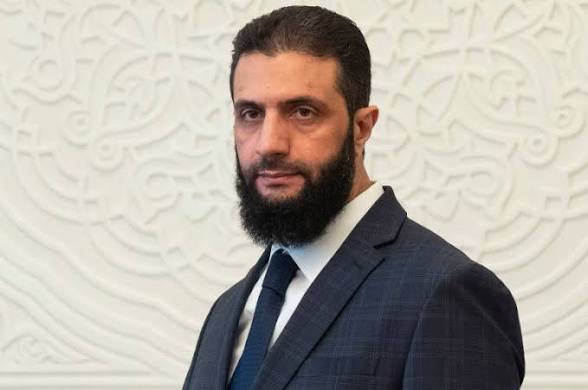
Syrian President Ahmad al-Sharaa’s use of a Visa card to make a payment at a restaurant in Old Damascus may appear to be an ordinary transaction, but its significance extends far beyond the price of a meal. The payment represents a symbolic moment in Syria’s attempt to reconnect with the global financial system after years of international sanctions and economic isolation.
In our view, the significance of the transaction lies not in the card itself but in what it represents: the gradual restoration of Syria’s access to international commerce. For a country whose financial system has been heavily constrained for years, the ability to process international electronic payments is a powerful indication that economic barriers are beginning to come down.
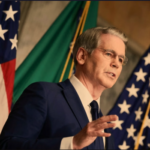
Sharaa made the electronic payment at a restaurant in Old Damascus on Wednesday, according to a video published by Syria TV. Central Bank of Syria Governor Safwat Raslan was present during the transaction, underscoring the institutional importance attached to the development.
The payment came shortly before Visa announced that it had successfully tested a live international card transaction in Syria. The global digital payments company described the development as an important step towards allowing international visitors to use Visa cards within the country.
Visa said the transaction was conducted in cooperation with the Central Bank of Syria and its partners, Fransabank and Paymera. The company said the initiative would help expand digital payment capabilities and strengthen Syria’s connection to the global digital economy.
The development could have important implications for businesses and consumers. Greater access to electronic payments could reduce reliance on cash, improve transaction efficiency and make it easier for foreign visitors and companies to conduct legitimate commercial activities in Syria.
For Syrian businesses, reconnecting with international payment networks could also provide new opportunities. Restaurants, hotels, retailers and other service providers could potentially serve foreign customers more easily as international economic activity gradually resumes.
However, reconnecting to the global financial system will not automatically resolve Syria’s deep economic difficulties. Years of conflict, sanctions, damaged infrastructure, weak investment and limited access to international capital have left the country facing enormous reconstruction challenges.
The Syrian government is now seeking to present the country as an emerging centre for trade and investment. Speaking at the opening of the 63rd Damascus International Fair, Sharaa said Syria had entered a new phase of reconstruction and development following the lifting of sanctions.
He expressed hope that Syria could regain its historic role as a bridge between markets, a trade corridor and an economic hub connecting East and West. Such ambitions, however, will require more than political declarations and isolated financial milestones.
The lifting of sanctions could attract investors who previously considered Syria too financially risky or inaccessible. Yet international investors will also demand stability, transparent regulations, functioning institutions and confidence that economic reforms will be sustained.
The United States Treasury Department also announced on Monday that Syria had been removed from its list of state sponsors of terrorism, fulfilling a key commitment by the Trump administration as part of its broader sanctions-relief measures. Syria had remained on the list since 1979.
The significance of these developments therefore goes beyond Syria’s borders. A more financially connected Syria could influence trade across the Middle East, create new commercial routes and potentially contribute to regional economic integration. It could also open opportunities for international companies willing to participate in the country’s reconstruction.
Nevertheless, Syria must ensure that the benefits of renewed international engagement reach ordinary citizens rather than remaining concentrated among political and commercial elites. Economic reopening should be accompanied by stronger institutions, accountability, inclusive development and policies that improve living standards.
Ultimately, the president’s Visa payment should be viewed as a symbol rather than a solution. It is a small transaction carrying a much larger message: Syria is attempting to move from isolation towards integration. Whether that symbolic swipe becomes the beginning of a genuine economic revival will depend on the country’s ability to maintain stability, build credible institutions and convince the international community that Syria is ready to rejoin the global economy.