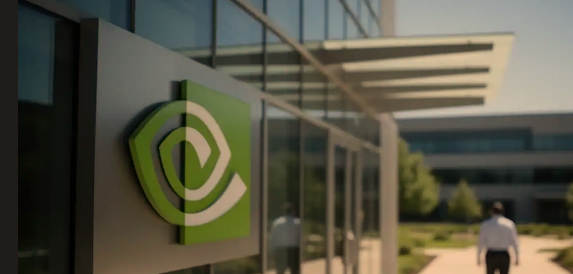
Two major Nvidia shareholders have urged the company’s board to adopt a cautious approach in selecting a permanent chief executive, insisting that founder Jensen Huang’s possible return should remain an option following his abrupt resignation.
Brad Gerstner, chief executive of Altimeter Capital, and Gavin Baker, managing partner and chief investment officer of Atreides Management, made the appeal in a letter to the board published on X on Friday.
The investors urged the board to conduct a “slow, measured and deliberate process” rather than rush to appoint a successor, arguing that Huang deserved a fair assessment before any permanent leadership decision was made.
They, however, acknowledged that the board retained the authority to determine whether his return would serve shareholders’ interest, while expressing confidence in interim chief executive Colette Kress, who previously served as Nvidia’s chief financial officer for 13 years.
According to regulatory filings, Altimeter held approximately 9.4 million Nvidia shares valued at nearly $1.9bn as of June 30, while Atreides owned about 1.2 million shares worth approximately $250m.
Nvidia announced on November 12 that Huang had resigned as president, chief executive and board member with immediate effect. The company appointed Kress as interim CEO and began searching for a permanent replacement while Harvey C. Jones was also named the company’s first board chairman.
Although Nvidia did not disclose the reason for Huang’s departure, the decision followed reports of alleged extramarital relationships involving the founder and multiple company employees, including Alice Huang, also known as Huang Le, a former senior executive at Singapore-based data centre operator Megaspeed.
The relationship attracted additional scrutiny following allegations that Megaspeed was involved in diverting Nvidia artificial intelligence chips restricted under United States export controls to customers in China.
The US Justice Department is investigating the allegations, while Nvidia has maintained that it stopped all sales and shipments to Megaspeed in June 2025 but Megaspeed denied diverting the chips and said Singapore’s investigation into the company ended without adverse findings.
Nvidia’s board has also launched an independent investigation into whether Huang was targeted in a foreign intelligence operation, saying there was no reason to believe that national security or company secrets had been compromised.
Meanwhile, public support for Huang’s reinstatement has gathered momentum, with an online petition titled Stand with Jensen attracting more than 100,000 signatures. Organisers claim that thousands of the signatories are current Nvidia employees.
Tesla and SpaceX chief executive Elon Musk disclosed that he had signed the petition, arguing that Nvidia could lose critical business opportunities without Huang’s leadership. Epic Games chief executive Tim Sweeney and Y Combinator chief executive Garry Tan have also supported the campaign.
However, the push for his return has attracted criticism, particularly over allegations involving relationships with subordinates as CNBC’s Jim Cramer argued that professional misconduct should not be overlooked because of an executive’s business achievements.
The controversy has also drawn the attention of US lawmakers, with Huang agreeing to appear before three House committees investigating the circumstances surrounding his departure and the alleged diversion of advanced chips to China.
The committees, chaired by Brian Mast, John Moolenaar and Rick Crawford, have proposed December 1 for a closed-door session, which is expected to be recorded and transcribed.
Commerce Secretary Howard Lutnick has also agreed to testify before the Senate Banking Committee on December 10 over the department’s handling of export restrictions and the Megaspeed investigation.
The matter has exposed divisions within the Trump administration. Treasury Secretary Scott Bessent said on Friday that his department, alongside the War Department, the US Trade Representative’s office and the State Department, had supported placing Megaspeed on the US entity list for months.
However, he said the Commerce Department had the final authority to implement the restriction.
The disagreement has raised questions about Washington’s enforcement of restrictions designed to prevent China from obtaining advanced American artificial intelligence technology.
For investors, the uncertainty surrounding Nvidia’s leadership has intensified concerns about the company’s future performance and exposure to China.
The company’s board has reportedly approached Arm Holdings chief executive, Rene Haas, as a possible successor. Haas previously spent about seven years at Nvidia before joining Arm in 2013. However, the search remains at an early stage, and the board has said it has made no formal contact with candidates.
Nvidia is expected to release its third-quarter results for fiscal 2027 on November 17, its first earnings report since Huang’s departure.
Its shares closed at $162.85 on Friday, declining 2 per cent on the day and 12.7 per cent for the week. The stock has recorded six consecutive weekly losses, its longest losing streak since 2012.
More than $573bn was wiped off its market value during the week, while its shares have lost over 28 per cent in the past month amid concerns over the leadership crisis and its exposure to the Chinese market.
The developments have also raised concerns among international partners building artificial intelligence infrastructure around Nvidia’s technology.
In Japan, Noetra Corporation, with support from the Ministry of Economy, Trade and Industry and local industry players, is developing a 140-megawatt artificial intelligence facility powered by 27,500 of Nvidia’s next-generation Rubin graphics processing units and 13,750 Vera central processing units.
The project, described by Nvidia as the world’s first national AI infrastructure for physical artificial intelligence, underscores the potential implications of prolonged uncertainty at the chipmaker.
FB