The United States and China have moved to formalise new mechanisms for managing trade and artificial intelligence, as Washington and Beijing seek to stabilise relations ahead of a planned summit between President Donald Trump and Chinese President Xi Jinping.
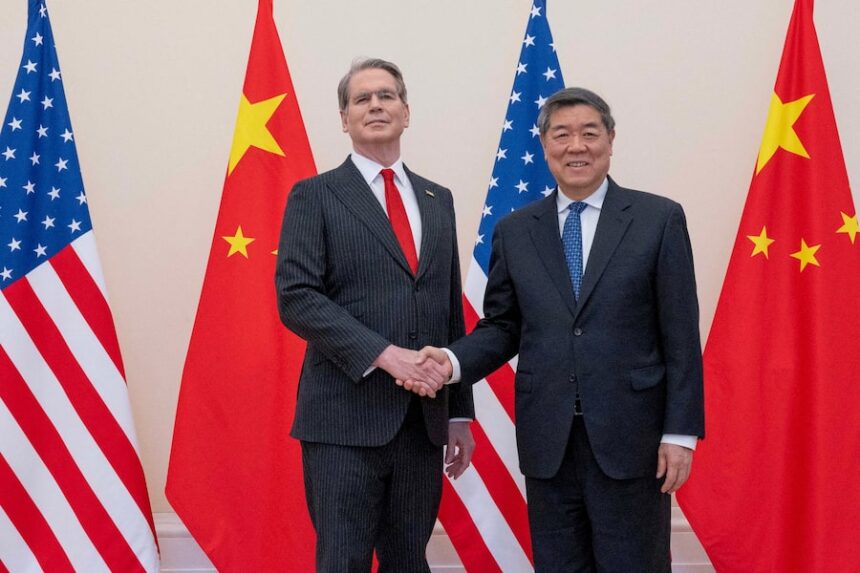
US Treasury Secretary Scott Bessent and Chinese Vice Premier He Lifeng led negotiations in New York on Sunday, where both sides agreed to operationalise proposals for a US-China Board of Trade and a dedicated dialogue on artificial intelligence.
Bessent described the discussions as “very, very successful,” saying they completed work that had begun during earlier negotiations in Beijing.
He said the AI dialogue would provide a framework for the world’s two leading AI powers to identify shared objectives and address common threats.
According to Bessent, Washington also proposed a notification mechanism through which the two countries could report national-security incidents involving artificial intelligence.
The US Treasury secretary said greater transparency was necessary because AI was increasingly becoming a cross-border issue, adding that Washington wanted relations between the two leading AI powers to become less opaque.
US Trade Representative Jamieson Greer, who participated in the negotiations, said proposals initially discussed in Beijing had now become operational arrangements.
Greer said the newly established Board of Trade was already examining categories of non-sensitive consumer goods that could continue to move between the two countries even if broader trade tensions deteriorate.
The initiative is aimed at creating what Washington described as a more balanced trading relationship while insulating selected products from future tariff or other trade restrictions.
Greer said US negotiators were considering low-technology Chinese imports, while Chinese officials were examining American energy products, agricultural commodities and potentially medical devices.
The discussions come as the existing US-China trade truce approaches its Nov. 10 expiration date, making the future of the agreement one of the issues likely to feature prominently in the leaders’ summit.
Washington has continued to accuse Beijing of falling short of some commitments under the existing arrangement, particularly over the supply of rare earth materials and critical minerals required by several American industries.
A senior Trump administration official said on Sept. 18 that Chinese exports of rare earths and critical minerals had not reached the levels Washington expected under the agreement.
Greer said the Trump administration would continue monitoring implementation of existing commitments while seeking improved access for American farmers, manufacturers and workers.
Beyond trade, financial and geopolitical tensions are also complicating the relationship between Washington and Beijing.
China’s economic relationship with Iran was expected to feature in the broader discussions, particularly as the Trump administration intensifies efforts to restrict Tehran’s access to international finance and markets.
Bessent told the House Financial Services Committee on Sept. 15 that Washington had sanctioned three Chinese banks over alleged dealings with Iran.
He said previously that he had held private discussions with Chinese officials about the issue and hoped to continue those conversations with He during the New York meeting.
China remains Iran’s largest trading partner and a major buyer of its oil, placing Beijing’s commercial relationship with Tehran under increasing scrutiny from Washington.
The issue also featured in a Sept. 17 telephone conversation between US Secretary of State Marco Rubio and Chinese Foreign Minister Wang Yi, although neither side publicly indicated that Iran was a central subject of Sunday’s trade negotiations.
The Chinese government did not issue a detailed statement after the New York meeting, although state media released photographs showing Bessent and He shaking hands.
Ahead of the talks, China’s Commerce Ministry said the consultations would focus on economic and trade issues of mutual concern.
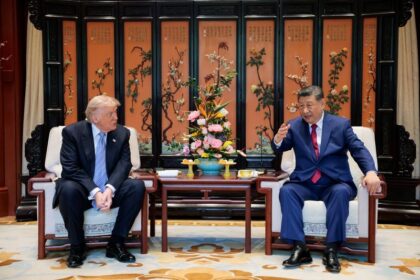
The latest engagement comes just days before Xi is expected to travel to Washington for meetings with Trump on Sept. 24 and 25. The summit will provide the leaders with an opportunity to address trade, technology, critical minerals and wider geopolitical tensions.
The activation of the trade and AI mechanisms could give the two governments additional channels for communication as they attempt to manage competition without allowing disputes in one sector to spill rapidly into others.