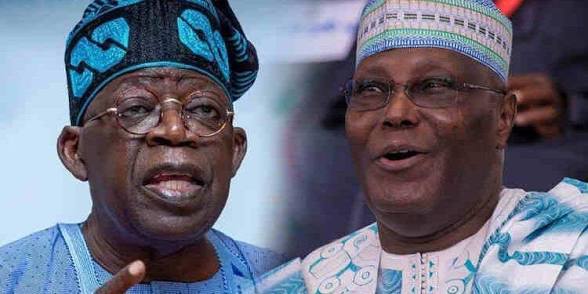
Former Vice-President and African Democratic Congress (ADC) presidential candidate, Atiku Abubakar, has criticised President Bola Tinubu’s decision to embark on a three-week vacation in Europe, arguing that the timing reflects a troubling absence of political leadership as Nigerians grapple with economic hardship and insecurity.
In a statement on Sunday, Atiku said Nigeria was facing serious challenges that required the President’s presence at home, describing the situation as a “disturbing vacuum of political leadership.” He stressed that while there was no constitutional vacuum, the circumstances surrounding Tinubu’s absence raised questions about the priorities of the administration.
The criticism comes as an analysis of government expenditure records by GovSpend, an accountability platform tracking public spending, showed that the Presidency spent N37.64 billion on presidential trips, associated logistics, foreign exchange transactions and other travel-related expenses between June 2023 and April 2026.
According to the records, the Presidency spent N9.19 billion in the second half of 2023, N25.27 billion in 2024, N2.71 billion in 2025 and N477.45 million between January and April 2026. The expenditure peaked in 2024, largely due to foreign-exchange allocations and funding associated with the Presidential Air Fleet.
Tinubu’s latest vacation began on Sunday when he departed Abuja for Europe, with London, United Kingdom, as his first destination. The Presidency has not disclosed the full itinerary for the trip or the other European countries the President may visit during the leave.
Presidential spokesman Bayo Onanuga said Tinubu was expected to return to Nigeria after the working vacation and join preparations for the January 2027 elections.
The latest trip also comes shortly after Vice-President Kashim Shettima returned from a two-week vacation. Shettima is currently in Luanda, Angola, attending the 21st Extraordinary Session of the Assembly of the African Union.
For Atiku, the simultaneous absence of both the President and Vice-President, even though Shettima is on official duty, makes the timing of Tinubu’s vacation particularly difficult to justify.
“I have travelled, lived and spent time abroad, and I have never pretended otherwise. But there is a fundamental difference between the travels of a private citizen and the responsibility of the sitting President of the Federal Republic of Nigeria,” Atiku said.
He listed rising living costs, food insecurity, high transport fares and insecurity among the problems confronting Nigerians, arguing that the situation demanded greater presidential attention.
His criticism also focused on the frequency of Tinubu’s foreign travels. Available travel records indicate that the President has undertaken 51 foreign trips, visited at least 30 countries and spent approximately 261 days outside Nigeria since assuming office in May 2023.
France has reportedly been Tinubu’s most frequent destination, followed by London, while the United Arab Emirates has also featured prominently on his itinerary. His foreign engagements have included international summits, state visits, bilateral meetings, investment engagements and working vacations.
The Presidency, however, has defended the President’s latest break, describing it as necessary after months of demanding official engagements.
Speaking to journalists at the airport on Sunday, Special Adviser to the President on Media and Public Communication, Sunday Dare, said the President deserved the vacation and would remain engaged with matters of state while abroad.
Dare said Tinubu had spent several months dealing with issues concerning the economy, security and other aspects of governance and needed to “refuel” ahead of the expected campaign season.
“At this point, the campaign season has just started. We have four, five months of serious campaigning; of course, governance will continue,” Dare said.
He added that the President would continue receiving briefings from ministers, service chiefs and other officials handling critical national matters during his vacation.
Beyond the President’s personal travel schedule, concerns have also emerged over expenditure associated with overseas trips involving First Lady Oluremi Tinubu.
GovSpend records showed that $553,884 was released for overseas trips involving the First Lady between 2023 and 2024. The foreign exchange transactions were valued at N700.71 million at the exchange rates applicable when the funds were purchased.
The records covered trips linked to the United States, Mozambique, Ethiopia, the United Kingdom and France. However, they did not provide details of the purposes of the trips, the size of the delegations or their overall costs beyond the foreign-exchange component.
The disclosure has prompted questions from transparency advocates over the legal basis for public expenditure associated with the Office of the First Lady, which is not expressly established by the Constitution.
President and Convener of the Transparency and Accountability Group, Ayo Ologun, argued that public authorities must ensure that government resources are spent within the law and in accordance with approved budgets.
He called for scrutiny of the expenditure, insisting that Nigerians had a right to know the source and legal authority for public funds used in connection with such travels.
The controversy over Tinubu’s vacation therefore extends beyond the question of whether a sitting President is entitled to rest. At its heart is a broader debate about leadership, public spending and the responsibilities of government at a time when many Nigerians continue to face economic pressure.
Atiku captured the political dimension of the controversy when he argued that leadership was not simply about occupying the presidency but knowing when the country needed its leader at home.
For the administration, however, the argument is that governance does not stop when the President travels and that a temporary break after sustained official duties does not amount to abandonment of responsibility.
The competing positions highlight a familiar tension in Nigerian governance: how public officials balance the legitimate demands of personal rest and international engagement with the expectations of citizens facing economic hardship and insecurity.
With the 2027 elections approaching, the issue is also likely to acquire greater political significance. For the opposition, Tinubu’s foreign travels provide an opportunity to question his sensitivity to the difficulties confronting ordinary Nigerians. For the Presidency, the defence remains that national governance continues regardless of the President’s location.
The real test, however, is whether Nigerians experience effective leadership and measurable improvements in their daily lives. In a country where the cost of living, security and public spending remain major concerns, every presidential decision—whether made at home or abroad—will inevitably be judged against the realities facing the citizens.