As Nigeria prepares for the January 2027 general elections, the political class has once again begun competing for the attention of a frustrated electorate, while the Independent National Electoral Commission, INEC published the final list of presidential candidates and their running mates, with 18 political parties participating in the presidential contest.
The list, disclosed in a statement by the Secretary to the Commission, Rose Oriaran-Anthony, comprises 16 male candidates and two female candidates. The two female presidential candidates are Ada Elizabeth Fredrick Okwori of the National Democratic Party and Nkem Esther Okereke of the National Rescue Movement.
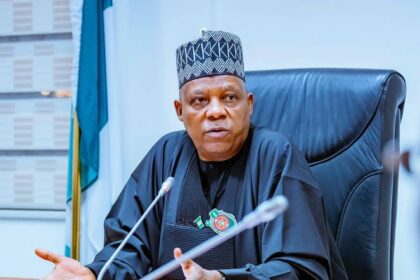
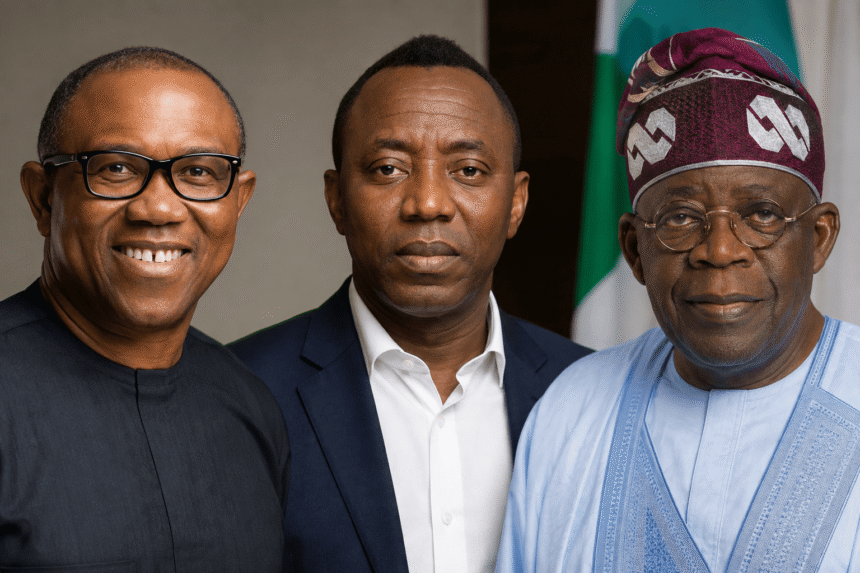
Among the prominent candidates are the All Progressives Congress, APC, ticket of President Bola Ahmed Tinubu and Vice President Kashim Shettima; the African Democratic Congress, ADC, ticket of Atiku Abubakar and Chibuike Rotimi Amaechi; and the Nigeria Democratic Congress, NDC, ticket of Peter Gregory Obi and Musa Mohammed Rabiu Kwankwaso, among others.
With the electoral contest gathering momentum, Nigerians are being presented with a familiar catalogue of promises: higher wages, reliable electricity, free education, improved security, electoral reforms and better management of public resources yet, the central question remains: Are these promises realistic programmes for national development, or merely political instruments designed to win votes?
The promise of a N500,000 minimum wage
The presidential candidate of the African Action Congress, AAC, Omoyele Sowore, has promised to introduce a monthly minimum wage of N500,000 if elected president. He has also pledged to provide 24-hour electricity, make education free and accessible at all levels, construct one million public mixed-income homes and reform tenancy laws to reduce the burden of advance rent payments.
Speaking in an interview with The Independent, Sowore described his agenda as one of “revolutionary justice and equal rights,” arguing that Nigeria’s enormous wealth has been undermined by corruption, incompetence and an economic system that favours a small political and business elite.
His proposals respond to genuine hardships confronting Nigerians. Workers are struggling with rising living costs, while unreliable electricity, inadequate housing and limited access to quality education continue to weaken productivity and social mobility.
However, good intentions do not automatically translate into workable policies. A N500,000 minimum wage may sound attractive to millions of workers, but its sustainability would depend on productivity, inflation, government revenue, the capacity of businesses to pay and the ability of state governments to meet their obligations.
A presidential candidate cannot simply announce a new wage and assume that the economy will absorb it without consequences. If the increase is not matched by higher productivity and stronger economic output, it could fuel inflation, increase business closures and weaken the purchasing power it is intended to protect.
The same question applies to the promise of 24-hour electricity. Nigerians deserve dependable power, but achieving it requires substantial investment in generation, transmission and distribution, as well as reforms in the electricity market, gas supply and regulation. It is a long-term national project, not a switch that a president can turn on by executive declaration.
Sowore’s promises therefore deserve serious consideration, but they must be accompanied by clear funding arrangements, implementation timelines and measurable targets. Without those details, the electorate is being asked to vote for aspirations rather than a fully developed programme of government.
The Dangote refinery controversy and the politics of blame
The debate over fuel subsidy and the Dangote Refinery has also exposed the contradictions that frequently characterise Nigeria’s political discourse.
Former Vice President Atiku Abubakar, through his spokesperson, Phrank Shaibu, accused the Tinubu administration of turning Dangote’s business model into a campaign strategy. Atiku argued that a private refinery should not be forced to absorb losses arising from government-imposed prices, while accusing the Presidency of dishonesty in its interpretation of his position.
The controversy reflects a broader problem: political actors often present complex economic questions as simple battles between good and evil. Fuel pricing, subsidy removal, domestic refining and consumer protection involve competing interests that require transparent policies rather than partisan accusations.
It would be recalled that the former vice president strongly vowed to restore the fuel subsidy remove by President Tinubu as announced in his first speech after been sworn in on 29th May 2023.
If the government wants Nigerians to benefit from domestic refining, it must explain how competition, pricing, regulation and consumer protection will work. Opposition politicians, in turn, must offer alternatives that are financially credible instead of merely criticising the government’s approach.
The public is tired of political arguments that generate more noise than solutions. Nigerians need to know who will bear the cost of a policy, who will benefit from it and how its success will be measured.
Obi’s promises on elections and insecurity
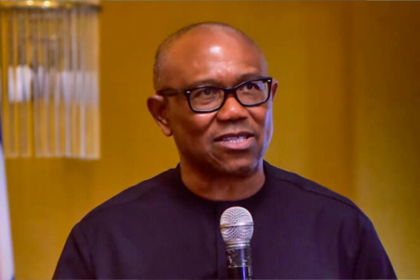
Peter Obi, the presidential candidate of the Nigeria Democratic Congress, has promised to establish an independent system for monitoring election results from polling units in the 2027 elections.
gAccording to him, the system would enable his political organisation to receive results directly from polling units and compare them with figures eventually collated and announced by INEC. He insists that the proposal would not amount to creating a parallel electoral commission.
The proposal raises an important issue: public confidence in elections. However, any independent monitoring system must operate within the law, protect the integrity of electoral materials and avoid creating competing claims to official results. Its credibility would depend on transparency, technological reliability and public acceptance.
However, this is really an embarrassment in disguise on a system or administration regarded as unreliable and incompetent which might not have happened if there is public and oppositions trust.
Obi has also criticised President Bola Tinubu’s leadership, alleging that the President has not spent three consecutive nights in any state outside Lagos and Abuja since assuming office, faulting the President for spending holidays abroad instead of visiting communities affected by insecurity.
If elected, Obi says he would personally take charge of the fight against insecurity, visit affected communities and appoint competent heads of security agencies with clear instructions to end the violence. He has also accused the Tinubu administration of being “a bit reckless” in its management of public resources.
There is merit in demanding that the President remain engaged with communities facing insecurity. Leadership should not be limited to meetings in the capital. Visiting affected areas can improve public confidence, expose failures in government response and bring national attention to neglected communities.
Nevertheless, physical presence alone cannot defeat insecurity. Nigeria’s security challenges require intelligence, effective policing, military coordination, judicial reform, economic opportunities and sustained cooperation with local communities. A president who visits a troubled state for 30 days but fails to reform the institutions responsible for security may achieve little beyond political symbolism.
Obi’s promise to appoint competent security chiefs is therefore more important than his promise to spend more nights in affected states. Nigerians need to know how he would ensure that security appointments are based on professional ability rather than political loyalty.
Can any candidate deliver without a competent cabinet?
This is perhaps the most important question in the 2027 election. Presidential promises are often presented as though the occupant of Aso Rock possesses unlimited power to transform the country single-handedly. In reality, the success of any administration depends heavily on the quality of its cabinet, the competence of public institutions and the integrity of the wider political system.
A president may have an excellent economic plan but a minister who lacks the expertise to implement it can turn the plan into a failure and immediate or future chaos. A government may promise to reform electricity but politically motivated appointments, bureaucratic resistance and poor regulation can undermine the entire effort.
The danger becomes greater when appointments are based on ethnicity, personal loyalty, political debts or the interests of a narrow circle of allies. A biased cabinet may reward supporters, marginalise qualified professionals and create competing centres of power within government. In such circumstances, even a realistic manifesto can become impossible to implement.
The issue is not whether every region, group or political interest should be represented in government. Broad representation is important in a diverse country such as Nigeria. The real question is whether representation will be balanced with competence, accountability and a shared commitment to national development.
A president who surrounds himself with loyalists who cannot challenge bad decisions risks becoming isolated from reality. Such an administration may continue to announce ambitious policies while the country’s problems deepen beneath the surface.
The next president must therefore be judged not only by the promises made during the campaign but also by the people selected to execute those promises. Nigerians should demand clear criteria for ministerial appointments, public disclosure of qualifications, performance assessments and consequences for failure.
Promises must be tested against reality
Among other candidates, the 2027 presidential contest offers Nigerians an opportunity to examine competing visions for the country. Sowore’s N500,000 minimum wage and 24-hour electricity promise addresses workers’ welfare and infrastructure. Obi’s proposals focus on electoral transparency, security and public accountability. Atiku’s criticism of the government’s fuel policies raises questions about economic management and the role of private enterprise.
But none of these proposals should be accepted merely because they sound attractive or politically convenient. Every promise must be tested against the realities of funding, law, institutional capacity, economic conditions and implementation.
Nigeria does not lack ambitious declarations. What it lacks is a consistent record of turning political commitments into measurable improvements in the lives of ordinary citizens.
The electorate must therefore ask the candidates difficult questions. How much will their programmes cost? Where will the money come from? Which institutions will implement them? What happens if their policies fail? And, most importantly, will they appoint people capable of telling them the truth, even when that truth is politically inconvenient?
The greatest danger facing Nigeria may not be the absence of good ideas, but the presence of leaders who make promises they cannot fulfil and appoint officials who are unwilling or unable to tell them so.
Obviously all the candidates only focus on are public wealth mismanagement, poor welfare of workers and the masses, poor infrastructure, oil sector among others. Meanwhile Nigeria is blessed with natural resources which could have made other sectors yield even more income if they are utilized.
Therefore as the 2027 elections approach, Nigerians must look beyond slogans, personalities and campaign theatrics. A credible president is not merely one who promises a better country. A credible president is one who understands what it takes to build it, assembles a competent team and accepts responsibility when the promises fall short.