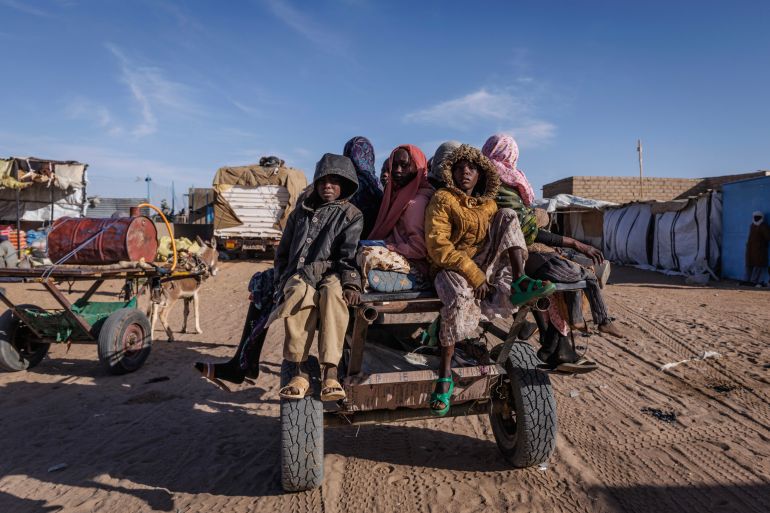
The accelerating flight of more than 55,000 Sudanese refugees into neighbouring Chad this year is another painful reminder of the devastating human cost of war.
United Nations says as many as 400 people are now crossing from Sudan into eastern Chad every day — about 20 times the rate recorded in previous months — while the humanitarian response is already severely underfunded.
Sudan has been trapped in a brutal civil war since April 2023, when the power struggle between the Sudanese Armed Forces and the Rapid Support Forces erupted into open conflict. More than three years later, millions remain displaced within Sudan and across its borders, while neighbouring countries such as Chad struggle to provide food, shelter, water and protection to those fleeing the violence.
The situation in Chad demonstrates how the consequences of war rarely stop at the battlefield. The UN says its $1.6 billion humanitarian appeal has received only about 20 percent of the required funding. Thousands of refugees are without adequate shelter, while many are receiving less than half of the minimum daily water requirement. These are not merely statistics; they represent families whose lives have been uprooted by a conflict they did not create.
The warning from the UN that continued deterioration could push more Sudanese refugees towards Europe should also concern the international community. Refugees do not ordinarily abandon their homes, communities and familiar surroundings without compelling reasons. When people undertake dangerous journeys in search of safety, it is often because remaining behind has become even more dangerous.
The situation in Lebanon offers another dimension to this disturbing pattern. Addressing the United Nations General Assembly, Prime Minister Nawaf Salam insisted that decisions concerning war and peace and the control of weapons must belong to the Lebanese state and its constitutional institutions. He said Lebanon had found itself facing a war it did not choose and had repeatedly warned against being drawn into it.
Does Salam regret anything? From the statement reported here, he did not explicitly express personal regret over a particular decision or action. His emphasis was instead on the consequences of Lebanon being dragged into conflict and on the need for state authority over decisions of war and peace. His remarks therefore sound more like a warning about the consequences of conflict than an admission of regret.
This distinction matters. Leaders may defend their decisions, blame circumstances or insist that they warned against escalation, but the ordinary citizen ultimately pays the price when diplomacy fails and weapons take over the conversation.
The prolonged conflicts between Russia and Ukraine, as well as the continuing violence involving Israel and Hamas in Gaza, further demonstrate how territorial disputes, political ambitions, security concerns and competing claims can produce suffering far beyond the immediate battlefield. After years of fighting, civilians continue to face death, displacement, hunger, destroyed homes and uncertain futures. No claim to land, power or security should be pursued without regard for the human beings whose lives are placed in danger.
It is high time conflicting communities across the world understood the full height of devastation that follows civil wars, interstate wars and military attacks. War may begin with political calculations, territorial disputes, struggles for power or competing strategic interests, but its aftermath is frequently measured in destroyed homes, displaced families, broken economies, humanitarian emergencies and generations struggling to recover.
The Sudanese experience should therefore not be viewed as an isolated African tragedy. Neither should Lebanon’s warning be dismissed as another statement at the United Nations. They are reminders of what happens when political disagreements become armed confrontations and when societies are unable to prevent escalation.
The reported xenophobic attacks and killings of Nigerians in South Africa add another disturbing dimension to the global crisis of violence and intolerance. The reported killing of Olatunde Olaleye, a 40-year-old Nigerian father of two, in Mamelodi, Pretoria, on 21 September 2026 despite several calls by Nigerian government to South Africa authority to swing into action must not be treated as an ordinary criminal incident without a transparent and impartial investigation. His death, reportedly followed an argument at a bar, has left a family devastated and deepened concerns about the safety of Nigerians and other foreign nationals in South Africa.
The reported deaths of other Nigerians, including lecturer Ayodele Odularu and Taiwo Fakunle and James Nwankwo, who were said to have been killed in separate xenophobic incidents, demand urgent attention from both governments. Every death must be properly investigated, and those found responsible must face the law, regardless of their nationality or social status.
South African authorities must do more to prevent xenophobic violence, while Nigerian diplomatic missions must intensify engagement with relevant authorities and provide effective protection and support for Nigerians living in the country. Political leaders and community organisations must also challenge the dangerous narrative that foreigners are responsible for local economic and social problems. Such narratives can quickly turn frustration into violence.
There is an old African wisdom that says, when two elephants fight, it is the grass that suffers. In modern conflicts, the grass is the civilian population — children, women, families, workers, migrants and communities who often have little influence over the decisions that send nations or societies into violence.
The international community must therefore do more than count the displaced after the guns have fallen silent. Greater attention must be given to preventing conflicts, strengthening diplomacy, protecting civilians, combating xenophobia and ensuring that humanitarian assistance reaches those caught in the middle. By the time the world begins counting refugees, casualties and destroyed communities, the real damage has often already been done.
War and hatred should never become the first language of political disagreement or social frustration. The Sudanese refugees arriving in Chad, Lebanon’s plea for state control over decisions of war and peace, the continuing devastation in Ukraine and Gaza, and the reported xenophobic killings in South Africa should remind the world of one simple truth: when elephants fight, the grass does not merely suffer — sometimes, it never grows back the same way again.