China’s rapidly expanding hybrid vehicle exports to Europe face fresh restrictions following a new agreement between Beijing and the European Union, threatening to slow the growth of Chinese automakers and intensify competition in the region’s automotive industry.
Chinese exports of hybrid vehicles to the EU’s 27 member states tripled to $7.5bn in the first half of 2026, up from $2.5bn in the corresponding period of 2025, according to Chinese customs data. The figure was nearly nine times the $845m recorded for the whole of 2021, highlighting the speed at which Chinese manufacturers have expanded their European market presence.
The agreement comes as Chinese automakers increasingly rely on plug-in hybrids to sustain overseas sales amid slowing growth in their domestic market. The vehicles became an attractive alternative after the EU imposed additional tariffs on Chinese-made electric vehicles in 2024, with plug-in hybrids exempt from the extra duties.
Plug-in hybrids, which combine rechargeable batteries with conventional combustion engines, have also benefited from inadequate charging infrastructure in parts of Europe. Their longer driving range and fuel efficiency have made them attractive to consumers who remain reluctant to rely entirely on electric vehicles.
According to investment firm Jefferies, SAIC, BYD and Chery accounted for more than 90 per cent of Chinese hybrid vehicle sales by volume in the EU, with hybrids representing more than half of their European sales.
The latest agreement, however, introduces fresh uncertainty for manufacturers that have used the tariff exemption to strengthen their foothold in Europe. Although the arrangement is expected to reduce imports, Beijing and Brussels have yet to disclose the detailed rules governing its implementation.
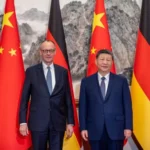
European Trade Commissioner Maroš Šefčovič said the agreement would reduce vehicle imports by several million units over four years. China’s Commerce Ministry, however, said the arrangement would allow exports to continue growing while guaranteeing Chinese manufacturers a quota no smaller than that granted to any other source of imports.
The unresolved details have left manufacturers and investors uncertain about the agreement’s long-term implications, particularly the proposed import limits, pricing requirements and possible exemptions.
Industry analysts believe the deal could ease immediate tariff concerns without eliminating the competitive pressure Chinese automakers are placing on European manufacturers.
Jefferies described the emerging situation as “tariff risk off, quota risk on,” suggesting that the immediate threat of additional tariffs may have diminished, while the prospect of restrictions on import volumes has become more significant.
According to report, Investors largely interpreted the agreement as a sign of easing trade tensions between China and the EU. BYD shares fell 1.8 per cent, while Chery and SAIC recorded gains of 1.4 per cent and 0.5 per cent, respectively, according to the report.
Citi analysts said the market reaction reflected relief over the possibility of avoiding additional tariffs, although the eventual impact would depend on technical negotiations over volume caps, price floors and exemptions.
The rapid expansion of Chinese hybrid sales has increasingly challenged established European manufacturers, particularly Volkswagen, which has long maintained a strong position in the region’s plug-in hybrid market.
Li Yanwei, an analyst at the China Automobile Dealers Association, said the growth of Chinese brands was putting increasing pressure on European competitors.
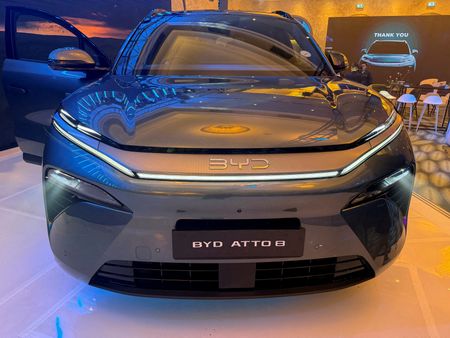
BYD, China’s largest hybrid vehicle exporter to Europe, sold more plug-in hybrids than fully electric vehicles during the first eight months of 2026, with its Seal U sport utility vehicle emerging as its best-selling model, according to data compiled by Li.
Together with Chery, SAIC and Geely, BYD has narrowed the competitive gap with Volkswagen, which still held a 31.8 per cent share of the EU plug-in hybrid market.
The growing presence of Chinese brands has intensified concerns about the future competitiveness of Europe’s automotive industry, particularly Germany’s manufacturers, which face pressure from foreign rivals offering competitively priced vehicles and increasingly sophisticated technology.
Renault Chief Executive Officer François Provost described the surge in Chinese hybrid imports as unsustainable for Europe but said the agreement was preferable to a trade war. He stressed the importance of managing trade relations in a way that avoids further escalation.
Felipe Muñoz of Car Industry Analysis said the restrictions would make market access more difficult for Chinese manufacturers but were unlikely to halt their expansion.
He argued that European policymakers would eventually have to decide how far they were prepared to go in protecting the continent’s automotive industry against growing Chinese competition.
Chinese manufacturers, however, appear increasingly prepared to respond by establishing production facilities within Europe rather than relying exclusively on exports.
Speaking at the Paris auto show on Monday, Changan President Zhao Fei said he was not particularly concerned about the agreement, describing it as a potential precursor to local-content requirements that could be addressed by manufacturing vehicles within the region.
He said the arrangement could create opportunities for Chinese companies seeking to deepen their European presence, adding that Changan planned to begin producing its first vehicles in the region early next year.
Bill Russo, founder of Shanghai-based consultancy Automobility, said the agreement would strengthen incentives for Chinese automakers to manufacture vehicles closer to European consumers.
He explained that restrictions on imported vehicles could make local production more attractive, although establishing factories requires substantial capital investment that could prove difficult for smaller manufacturers.
Analysts also warned that some companies might accelerate shipments before the new quota arrangements take effect, potentially increasing imports in the short term even as longer-term restrictions are negotiated.
Michael Dunne, a consultant who follows China’s automotive industry, questioned whether Beijing would fully honour the agreement or seek alternative arrangements, including temporary tariff exemptions.
The outcome could reshape competition across Europe’s automotive market, with Chinese manufacturers potentially concentrating on higher-priced models while expanding local production to overcome restrictions on imports.
For European manufacturers, the agreement offers some prospect of relief from the rapid increase in Chinese vehicle imports, but it does not resolve the broader challenge posed by China’s expanding industrial capacity and competitive automotive technology.,