The World Bank has identified more than 15,000 small towns across sub-Saharan Africa as potential centres of economic growth and job creation, warning that inadequate infrastructure, weak local government finances and poor connections to markets are limiting their ability to generate employment.
In a report titled Sub-Saharan Africa’s Urban Awakening, published on October 29, 2026, the institution argued that these towns could play a greater role in the continent’s economic transformation if governments directed investment towards improving transport links, expanding infrastructure and supporting local businesses.
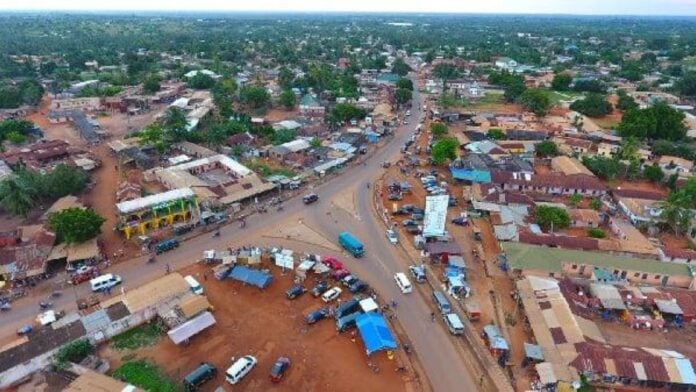
While urban development policies have traditionally focused on major cities such as Lagos and Kinshasa, thousands of smaller settlements situated between rural communities and major urban centres remain largely overlooked. Many have markets, shops, workshops and government offices but lack the infrastructure and investment needed to expand their economic activities.
The World Bank believes these settlements represent an underutilised economic resource that could help African countries address growing employment pressures while strengthening connections between rural producers and urban markets.
Rising Population Intensifies Jobs Challenge
The report highlights the scale of the challenge facing sub-Saharan Africa as its urban population continues to expand.
The region had approximately 913 million urban residents in 2025, a figure projected to rise to 1.7 billion by 2050, representing an increase of 748 million people.
Meanwhile, about 15 million young people enter the labour market across the region every year, intensifying the need for governments to create productive employment opportunities.
Beyond providing housing, roads and other essential infrastructure, African countries must generate sufficient economic activity to accommodate the growing workforce.
However, the World Bank observed that urban economic performance remains weak in many parts of the region. Using nighttime light intensity as an indicator of economic activity, it found that African cities generate, on average, nearly 50 per cent less activity than the world’s best-performing cities of comparable size.
This gap, the institution suggested, highlights the need for a more effective approach to urban development and employment generation.
Small Towns Could Bridge Rural-Urban Divide
According to the report, small towns could help close the gap by connecting agricultural communities to wider markets and providing essential services closer to where production takes place.
Rather than transporting agricultural produce over long distances to major cities, rural communities could rely on nearby towns for storage, processing, distribution and marketing.
Such activities could stimulate investment in agro-processing facilities, cold-storage warehouses, transport services, repair workshops and other small businesses.
The resulting economic activity could create jobs for young people while providing farmers with better access to markets and reducing some of the costs associated with moving goods over long distances.
Towns located along major transport and trade corridors could also attract logistics companies and businesses providing services for regional commerce.
However, the World Bank cautioned that opportunities differ from one location to another, with geography, existing infrastructure and access to markets playing important roles in determining which towns are best positioned for growth.
Ethiopia’s Dire Dawa Offers Lessons
The Ethiopian city of Dire Dawa illustrates how strategic location and infrastructure can support economic development.
Although its estimated population of 1.3 million places it outside the category of small towns, the World Bank highlighted it in an analysis published in November 2025 as an example of the opportunities associated with transport corridors.
Located along the Addis Ababa-Djibouti corridor, through which most of Ethiopia’s foreign trade passes, Dire Dawa has a free trade zone, an inland dry port and a major industrial park.
However, the World Bank noted that modern, highly automated factories tend to employ relatively few workers directly. A substantial share of employment opportunities therefore emerges from businesses operating around them, including subcontractors, maintenance providers and logistics companies.
For smaller businesses to benefit from industrial expansion, the city needs trained technicians, improved access to credit for small and medium-sized enterprises, serviced industrial land, reliable electricity and affordable housing for workers.
The experience illustrates why establishing industrial facilities alone may not be sufficient to deliver widespread employment benefits without supporting businesses and essential services.
Investment Concentration Leaves Small Towns Behind
The World Bank attributed the neglect of smaller towns partly to the concentration of public investment, government institutions and corporate headquarters in major cities.
Large urban centres also tend to have greater international visibility, making them better positioned to attract financing and private investment.
By contrast, many smaller municipalities have limited revenue-generating capacity and inadequate urban-planning systems. These constraints make it difficult for them to maintain roads, provide essential services and reserve land for future industrial and commercial activities.
To address the imbalance, the institution recommended a selective investment strategy that prioritises infrastructure and urban planning in towns with strong economic potential, particularly those situated along major transport corridors.
It also called for sustained investment in education and healthcare across all communities to ensure that residents of less-developed areas can access opportunities in more dynamic economic centres.
Strengthening local government finances is another priority. The report identified the modernisation of property taxation through affordable digital tools as one way municipalities could improve revenue collection and finance essential infrastructure.
The World Bank estimated that nearly half of the urban space sub-Saharan Africa will require by 2050 has yet to be built, creating an opportunity for governments to influence how the region’s future cities and towns develop.