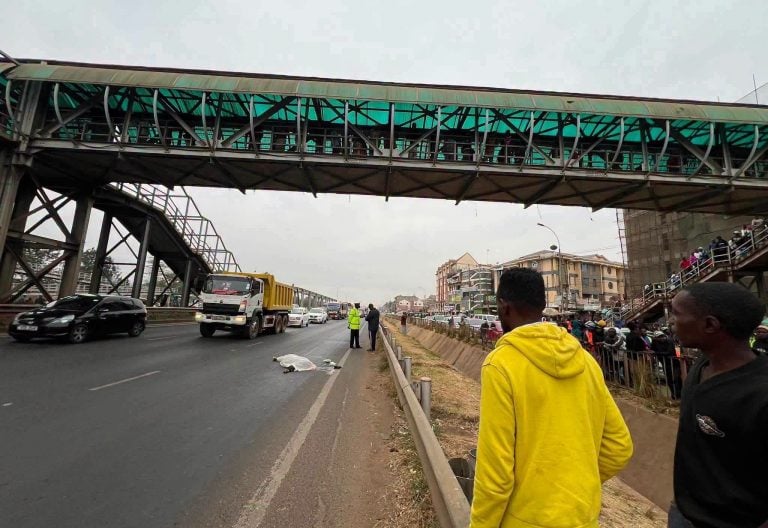
The Motorist Association of Kenya (MAK) has opposed plans to construct an elevated expressway over the Thika Superhighway, arguing that the project would duplicate existing road infrastructure, worsen traffic bottlenecks and disrupt businesses along one of Nairobi’s busiest transport corridors.
In a statement issued on Monday, November 2, 2026, the association questioned the justification for adding another major road structure to a highway it considers adequately developed, urging the government to prioritise mass transit, improved traffic management and alternative routes instead.
According to MAK, Thika Road already has several features associated with expressways, including restricted access, pedestrian footbridges, multiple traffic lanes and service roads. It noted that some sections between Pangani, Wangari Maathai Road and Thika have up to 12 lanes.
The association argued that constructing an elevated expressway above the existing highway would amount to unnecessary duplication of infrastructure, potentially committing billions of shillings to a project whose long-term impact on congestion remains uncertain.
MAK also warned that the proposed development could have significant environmental and economic consequences for communities and businesses operating along the corridor.
Drawing comparisons with elevated road sections along Mombasa Road and Uhuru Highway, the association said the project could reduce natural light beneath the structure, increase noise and pollution, and make surrounding commercial areas less attractive to customers.
It further cautioned that the construction phase could disrupt traffic and economic activities, as the installation of supporting pillars and other structures would likely affect existing lanes and access to businesses.
Beyond the immediate construction challenges, MAK questioned whether increasing the highway’s capacity would provide a sustainable solution to Nairobi’s persistent traffic congestion.
The association maintained that additional road capacity could simply direct more vehicles towards already congested sections of the city, leaving commuters trapped in bottlenecks despite the availability of an elevated route.
Instead, MAK called for greater investment in public transportation, proposing improved commuter rail services along the existing railway corridor and the development of a high-capacity light rail system within the railway reserve.
It also recommended dedicated Bus Rapid Transit (BRT) corridors, bicycle lanes, green belts and safer pedestrian routes as part of a broader strategy to reduce dependence on private vehicles.
The association identified Pangani Junction, Khoja Roundabout and several exit points along the Thika Road corridor as areas requiring urgent traffic-management interventions.
It described Pangani Junction as a major contributor to morning and evening traffic congestion, recommending improved traffic control and redesigned interchanges, including cloverleaf configurations where appropriate.
MAK also advocated stricter lane discipline and more effective management of vehicle movements to improve traffic flow without necessarily expanding the existing highway.
For a more comprehensive and lasting solution, the association proposed developing alternative road connections to distribute traffic across the wider region rather than concentrating additional capacity along Thika Road.
Among its recommendations were bypass links connecting Kilimambogo, Tala and Kantafu to Thika Road and Kajiado, as well as improvements to the Mitaboni–Konza corridor.
The association argued that such investments could provide alternative routes for motorists, ease pressure on the existing highway and support economic activity across surrounding communities.
MAK added further that prioritising an elevated expressway over mass transit could disadvantage the wider travelling public, particularly commuters who depend on affordable and accessible transportation.
It urged the government to reconsider the proposal and redirect public resources towards strengthening existing infrastructure, eliminating traffic bottlenecks, expanding regional road connections and developing sustainable public transport systelms.