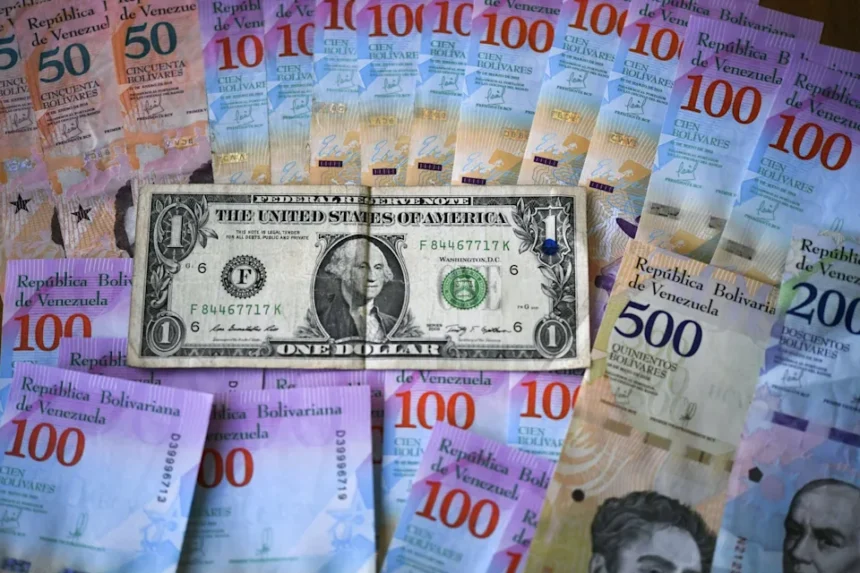
Venezuela could be on the verge of one of the world’s biggest currency transformations in decades, with economist Steve Hanke advocating the complete replacement of the struggling bolivar with the U.S. dollar.
Hanke, a professor of applied economics at Johns Hopkins University and widely known as the “Money Doctor,” says full dollarisation could help tackle Venezuela’s severe inflation, which he puts at around 400 per cent.
Speaking with newsmen, Hanke said the plan would involve abandoning the bolivar and effectively ending the country’s central bank’s role in issuing domestic currency. The objective, he argued, is to prevent the government from financing its spending by printing money, a practice that can fuel inflation.
“Taming inflation is the key to restoring stability in Venezuela,” Hanke said, arguing that stable prices are essential for economic recovery.
Hanke has previously advised countries on currency reforms. In 1999, he helped Montenegro replace the Yugoslav dinar with the Deutsche Mark, while he played a key advisory role in Ecuador’s decision to adopt the U.S. dollar in 2000.
He also advised Zimbabwe in 2009 as the country moved towards dollarisation following a period of devastating hyperinflation. However, Zimbabwe later abandoned the U.S. dollar as its main currency, with inflationary pressures subsequently returning.
Hanke is making a second attempt to promote major currency reform in Venezuela. His earlier proposal for a currency board in the 1990s failed to secure sufficient support in the National Assembly.
This time, however, he estimates that there is a 50 to 80 per cent chance of dollarisation being approved, describing the potential move as one of the largest shifts from a domestic currency to an alternative currency since the introduction of the euro in 1999.
Dollarisation is already widespread in Venezuela, where the bolivar’s prolonged decline has encouraged businesses and consumers to rely heavily on the U.S. currency. The bolivar has lost about 78 per cent of its value against the dollar over the past year, according to the report.
Hanke described the widespread use of dollars outside government salaries, pensions and aid as “spontaneous dollarisation” and said it could make an official switch easier to implement.
However, abandoning the bolivar would come with significant challenges. Venezuela would lose its own central bank as a lender of last resort and surrender control over monetary policy to the U.S. Federal Reserve, despite having no influence over its decisions.
The proposal also faces the experience of Argentina, where President Javier Milei campaigned on dollarisation before stepping back from a full currency switch after taking office. His government has instead focused on cutting subsidies and reducing the budget deficit, helping to bring inflation down sharply, although it remains elevated.
For Venezuela, the debate now centres on whether formally adopting the dollar could provide the monetary stability needed to rebuild an economy battered by years of inflation, currency depreciation and financial instability.