Liberia has begun receiving migrants deported from the United States under an agreement with the Donald Trump administration, raising questions about the country’s capacity to accommodate them and the historical irony of the arrangement.
The first group of 20 deportees arrived in Monrovia from Louisiana, marking the beginning of a deal that could see as many as 1,200 people transferred to Liberia.
Liberian officials said the arrivals were from African and other Western Hemisphere countries. The government has described the arrangement as humanitarian, saying the deportees will be treated as guests who can seek asylum or leave the country.
The development has sparked mixed reactions in Liberia, a nation of fewer than six million people still rebuilding from years of conflict and facing significant economic and social challenges.
For some Liberians, the agreement carries particular historical significance because the country itself was established partly through migration from the United States.
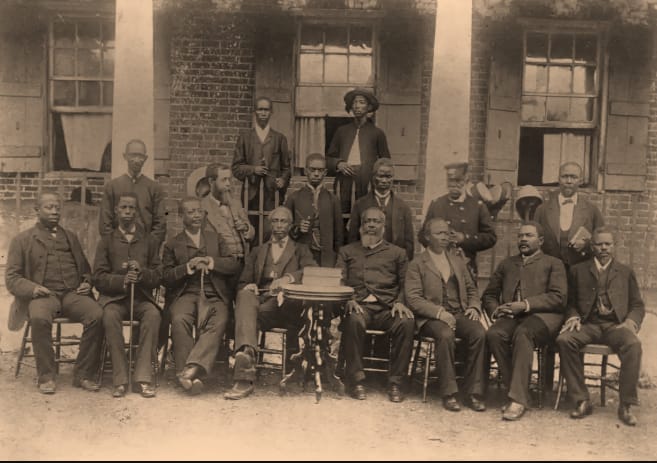
In the 19th century, free and formerly enslaved Black Americans travelled to West Africa in search of freedom and opportunities to build new lives.
The American Colonization Society played a major role in facilitating the migration, with settlements established along the West African coast that eventually developed into the Republic of Liberia.
According to the US State Department, about 16,000 Black Americans migrated to Liberia during the 19th century.
Liberia declared independence in 1847, and the influence of its American origins remains evident in the country’s institutions, culture and national symbols.
Its capital, Monrovia, was named after former US President James Monroe, while the Liberian flag bears a strong resemblance to the American flag.
The latest arrivals, however, are coming under very different circumstances. Unlike the Black Americans who travelled to Liberia seeking a new home, the deportees are being transferred after the United States decided they should leave its territory.
That difference has prompted concerns that Liberia could become a destination where the United States sends migrants it no longer wants to accommodate.
Former Liberian lawmaker Conmany Wesseh questioned whether the country has the infrastructure and resources needed to absorb a significant number of additional people.
Liberia continues to face shortages in healthcare, education, housing and other essential services, while poverty and youth unemployment remain major concerns.
Wesseh said the government would need to explain how the country would accommodate the new arrivals without placing additional pressure on already limited public services.
The first transfer has also encountered difficulties. Five migrants reportedly refused to leave the aircraft after it landed in Monrovia and were subsequently flown to Equatorial Guinea, where other migrants previously transferred from the United States are being held.
The United States has defended its immigration policy, with the State Department describing the implementation of the Trump administration’s immigration agenda as a priority.
Liberian authorities, meanwhile, appear to view the arrangement as an opportunity for humanitarian cooperation and potentially greater support from Washington.
The debate has nevertheless exposed a complicated relationship between Liberia and the United States—one rooted in a history of migration, freedom and the creation of a new African republic.
Some Liberians believe the newcomers should not be defined solely by the circumstances that brought them to the country, but should instead be given an opportunity to rebuild their lives.
Francis Dennis, a former president of the Liberia Chamber of Commerce whose ancestors migrated from the United States to Liberia, believes the arrivals could eventually turn their difficult circumstances into an opportunity.
For Liberia, the agreement represents both a humanitarian challenge and a test of its capacity to absorb new arrivals, while reviving an extraordinary historical question: a country once created as a destination for Black Americans seeking freedom is now receiving migrants whom the United States wants removed.