US President Donald Trump’s announcement of a $15 billion steel plant to be built by India’s Essar Group has drawn fresh attention to the conglomerate’s longstanding financial and business ties to Russia.
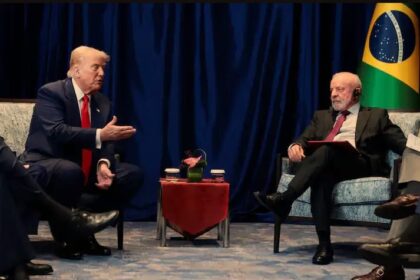
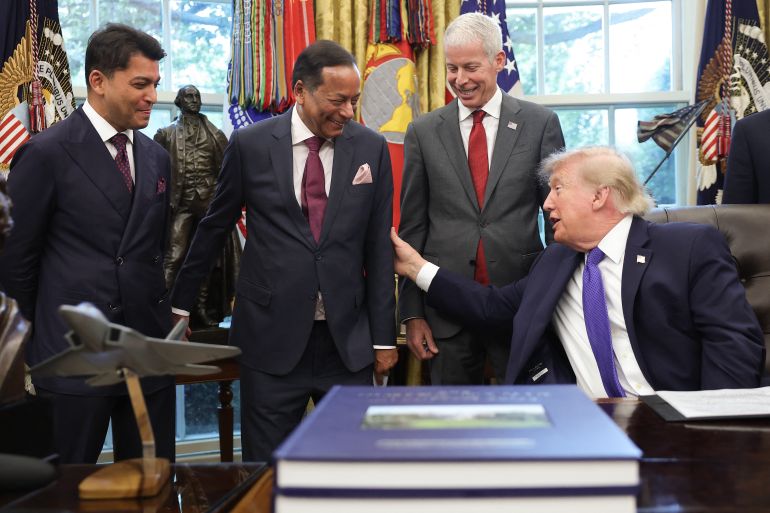
Trump unveiled the project at the White House on Monday alongside Ravi Ruia, co-founder of Essar Group, and Rewant Ruia, chairman of Mesabi Metallics, the Essar-owned company behind the proposed steel complex.
The project, planned for eastern Iowa, is expected to become one of the largest steel plants in the United States. It is projected to create at least 1,750 permanent jobs and support up to 6,000 construction jobs.
The first phase is expected to produce 7.5 million tonnes of steel annually, with capacity eventually rising to 10 million tonnes. Production is targeted to begin in 2030.
The White House estimates that the first phase could generate about $95 billion in economic impact during construction and its first decade of operation.
Trump and his administration presented the investment as evidence that his tariff policies are encouraging companies to manufacture in the United States rather than pay higher duties on imported steel.
But the announcement has also highlighted Essar’s complicated relationship with Russian investors, particularly its former oil business, which was sold to a Russian-led consortium in 2016.
Essar Oil, which operated the Vadinar refinery in Gujarat, India, was sold for about $12.9 billion to a consortium led by Russian state-controlled oil giant Rosneft and United Capital Partners. The company was subsequently renamed Nayara Energy.
Rosneft owns a 49 per cent stake in Nayara, while United Capital Partners holds another 49 per cent. The refinery continues to operate under the Essar brand in India under a 99-year branding agreement.
Nayara has since come under European Union sanctions because of its continued links to Russian crude and petroleum exports. The refinery has also faced increasing scrutiny from Western companies over its business relationship with Russia.
Essar’s relationship with Russian finance also extends beyond the refinery transaction. Around the time of the 2016 sale, Russian bank VTB provided Essar with a reported $3.9 billion loan as part of a debt restructuring arrangement.
VTB was later hit by US and European sanctions following Russia’s full-scale invasion of Ukraine in 2022.
Investigations published in 2026 by The Guardian and SourceMaterial alleged that Essar moved the VTB loan to Mauritius after sanctions were imposed, raising questions about how the group managed its Russian-linked financial obligations.
Essar has not, however, been placed under US or EU sanctions, and there is no evidence that the proposed Iowa steel project violates US sanctions against Russia.
The US State Department had also said in 2016 that the sale of Essar Oil to the Russian-led consortium did not violate US or European sanctions at the time.
The Iowa project therefore does not amount, on the available evidence, to a sanctions breach. Rather, it highlights the continuing complexity of separating Western investment from companies with historical or ongoing links to Russian capital.
The timing of Trump’s announcement has added another layer to the issue. Washington has intensified pressure on countries that continue to purchase Russian oil, while India has remained one of Moscow’s biggest crude customers since Russia’s invasion of Ukraine.
Trump has previously imposed additional tariffs on Indian imports over New Delhi’s purchases of Russian crude, although those measures were later removed after India committed to reducing its dependence on Russian oil.
Against that backdrop, the decision by an Indian conglomerate with significant Russian business history to invest billions of dollars in the US steel industry illustrates the complicated economic relationships created by global trade and sanctions.
For Trump, the project reinforces his argument that tariffs can drive industrial investment into the United States. For Essar, it marks another major step in expanding its American presence even as parts of its historical business empire remain closely associated with Russian capital.