Four African nations have joined a World Bank initiative targeting $19bn in mineral financing and private capital mobilisation by 2030, raising fresh hopes of industrial expansion but renewing questions about whether the continent can finally turn its vast mineral wealth into domestic prosperity.
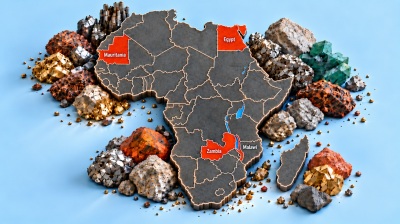
Zambia, Egypt, Malawi and Mauritania are among the first eight countries selected for a World Bank Group initiative designed to expand investment in metals and minerals, strengthen local processing and attract private capital. Announced by World Bank President Ajay Banga on October 16 at the International Monetary Fund and World Bank annual meetings in Bangkok, the programme seeks to increase financing and capital mobilisation for the sector more than fivefold over the next five years.
The target represents a significant increase from the $3.6bn recorded during fiscal 2021–2025 to $19bn for fiscal 2026–2030. However, the figure combines World Bank Group financing with private capital mobilisation and should not be interpreted as $19bn in new loans or guaranteed funding for the participating countries. Although 20 potential partner countries have been identified, only eight were included in the initial partnerships, with no specific share of the overall target allocated to the four African participants.
The initiative forms part of the World Bank’s broader Metals and Minerals strategy, which seeks to help resource-rich developing economies move beyond extracting raw materials towards refining, processing and manufacturing. For Africa, where mineral deposits underpin global industries ranging from electric vehicles to renewable energy and advanced manufacturing, the strategy presents an opportunity to address a longstanding weakness in the continent’s economic structure.
Africa possesses enormous mineral resources but continues to capture only a limited share of the value generated by transforming them into finished products. According to International Energy Agency estimates cited in the report, the continent produces around 70 per cent of the world’s cobalt, three-quarters of its manganese and nearly one-fifth of its copper, yet captures less than one per cent of the value generated by manufacturing clean-energy technologies and components.
This imbalance exposes a fundamental contradiction in Africa’s mineral economy. The continent supplies essential raw materials for industries driving the global energy transition, but much of the higher-value processing and manufacturing takes place elsewhere. Consequently, the benefits of its resources are not fully reflected in domestic industrial capacity, skilled employment, technological development and government revenues.
The World Bank initiative seeks to address some of these weaknesses by combining public financing, private investment, policy advice and guarantees. Its International Finance Corporation will invest in and mobilise commercial capital, while the Multilateral Investment Guarantee Agency will provide guarantees designed to reduce investment risks. The World Bank itself will support policy reforms and public financing, including measures to improve the infrastructure and regulatory conditions required for commercially viable mineral industries.
Zambia, one of Africa’s leading copper producers, is seeking to expand output and domestic processing through improved geological information, licensing reforms, electricity supply and transport infrastructure. The country has set a target of producing three million tonnes of copper annually by 2031, alongside efforts to develop supporting industries.
Achieving that ambition, however, will require more than attracting mining companies. Electricity shortages, inadequate transport links and limited processing capacity remain significant constraints. Zambia’s earlier suspension of a 10 per cent duty on copper-concentrate exports, subsequently extended to September 2026, highlighted the difficulties miners face when smelter maintenance and infrastructure limitations disrupt the processing chain.
The experience underscores the importance of aligning production targets with domestic industrial capacity. Expanding copper extraction without sufficient smelting and refining facilities risks increasing the volume of raw materials exported without proportionately expanding the economic value retained within the country.
Egypt is pursuing a different but complementary strategy. It aims to increase mining’s contribution to gross domestic product to six per cent by 2030 and raise metals and minerals-related exports to $9.8bn by 2040. Its programme includes regulatory reforms, better geological information and the development of mineral-processing hubs, with support from the World Bank Group and the European Bank for Reconstruction and Development.
Malawi’s priorities include strengthening mining governance, improving transport and energy infrastructure, supporting local suppliers and increasing transparency in mineral licensing and revenues. These measures are particularly important in ensuring that mineral development generates broader economic benefits rather than concentrating gains among a narrow group of investors and commercial interests.
Meanwhile, Mauritania intends to combine mineral development with renewable energy investment to support lower-emission processing and retain more economic value domestically. Its approach reflects a growing recognition that reliable and affordable energy will be decisive in determining whether African countries can compete in mineral processing, a sector that can require substantial and consistent electricity supplies.
Despite their different resource bases and industrial capacities, the four countries share a common challenge: converting mineral extraction into a wider industrial ecosystem. This requires investment not only in mines but also in electricity generation, railways, roads, ports, technical education, research and manufacturing facilities.
The World Bank programme also comes amid intensifying international competition for critical minerals. Copper, cobalt, manganese and other resources are increasingly important to electric vehicles, battery production, renewable energy equipment and advanced manufacturing. Governments seeking to secure strategic supply chains are therefore expanding their engagement with mineral-producing countries, creating opportunities for African economies to attract new investment.
The United States has been particularly active in promoting diversification of critical-mineral supply chains. Its International Development Finance Corporation announced on October 9 plans to take more equity stakes in African critical-minerals projects and has committed more than $3bn to critical minerals and related investments across the continent.
US Treasury Secretary Scott Bessent also called for World Bank involvement in deep-sea mining during the annual meetings. Banga did not endorse such projects, while the bank’s minerals strategy maintains a precautionary approach consistent with its environmental and social policies. The distinction highlights the need to balance the strategic importance of mineral supplies with environmental protection and the long-term interests of resource-producing countries.
Separately, six multilateral development banks, including the World Bank and the African Development Bank, have agreed to coordinate financing, guarantees, infrastructure investment and environmental standards for critical-mineral supply chains. This cooperation could create additional opportunities for African countries to secure funding for electricity networks, transport corridors and processing facilities, although it does not guarantee specific allocations to individual countries.
The World Bank’s initiative also follows a separate United Nations programme launched in September to assist Guinea, Madagascar, Nigeria, Zambia and Zimbabwe in developing higher-value mineral industries. Unlike the World Bank’s financing and capital-mobilisation target, the UN initiative focuses on policy and regulatory assistance without an announced funding allocation. Together, the programmes demonstrate growing international recognition that mineral-rich developing countries must play a greater role in the value chains built around their resources.
Nevertheless, it’s not about how much money international institutions can mobilise, but how much lasting economic value African countries can retain. Financing announcements and production targets may attract headlines, but their true significance will be measured by the number of processing plants established, the proportion of minerals refined locally, the jobs created, the skills transferred and the revenues available for public investment.
African governments must therefore approach these partnerships with clear industrial strategies and firm expectations. Contracts should encourage local processing, technology transfer, workforce development and participation by domestic businesses, while providing sufficient transparency to ensure that public resources and mineral revenues serve the wider population. Governments must also resist arrangements that leave them bearing infrastructure costs while most of the long-term commercial benefits accrue elsewhere.
The continent’s experience with extractive industries offers a warning against equating higher production with economic transformation. A country can export record quantities of copper, cobalt or manganese and still struggle with unemployment, unreliable electricity and weak manufacturing if it fails to develop industries around those resources. Mineral wealth alone does not guarantee prosperity; the institutions, policies and productive capacity built around it determine how widely that wealth is shared.
Ultimately, the World Bank’s $19bn target offers Africa an opportunity, not a guarantee. Zambia, Egypt, Malawi and Mauritania must demonstrate that the new partnerships can move beyond investment announcements to measurable industrial progress. For a continent that supplies critical materials to the global economy, the objective should be clear: Africa must no longer remain merely the source of the world’s minerals while others dominate the processing, manufacturing and profits. The real measure of success will be whether its natural wealth begins to build industries, create decent jobs and deliver lasting prosperity at home.