US Vice President JD Vance has said Iran must make a “meaningful” reduction in its nuclear enrichment capacity as a condition for ending the seven-month war between Tehran and Washington.
Vance, who has emerged as a key figure in US efforts to negotiate an end to the conflict, said Washington would not accept verbal assurances from Iran but would require concrete action on its nuclear programme.
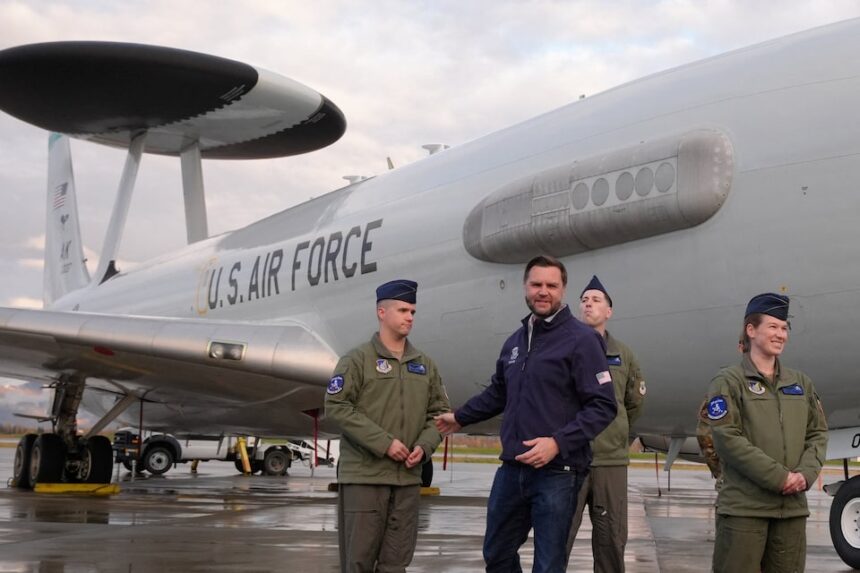
“If you don’t want a nuclear weapon, then why do you need 60% enriched fuel?” Vance told Reuters in an interview in Alaska. He said Iran would have to demonstrate its commitment to not developing a nuclear weapon by taking significant steps to reduce its enrichment capacity.
The comments came as the United States and Iran continued to exchange proposals aimed at ending the war and reopening the Strait of Hormuz, a critical global energy shipping route.
US President Donald Trump rejected Tehran’s latest proposal and warned that military operations could intensify after next month’s midterm elections.
“We’re not going to trade words for actions,” Vance said, stressing that any agreement would have to include tangible Iranian nuclear concessions.
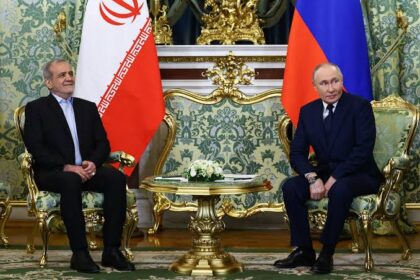
However, Vance acknowledged that Washington remained uncertain about how decisions are made within Iran’s political and military structure. He said the US was in contact with President Masoud Pezeshkian and Foreign Minister Abbas Araqchi but questioned how much authority they wield following the killing of Supreme Leader Ayatollah Ali Khamenei in joint US-Israeli strikes at the beginning of the war.
“One of the things we picked up on is it’s not totally clear how their country makes decisions,” Vance said.
On Tuesday, Trump also said his “biggest problem” was that no one knew who was running Iran. Tehran rejected the claim, with Foreign Ministry spokesman Esmaeil Baghaei accusing US officials of creating confusion through contradictory statements and mixed messaging.
Vance said he had also spoken with military commanders to assess battlefield conditions. He dismissed concerns about critical US munitions shortages, while claiming that although Iranian forces could periodically target commercial vessels in the Strait of Hormuz, they were largely unable to stop energy exports through the waterway.
The war, which Vance said costs the United States about $3 billion monthly, has also become a political challenge for Trump and Republicans ahead of the November midterm elections, with higher energy prices increasing pressure on the administration.
Vance has defended Trump’s handling of the conflict while campaigning for Republican candidates, including Senator Dan Sullivan of Alaska, whose re-election contest has become competitive.
Despite growing speculation that Vance could seek the Republican presidential nomination in 2028, he told Reuters that he had not made a decision.
“I’m inherently a procrastinator,” Vance said. “I really haven’t thought about it much.”