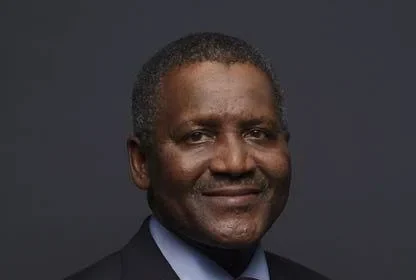
The Central Bank of Nigeria (CBN) has intensified efforts to strengthen Nigeria’s financial ties with Asia, as Governor Olayemi Cardoso held high-level engagements in Singapore and signed a Memorandum of Understanding (MoU) with the Global Finance & Technology Network (GFTN) to advance financial innovation and investment opportunities.
The engagements, which also involved discussions with Singapore’s Monetary Authority of Singapore (MAS) and the Nigeria–Asia Financial Connectivity Dialogue, reflect the apex bank’s drive to translate domestic financial-sector reforms into stronger international partnerships, deeper capital markets and improved channels for trade and investment.
The CBN said the discussions were part of its broader strategy to strengthen Nigeria’s position in international financial markets through institutional cooperation, market development and innovation. The Nigeria–Asia Financial Connectivity Dialogue was convened by the CBN in collaboration with J.P. Morgan, Nigerian Exchange Group (NGX) and FMDQ Group.
During discussions with the Monetary Authority of Singapore, the Nigerian delegation exchanged views on financial-sector development, regulatory frameworks, market connectivity and innovation, identifying potential areas for continued engagement and cooperation between both institutions.
The CBN and GFTN also signed an MoU establishing a framework for collaboration on financial innovation. The agreement is expected to facilitate connections between relevant institutions and innovation ecosystems while creating opportunities for practical cooperation in the financial-services industry.
Speaking at the Nigeria–Asia Financial Connectivity Dialogue, Cardoso said Nigeria was seeking to build deeper, more liquid and internationally connected financial markets, noting that recent reforms had laid the groundwork for a new phase of market development.
He explained that foreign-exchange reforms were designed to eliminate market distortions, improve transparency and restore confidence in the rules governing participation in Nigeria’s currency market.
“The real test of reform is not whether you can attract capital once; it is whether you create the confidence for capital to stay, return and grow,” Cardoso said, stressing the importance of creating an investment environment capable of attracting sustained capital inflows.
The CBN governor identified credible monetary policy, stronger governance, improved market operations and predictable regulatory frameworks as essential conditions for attracting long-term investment and strengthening investor confidence in the Nigerian economy.
He added that economic stabilisation was not an end in itself but a foundation for broader participation by long-term institutional investors, stronger financial-market infrastructure and more effective connections with international markets.
Cardoso further emphasised that Nigeria’s engagement with Asia should extend beyond attracting investment to establishing lasting relationships among financial institutions, markets, businesses and people across the regions.
He identified opportunities for stronger partnerships between Nigerian and Asian banks, more efficient payment and settlement systems, and increased participation by Nigerians in financial and commercial activities across Asia.
The CBN said the engagements underscored its commitment to expanding Nigeria’s international financial relationships and creating practical avenues through which domestic reforms could support investment, trade and financial innovation.
Through the partnerships, the apex bank hopes to strengthen cross-border financial connectivity, improve access to international markets and position Nigeria to benefit more effectively from investment and commercial opportunities across Asia.