There is dignity in keeping promises, but there is nothing dignifying about a government whose assurances appear increasingly disconnected from the realities confronting its citizens.
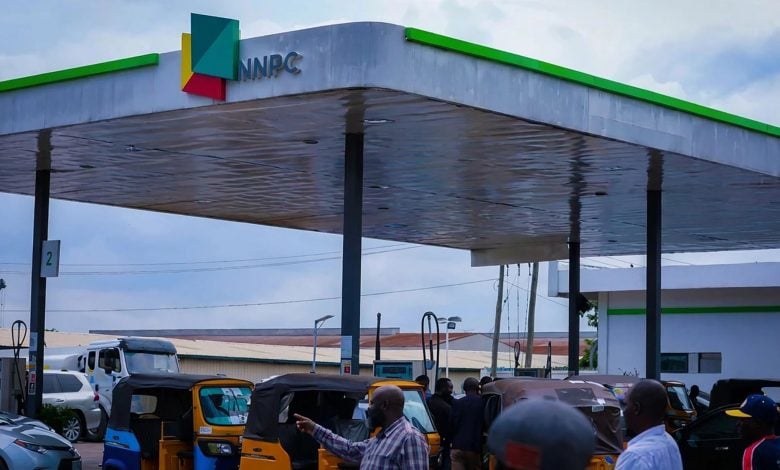
It is so alarming that the Nigerian National Petroleum Company Limited (NNPCL) has raised its petrol pump price from N1,370 to N1,405 per litre, according to checks by DAILY POST, barely days after the state-owned oil company reportedly reverted to the lower price. This latest adjustment, which adds N35 to every litre, raises a fundamental question about the credibility of the Federal Government’s promises on fuel affordability: who exactly is fooling Nigerians?
The timing of this increase makes the situation even more troubling. Nigerians were already grappling with the controversy surrounding the announced fuel discount when the latest price adjustment emerged. Instead of providing clarity, the NNPCL’s action has deepened public confusion and reinforced the perception that the government is either unwilling or unable to provide consistent and transparent information about the cost of a commodity that affects virtually every aspect of national life.
The controversy is particularly disturbing because the Federal Government has been communicating a different message.
On Thursday, Finance Minister Taiwo Oyedele announced a proposed fixed petrol gantry price of N1,375 per litre ahead of the January 16, 2027, presidential election. Yet, against this backdrop, the NNPCL’s pump price reportedly climbed to N1,405 per litre. Nigerians are therefore entitled to ask a simple but unavoidable question: what exactly is the government promising, and what is its own petroleum company implementing?
A government cannot reasonably expect citizens to celebrate a proposed discount while the price at the pump moves in the opposite direction. Neither can it expect public confidence to survive when official announcements and the practical experiences of consumers appear to contradict each other. If the proposed price arrangement is intended to provide relief, the government must explain how it will work, when it will take effect, who will benefit and why the NNPCL has increased its retail price amid the ongoing controversy.
The Federal Government must understand that Nigerians are not interested in announcements designed to generate favourable headlines. They want policies that produce measurable improvements in their lives. A discount that cannot be clearly explained, verified or consistently reflected in pump prices is, at best, an incomplete intervention. At worst, it risks becoming another exercise in political messaging that offers hope in public while leaving citizens to bear the same crushing costs in practice.
The consequences of petrol price instability extend far beyond motorists and private vehicle owners. Transportation operators adjust their fares to reflect fuel costs. Traders pass higher logistics expenses to consumers. Manufacturers contend with increased production and distribution costs, while small businesses struggle to remain profitable in an economy where energy is expensive and purchasing power is weak. Every additional naira at the pump can travel through the economy, eventually appearing in the prices of food, essential goods and services.
For millions of Nigerians who depend on daily earnings, the difference between N1,370 and N1,405 per litre is not merely a statistical adjustment. It represents additional money taken from already stretched household budgets. For commercial drivers, it means higher operating expenses. For small business owners who depend on petrol-powered generators, it means another burden on production costs. For families struggling to afford basic necessities, it is another reminder that economic decisions made far above their heads can have devastating consequences at the dinner table.
It is therefore insulting to treat the public’s demand for clarity as though it were an unreasonable expectation. Nigerians are not asking for miracles. They are demanding honesty, consistency and accountability from institutions entrusted with managing a sector that has enormous implications for their welfare. If the NNPCL has legitimate commercial reasons for adjusting its pump price, it should state them plainly. If the proposed discount has specific conditions, those conditions should be made public. And if the government has announced a price arrangement that the NNPCL cannot implement, the administration owes the country an immediate explanation.
I wonder how President Bola Ahmed Tinubu yet have confidence to publicly speak and boast of 3 years achievements that birthed poverty and hunger. I wonder how the minister of finance Taiwo Oyedele yet have courage to speak on behalf of the federal government despite decay governance and failed promises. I wonder how political gladiators keep hailing a leader whose policies only influence poverty.
However, the government must resist the temptation to hide behind the argument that petroleum pricing is now determined by market forces. Even in a deregulated market, transparency remains indispensable, particularly when the government itself announces a discount or proposes a fixed gantry price. Deregulation does not mean deregulation of accountability. It does not give public institutions permission to leave citizens guessing about the relationship between official announcements, wholesale prices and retail charges.
President Bola Tinubu must take responsibility for the credibility of his administration’s economic communication. The NNPCL may operate under commercial considerations, but it remains a state-owned company whose decisions carry enormous public consequences. The government cannot distance itself from the confusion surrounding its own company’s pricing decisions while continuing to make assurances about relief for Nigerians.
Even if it distance itself from NNPCL’s action, it means its authority is limited in its self owned institutions.
Therefore Leadership requires more than making announcements; it requires ensuring that public institutions speak clearly, act consistently and explain themselves when their actions contradict public expectations.
It is high time the Tinubu-led administration desist from raising false hope and recognise the political danger of repeatedly raising expectations without delivering clearly identifiable relief. Public trust is not sustained by promises alone. It is built when citizens can see a direct connection between what their leaders say and what happens in their daily lives. When that connection breaks down, even a potentially beneficial policy becomes vulnerable to suspicion. Nigerians who have endured years of economic hardship have every reason to scrutinise announcements that promise relief but leave basic questions unanswered.
The NNPCL, for its part, must stop treating price adjustments as matters that require no meaningful public explanation. Its position at the centre of Nigeria’s petroleum supply chain makes transparency especially important. A difference between an announced price and the price charged at filling stations demands clarification, not silence. The company should explain the basis for the latest N35 increase, clarify its relationship with the proposed N1,375 gantry price and disclose the actual terms of the disputed discount. Nigerians deserve facts, not speculation.
Above all, the Federal Government must stop behaving as though public frustration can be managed indefinitely through carefully worded announcements. Economic hardship is not an abstract political talking point; it is the daily reality of people choosing between transportation and other necessities, businesses cutting costs to survive and households struggling to maintain even modest living standards. Any policy presented as relief must be judged by whether it genuinely eases these burdens, not by the optimism of the announcement that introduces it.
There is dignity in promises kept, but where is that dignity when the government announces a proposed price arrangement and its own petroleum company increases the price Nigerians pay? Federal Government, where is your dignity? NNPCL, where is your accountability? President Tinubu, where is the consistency between your administration’s promises and the reality confronting the people? Nigerians must not be treated as spectators in a confusing game of announcements, reversals and unexplained price changes. If the discount is genuine, demonstrate it. If the proposed price arrangement is workable, explain it. If the NNPCL’s increase is justified, publish the reasons. Until these questions are answered, the suspicion that Nigerians are being taken for granted will continue to grow. A government that asks its citizens to endure economic hardship owes them honesty, not confusion; accountability, not excuses; and tangible relief, not another promise that leaves them paying more at the pump.