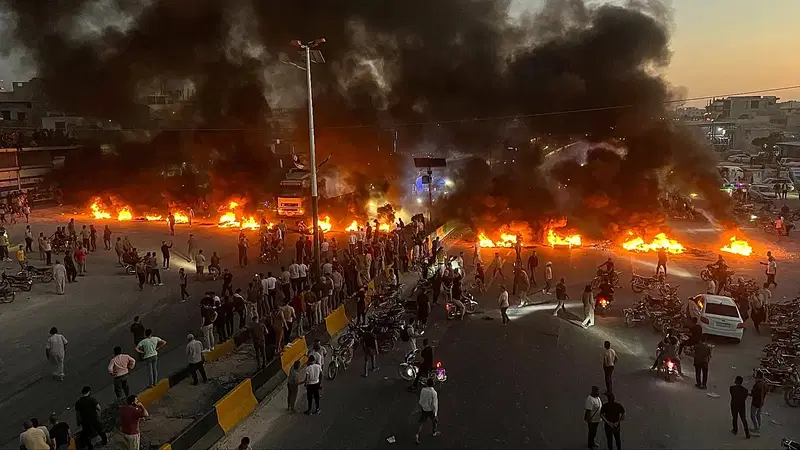
Widespread protests have erupted across Syria following a sharp increase in fuel prices, triggering the country’s most extensive demonstrations since the overthrow of President Bashar al-Assad nearly two years ago.
Demonstrators burned tyres and blocked major roads, including the highway linking the capital, Damascus, with the industrial city of Aleppo, as public anger mounted over rising living costs and worsening economic hardship.
The protests followed the government’s decision on Saturday to increase diesel prices by 40 per cent to 175 Syrian pounds ($1.32) per litre. The authorities also raised household and industrial gas prices by approximately 9 per cent.
The price of 95-octane petrol rose by 28 per cent to 195 pounds per litre, while 90-octane petrol increased by 26 per cent to 185 pounds. The latest adjustments have intensified pressure on Syrians already struggling with a prolonged economic crisis.
The United Nations Development Programme estimates that about 90 per cent of Syrians live below the poverty line, compared with roughly one-third of the population before the civil war began in 2011.
The latest fuel increases have also revived concerns about the government’s management of the country’s resources and economic recovery. One demonstrator expressed frustration over public spending priorities, saying, “Border crossings bring in millions of dollars. We don’t want new roundabouts or malls. We just want to live.”
The Energy Ministry said the price increases were a temporary measure necessitated by higher global procurement costs and Syria’s dependence on imported fuel. Ministry spokesperson Abdulhamid Salat said the prices could be revised depending on market conditions.
Syria has relied heavily on Russian crude, importing approximately 60,000 barrels per day this year. However, supplies have come under pressure following Ukrainian attacks on Russian refineries, which have affected production, while Moscow has also restricted some gasoline and diesel exports.
The country’s fuel shortage has been further aggravated by the three-month closure of the Baniyas refinery, Syria’s largest refinery, which is undergoing major maintenance.
The latest adjustments mean that the price of 95-octane petrol has risen by approximately 86 per cent since February, while diesel prices have more than doubled.
For ordinary Syrians, the impact extends beyond the cost of filling a vehicle. Imad Abu Ras, 44, said rising fuel prices were already creating difficulties for passengers and warned that increased transport costs would drive up the prices of essential goods.
“Now vegetables and everything else will go up with fuel prices. What is the solution? Steal? We can’t steal,” he said.
The protests underscore the growing tension between Syria’s economic recovery efforts and the immediate needs of a population still burdened by poverty, shortages and rising prices. Without meaningful relief, the government’s fuel-price policy risks deepening public frustration and undermining confidence in the country’s post-Assad transition.