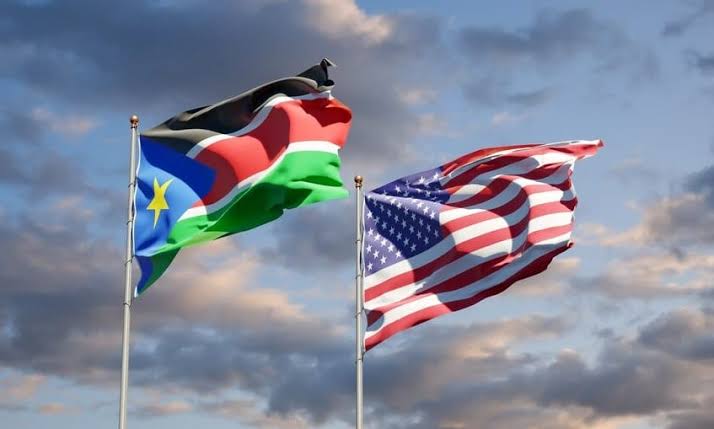
Sudan is bleeding from war, hunger and humanitarian devastation, yet its natural wealth appears to be attracting another battle for economic control.
The proposed US Sudan IMPACT Act raises troubling questions about whether Washington genuinely intends to help rebuild the war-torn African nation or is positioning itself to secure access to its valuable mineral resources. When a country is struggling to keep its population alive, any arrangement involving gold, uranium, crude oil and other strategic resources deserves rigorous scrutiny. Sudan must not be forced to exchange the wealth that could finance its recovery for machinery that foreign powers can price, control and supply on their own terms.
The central concern is not whether Sudan needs agricultural machinery, mining equipment, irrigation systems and technical expertise. It desperately needs these resources to rebuild its shattered economy. The question is whether the proposed exchange would deliver fair value to Sudan or reproduce the familiar pattern in which Africa supplies raw materials while foreign economies capture the profits from processing, manufacturing and technological advancement.
If Washington secures priority access to Sudanese resources in exchange for equipment, who determines the value of the gold and uranium? Who owns the resulting infrastructure? Where will the minerals be processed, how many jobs will Sudanese citizens secure, and what proportion of the profits will remain in the country? Without transparent answers, the promise of development risks becoming another avenue for resource extraction.
The political conditions attached to the proposed framework also demand attention. Requiring progress towards civilian government, peace and stability may appear reasonable, particularly given Sudan’s devastating conflict.
However, making access to essential technology dependent on political certification by a foreign government raises questions about sovereignty and the possibility of external leverage over Sudan’s recovery. Peace should create opportunities for Sudanese people to reclaim their country, not turn their mineral wealth into bargaining chips in international power politics. Any legitimate partnership must prioritise Sudan’s reconstruction and the welfare of its citizens rather than the strategic convenience of foreign economies.
What will it cost Sudan to transform itself, and how long will that transformation take?
Rebuilding a country devastated by war requires far more than machinery and mineral contracts. Sudan needs functioning institutions, secure communities, electricity, roads, hospitals, schools, productive farms, industrial facilities and a financial system capable of supporting investment. It must also restore livelihoods, resettle displaced people and create employment for a population battered by conflict.
These are enormous undertakings that will require sustained investment, competent leadership and years of determined reconstruction. No minerals-for-machinery arrangement, however attractive its presentation, can deliver this transformation overnight.
Unrealistic Approach
The danger is that Sudan could surrender valuable resources today in exchange for equipment that produces limited immediate benefits, while the real economic gains from its minerals emerge elsewhere over decades. If gold and uranium leave the country unprocessed, Sudan could lose the opportunity to develop domestic refineries, technical expertise, manufacturing capacity and higher-paying jobs.
The experience of African mineral exporters offers a painful warning: possessing enormous natural wealth does not guarantee prosperity when the value-added stages of production occur abroad. Zimbabwe’s restrictions on raw lithium exports, alongside wider African efforts to promote domestic processing, demonstrate why resource-owning countries are increasingly demanding more than royalties and promises from foreign investors.
The United States, like every prospective partner, should therefore be judged by the practical benefits its proposal delivers to Sudan, not by the language of cooperation surrounding it. Any agreement must guarantee transparent pricing, fair compensation, meaningful local employment, environmental protection, technology transfer and substantial domestic processing.
Sudan must retain the freedom to negotiate with multiple partners rather than become dependent on a single foreign power. Above all, its people must have a decisive voice in determining how their national resources are used. Given the country’s fragile circumstances, independent oversight and public disclosure would be indispensable safeguards against exploitation.
However, Sudan’s transformation will depend on whether its leaders and international partners treat its natural resources as the foundation of national recovery or as commodities to be secured while the country is too weak to negotiate effectively. Washington may offer machinery, but machinery alone cannot rebuild a nation whose institutions, communities and economy have been devastated by war. Sudan needs a fair reconstruction partnership that converts mineral wealth into industries, jobs, public services and lasting prosperity.
The real measure of American assistance will not be how much Sudanese gold or uranium reaches foreign markets, but how much wealth, capacity and dignity remain with the Sudanese people. Africa has paid too high a price for resource deals that enrich others while leaving its citizens in poverty. Sudan must not become the next example.