The killing of an opposition party organiser in South Africa ahead of Wednesday’s municipal elections has once again drawn attention to the dangerous intersection of politics, power and violence, raising fresh concerns about the safety of political actors and the integrity of democratic competition.
According to report, Lastborn Shazi, an organiser with the opposition uMkhonto weSizwe Party (MKP), was shot dead late Monday at his home in KwaZulu-Natal while participating in a Zoom call coordinating the party’s election campaign.
Al jazeera hinted that Police said they have opened a murder investigation, although the motive remains unclear.
The killing comes amid growing concerns over politically linked violence, with police reporting 20 murders involving political representatives, party members and supporters during the current municipal election period.
President Cyril Ramaphosa has consequently ordered the deployment of more than 500 soldiers to KwaZulu-Natal, where over 165 polling stations have been identified as high-risk.
What makes the situation particularly troubling is how political competition, which should be settled through persuasion, policies and the ballot box, increasingly appears to carry the threat, when political organisers cannot safely coordinate campaigns or exercise their democratic rights, the very foundation of electoral participation comes under threat.
The disturbing reality is that politics, which should be a peaceful contest of ideas and public support, is increasingly associated with intimidation, violence and bloodshed. When political opponents are treated as enemies to be eliminated rather than rivals to be defeated at the polls, democracy becomes a dangerous game of survival. It is a troubling reflection of how the pursuit of political power can overshadow the very principles of representation and public service.
More worrying is the possibility that control of political offices and municipal resources has become so fiercely contested that some are willing to resort to violence to secure their interests.
Political office should be about serving the people, not controlling access to public wealth, influence and patronage.
Although the motive behind Shazi’s killing remains under investigation, the growing number of politically linked murders raises serious questions about the safety of those participating in the electoral process.
Politics is supposed to be a contest of ideas, not a battlefield where opponents become targets. The killing also raises uncomfortable questions about the growing desperation surrounding political power, particularly in areas where electoral control could determine access to municipal resources, influence and patronage. However, investigators must establish the circumstances and motive before the killing can be conclusively linked to electoral rivalry.
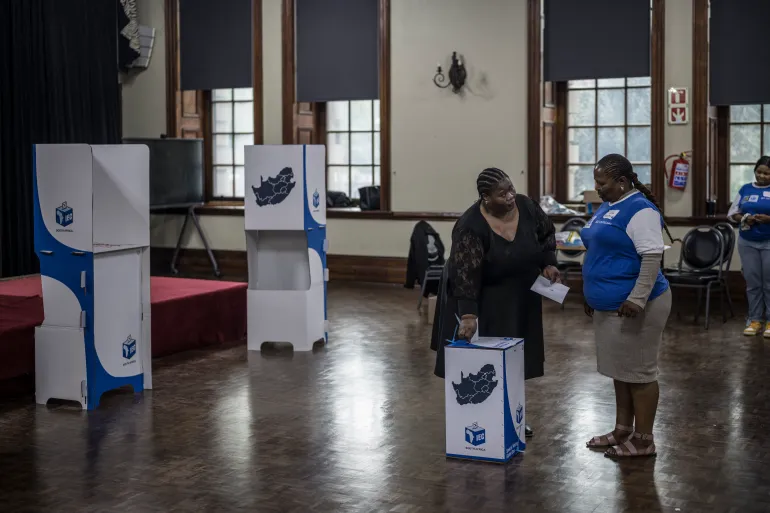
The timing is especially significant as South Africans head to the polls amid growing dissatisfaction with municipal services and the declining dominance of the African National Congress (ANC), which lost its parliamentary majority in the 2024 general election. The MKP, led by former President Jacob Zuma, is also challenging the ANC’s political influence, particularly in KwaZulu-Natal.
Ultimately, an election loses its democratic meaning when fear begins to compete with freedom of choice. No political ambition, party rivalry or struggle for municipal control should cost anyone their life. South Africa’s authorities must ensure that this killing is thoroughly investigated and that those responsible are brought to justice, regardless of their political connections.
Is there any correction?