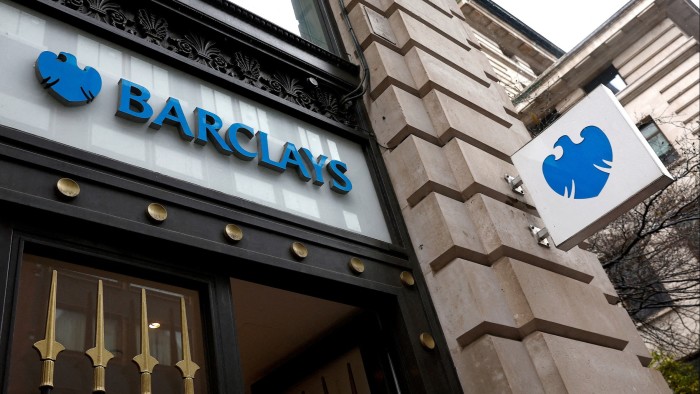
Rising profits contrast with workforce cuts as automation threatens traditional banking roles
The growing adoption of artificial intelligence (AI) in the banking industry is intensifying concerns over the future of human labour, as financial institutions increasingly turn to automation to improve productivity, reduce operating costs and strengthen profitability, with thousands of workers facing the risk of displacement.
Against this backdrop, British banking giant Barclays has announced plans to cut about 5,000 jobs, representing roughly five per cent of its global workforce, by the end of 2026 as part of an efficiency drive centred on AI and technological transformation.
The announcement, made on Thursday 22nd October 2026 alongside the bank’s third-quarter earnings update, highlights the growing tension between technological advancement and employment security, particularly as businesses seek to achieve more with fewer workers.
In its earnings presentation, Barclays said the planned reductions would result from “organisational simplification and technology change efficiency driven by AI”.
About 60 per cent of the job losses are expected to affect support functions, including a reduction in the number of software developers as AI tools enable existing employees to perform more work.
For the approximately 5,000 affected employees, the consequences could extend beyond the loss of monthly salaries to disrupted household finances, mounting financial obligations and the challenge of securing alternative employment in an increasingly technology-driven economy.
The impact could also spread across the wider banking industry, as other financial institutions adopt similar strategies to remain competitive. Workers whose responsibilities involve routine administrative, analytical and technical tasks may face growing pressure to retrain, acquire digital skills or transition into roles less susceptible to automation.
According to ADP, the job cuts come despite stronger financial performance at Barclays. The bank’s profit after tax rose 13 per cent to £1.65 billion ($2.2 billion) in the third quarter, compared with £1.46 billion in the corresponding period a year earlier.
Group income increased three per cent to £7.37 billion, while revenue from equities trading surged 47 per cent year-on-year, reflecting stronger performance in the bank’s investment banking operations.
Chief Executive Officer C. S. Venkatakrishnan highlighted the bank’s continuing operational and financial progress, particularly the strong performance of its investment banking division.
The contrast between rising profits and planned job losses raises questions about how the gains from AI-driven productivity will be distributed. While shareholders may benefit from lower operating costs and improved efficiency, employees could bear a disproportionate share of the transition unless businesses provide meaningful opportunities for retraining, redeployment and career development.
AJ Bell investment director Russ Mould said Barclays’ third-quarter performance had fallen short of expectations, with its share buyback announcement failing to fully address investor disappointment.
He also identified rising costs and two significant concerns hanging over the business: an anticipated increase in taxes on the banking sector in the United Kingdom’s forthcoming budget and a reported investigation into possible misrepresentation of risks in Barclays’ private credit portfolio.
Barclays shares edged higher following the announcements.
However, the bank’s restructuring reflects a broader transformation in financial services, where AI is emerging as both an instrument of productivity and a potential substitute for human labour. Although businesses cannot be expected to ignore technologies that improve efficiency, the long-term success of this transition should not be judged by profits and cost savings alone, but also by how responsibly companies manage the human consequences of technological change.