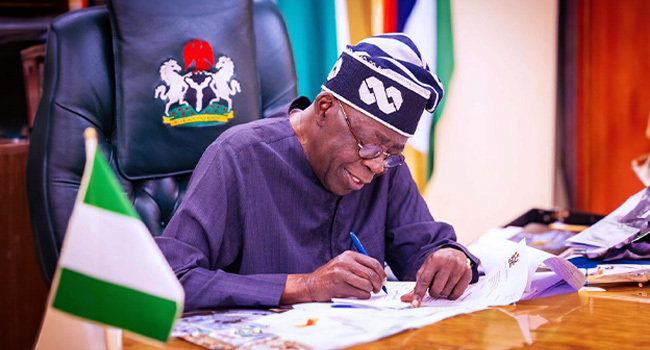
…As Senate refers 2026–2027 borrowing plan to debt committee, sets one-week deadline
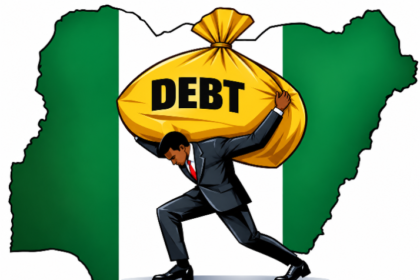
Despite strong criticisms against public loan, Nigeria President Bola Tinubu has approached the Senate for approval to secure $20.52 billion and €1.045 billion in additional foreign loans to finance infrastructure and development programmes under the Federal Government’s 2026–2027 supplementary external borrowing plan.
The request was conveyed in a letter addressed to Senate President Godswill Akpabio, who read its contents during plenary on Tuesday before referring the proposal to the Senate Committee on Local and Foreign Debts for consideration.
According to the President, the proposed borrowing would support projects across critical sectors of the economy, including power, transportation, agriculture, healthcare, education, water supply and security, as well as initiatives aimed at promoting economic growth and employment.
Tinubu argued that the scale of Nigeria’s infrastructure deficit and the substantial funding required to address it had made additional external financing necessary. He urged the National Assembly to consider and approve the borrowing plan promptly to facilitate the release of funds and ensure the timely execution of the proposed projects.
In the letter, the President said the borrowing programme covered a broad range of economic and social interventions, with particular attention to infrastructure development, agricultural productivity, healthcare delivery, education, water provision, security and job creation.
He also listed financial management reforms among the areas expected to benefit from the proposed financing.
Tinubu stated that the projects were selected following technical and economic assessments to determine their potential contributions to national development.
According to the letter, the proposed facilities amount to $20,517,755,901 and €1,045,083,643 tthough the document presented during plenary contained some inconsistencies in the presentation of the dollar figure.
The President maintained that the projects were designed to deliver tangible economic and social benefits, particularly through employment generation, skills development, entrepreneurship, poverty reduction and improved food security.
He said the proposed interventions would ultimately help improve the livelihoods of Nigerians, including children, by expanding economic opportunities and strengthening essential public services.
Tinubu further disclosed that most of the projects would be implemented across the 36 states and the Federal Capital Territory, describing the nationwide distribution of the interventions as part of efforts to address development challenges across the federation.
He said the proposed borrowing was necessary to bridge the country’s infrastructure financing gap and sustain economic expansion.
“In light of the need for significant infrastructure investment in the country and the vast financial resources needed to address this gap, it has become essential to pursue broader external borrowings to close the financing shortfall,” the President said.
He identified electricity, transportation and healthcare infrastructure as major priorities for the proposed financing, noting that the funds would support critical projects across these and other sectors.
The President also stressed the importance of securing legislative approval without delay, arguing that timely consideration of the proposal would enable the government to meet its commitments to Nigerians through prompt disbursement and effective project implementation.
He urged the Senate leadership and the entire National Assembly to give the borrowing plan the necessary attention, citing the urgency of the country’s development needs and the importance of economic stability.
Tinubu said approval of the request would provide the government with the financial capacity to advance the planned interventions and fulfil its obligations to the Nigerian people.
Following the presentation of the letter, Akpabio referred the proposal to the Senate Committee on Local and Foreign Debts for further legislative scrutiny and directed the committee to submit its report within one week.
The committee is expected to examine the borrowing proposal and may work with the Senate Committee on Appropriations and other relevant committees as part of its assessment.
However, the letter presented to the Senate did not contain a detailed breakdown of the proposed loans by individual project or sector. It also did not specify the financing conditions, repayment arrangements or the exact amounts allocated to the different areas of intervention.
These details are likely to feature in the legislative examination of the proposal, particularly as lawmakers consider the financial implications of the borrowing and the government’s plans for deploying the funds.
The Senate’s review will also provide an opportunity to scrutinise the projects’ development objectives, including their expected contributions to infrastructure expansion, economic activity, employment generation and the delivery of essential public services.
In his communication to the lawmakers, Tinubu formally submitted the Federal Government’s 2026–2027 Supplementary External Borrowing Plan for consideration and early approval, explaining that the proposed financing was intended to accelerate the implementation of government projects.
He reiterated that the programme covered infrastructure, agriculture, healthcare, education, water supply, security, employment generation and financial management reforms.
The President also linked the borrowing request to the need to sustain economic growth following the implementation of his administration’s reforms, arguing that additional financing would help address the funding requirements of critical development projects.