The United States has thrown its weight behind Kenya’s drive to process critical minerals locally, as Washington seeks deeper access to Africa’s strategic mineral resources amid intensifying competition with China.
U.S. Assistant Secretary of State for African Affairs, Frank Garcia, said on Wednesday that American companies were prepared to partner with Kenya to develop a local mineral-processing industry, create jobs and strengthen global supply chains.
“American companies are not here to extract and ship. That is not partnership, that is extraction,” Garcia said at the American Chamber of Commerce Business Summit in Nairobi.
He said Washington supported Kenya’s decision to move away from the traditional model of exporting minerals in their raw form and instead develop industries capable of processing and adding value to the resources locally.
“We want processing done right here on the ground in Kenya, not thousands of miles away,” Garcia said.
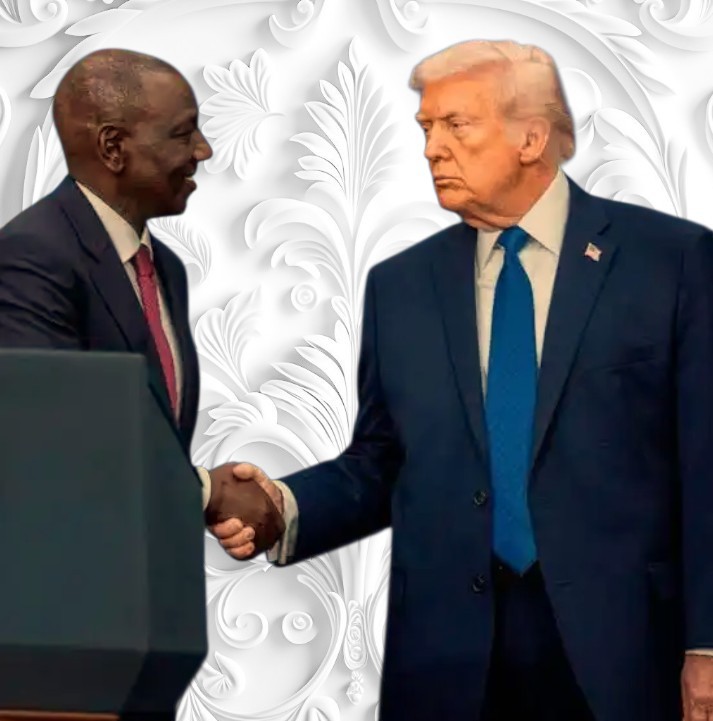
The U.S. support comes as President William Ruto’s administration intensifies efforts to ensure that Kenya derives greater economic benefits from its mineral wealth.
Ruto said the country was accelerating the responsible exploration and development of rare earth elements and other strategic resources, including titanium, graphite, lithium and niobium.
“In critical minerals, we are accelerating the responsible exploration and development of rare-earth elements, titanium, graphite, lithium, niobium and other strategic resources,” the President said.
The push for local processing has also brought the government into a dispute with Tata Chemicals over its operations at Lake Magadi in Kajiado County.
Ruto has criticised the company’s extraction of soda ash, arguing that Kenya has not received sufficient economic benefits from the resource.
The President subsequently ordered Tata Chemicals to exit the country, accusing the company of economic exploitation.
Against this backdrop, Kenya is preparing to select investors for the development of the potentially lucrative Mrima Hill mineral deposit in Kwale County.
Mrima Hill is believed to contain significant deposits of rare earth minerals and niobium, a strategic metal used in aerospace and other advanced manufacturing industries.
The United States has expressed support for what it described as a transparent and competitive process for awarding the mining rights.
Kenya’s Principal Secretary for Mining, Harry Kimtai, said six companies had been shortlisted for the project, including two U.S.-based consortia though the government has not formally published the shortlist.
U.S. company Critical Metals Corp and Australian firm RareX announced in July that they had been shortlisted to compete for rights to develop Mrima Hill.
The U.S. acting Deputy Assistant Secretary of State for Southern Africa and Critical Minerals Chris Kulukundis said the tender process was progressing transparently.
He said the two U.S. consortia were capable of developing the project in line with the standards agreed upon by Kenya and the United States, should either be selected.
Garcia said critical minerals had become a major priority for the administration of U.S. President Donald Trump and Secretary of State Marco Rubio.
“Critical minerals are a top priority for President Trump and Secretary Rubio, and we’re ready to work with Kenya as it becomes a regional leader in this space,” he said.
He added that Washington wanted Kenya to build a mining sector that is transparent, attracts legitimate investors, respect local communities and contribute to the security of global mineral supply chains.
The U.S. International Development Finance Corporation is already supporting a pipeline of rare-earth projects across Africa as Washington seeks to reduce global dependence on China.
China currently dominates large parts of the global critical-minerals supply chain and has tightened export controls on some strategic minerals in recent years.
Garcia said the United States believed African countries should retain more of the economic value generated from their natural resources.
He criticised what he described as an extractive model in which minerals are removed from producing countries, shipped abroad and processed elsewhere.
“Some of our competitors are efficient at one thing: pulling minerals out of the ground, whisking them offshore and capturing all value addition far away from the lands from which the minerals originated,” Garcia said.
China has faced similar criticism from some governments and advocacy groups over the export and overseas processing of African raw minerals, allegations Beijing has rejected.
For Kenya, the renewed U.S. interest presents an opportunity to attract investment while developing domestic industries around its mineral resources.
Ruto said local processing would help generate employment and broaden the economic benefits of mining.
The competition between Washington and Beijing over critical minerals is expected to intensify as demand for resources needed in advanced manufacturing, energy technologies and strategic industries continues to grow.
Kenya’s Mrima Hill project could therefore become an important test of the country’s ambition to move beyond raw mineral exports and position itself as a regional centre for mineral processing and value addition.