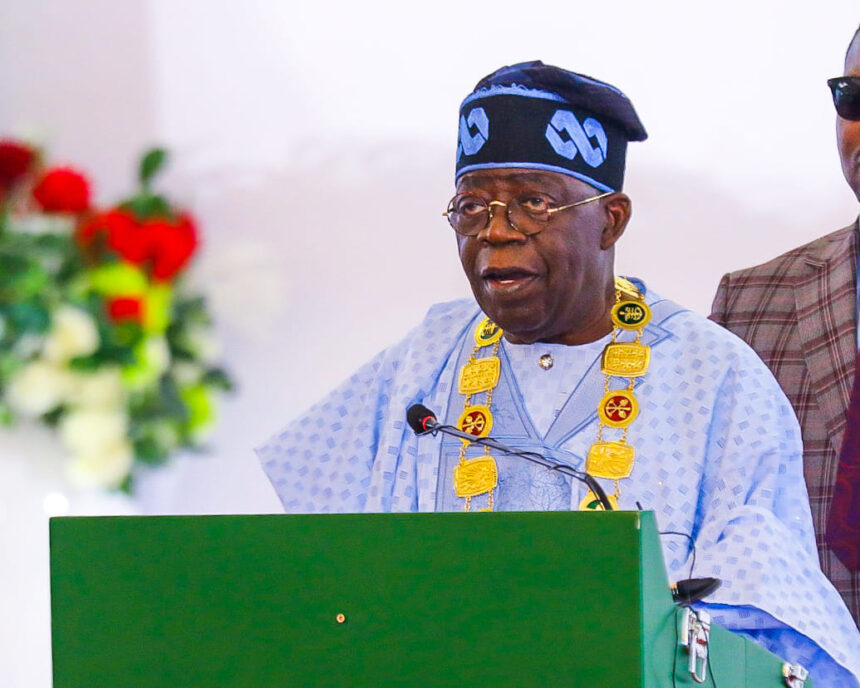
Opposition figures and civil society groups question transparency and spending priorities as debate grows over religious projects in the federal budget.
The Federal Government’s proposed allocation of ₦8.05 billion for the construction and renovation of churches and mosques in the 2026 budget has sparked widespread debate, with opposition politicians, policy experts and civil society organisations questioning the spending at a time of mounting economic hardship.
While supporters argue that government has historically funded some religious projects, critics contend that the allocation comes at a time when millions of Nigerians face rising living costs, insecurity and limited access to quality healthcare and education. (Why does the Nigerian ruling elite inflict suffering on the Nigerian people by wasting their financial resources on religion?)
Former Vice President and African Democratic Congress (ADC) presidential candidate, Atiku Abubakar, was among the first prominent figures to criticise the proposed expenditure.
In a statement issued by his spokesperson, Phrank Shaibu, Atiku questioned the transparency surrounding the allocations, citing an analysis by public accountability platform Tracka, which indicated that approximately ₦6.14 billion was earmarked for mosque-related projects and ₦1.91 billion for church-related projects.
According to Atiku, while religion occupies an important place in national life, public spending on religious institutions must be transparent and open to public scrutiny.
He argued that unlike public infrastructure such as roads, schools and hospitals, many of the budget line items reportedly do not clearly identify the beneficiary churches and mosques or their exact locations, making independent verification difficult.
The former vice president called on the Federal Government to publish the names of beneficiary institutions, project locations, implementing agencies and the legal basis for the allocations, warning that failure to do so could deepen public concerns about accountability.
Public policy analyst David Etim also described the allocation as a misplaced priority, arguing that limited public resources should be directed toward sectors capable of improving the welfare of a larger number of Nigerians.
According to him, investments in education, healthcare and productive industries would have a greater impact on reducing poverty than spending on religious infrastructure.
Etim maintained that government should prioritise projects that improve living standards, create jobs and expand access to essential public services.
The Alliance for Economic Research and Ethics (AERE) offered a different perspective.
While questioning the inclusion of religious projects in the budgets of ministries that have no direct responsibility for religious affairs, the organisation argued that the controversy should not distract from broader fiscal concerns.
The group noted that the proposed allocation represents only a small fraction of the ₦68.32 trillion federal budget, while Nigeria’s much larger fiscal challenges include a projected budget deficit of ₦31.45 trillion and planned debt servicing of about ₦15.8 trillion.
According to AERE, greater attention should be paid to strengthening government revenue, improving fiscal discipline and ensuring that public expenditure is concentrated on infrastructure and economic development projects capable of generating long-term growth.
Also reacting to the proposed allocation, Peoples Democratic Party (PDP) chieftain Lanre Adebowale questioned both the rationale behind the spending and the selection of beneficiaries.
He argued that the allocation excludes adherents of other religions and non-religious Nigerians while failing to disclose which churches and mosques are expected to benefit.
Adebowale also suggested that the proposed expenditure could carry political implications ahead of the 2027 general elections.
He maintained that Nigerians are more concerned about security, employment, affordable healthcare and food security than government-funded religious projects, adding that addressing those challenges would have a greater impact on citizens’ lives.
The proposed allocation has continued to generate mixed reactions across the country, with supporters defending government involvement in religious projects while critics call for greater transparency and a stronger focus on pressing socio-economic priorities.