Nigeria turns 66 today. This week, in a Washington courtroom, lawyers are still arguing about whether its citizens are allowed to read a 33-year-old file about the man leading it.
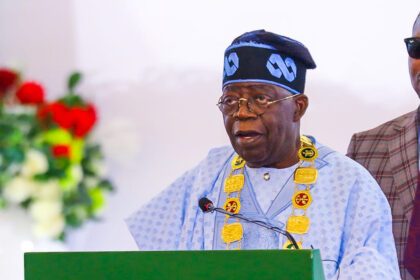
Sixty-six years ago today, Nigeria’s flag went up over Lagos and a nation declared itself answerable to no one but its own people. This week, in Courtroom 21 of the United States District Court for the District of Columbia, lawyers for President Bola Tinubu filed papers arguing the opposite proposition about the man himself: that parts of his own history are not Nigeria’s business, not America’s business, not anybody’s business — because he says he was, at the relevant time, a private individual, a student, entitled to the privacy any citizen would have.
Read that claim on an Independence Day and sit with what it actually asks of you. The President of the Federal Republic of Nigeria is asking an American judge to agree that key facts about his own biography belong to him alone, sealed, fifty years after the fact, while 230 million Nigerians who did not get a vote in that courtroom wait to find out what their own head of state has spent three years, and six figures in American legal fees, fighting to keep from them.
What is actually before the court
This newspaper has covered this case before and will state the record plainly again, because plain is where this story is strongest. Aaron Greenspan, an American transparency activist, filed Freedom of Information Act requests between 2022 and 2023 with six US agencies for records connected to a Chicago-based heroin trafficking investigation from the early 1990s in which Tinubu’s name appears. The government’s early refusals — neither confirming nor denying the records existed — were struck down by Judge Beryl Howell in April 2025 as “neither logical nor plausible,” given that the government had already acknowledged the investigation publicly elsewhere. That ruling did not order every document released. It ordered the agencies to stop pretending the file didn’t exist and start arguing, specifically, over what in it could lawfully stay redacted.
That argument is still going, in real time, this week. On August 28, Tinubu’s lawyers filed to keep the redactions in place, framing the matter — again — as private-individual history rather than public business. Greenspan and the government filed their replies on September 23, after the original September 18 deadline was extended. On September 27, Tinubu’s team filed again, repeating that the records concern “his life as a private individual, student.” On September 28, Greenspan filed something new: a request for permission to ask Tinubu, under oath, whether he, his government, or anyone acting for him — he named the firm DCI Group AZ, L.L.C. specifically — was behind a denial-of-service attack that hit his website with over 940 megabits per second of traffic during the litigation. On September 29, Greenspan filed again, arguing the government’s own privacy analysis never weighed the public-interest case he’d made. None of this is settled. Judge Howell has not ruled. The docket is, as of this Independence Day, still open and still moving roughly every three to four days.
The Presidency’s official position, repeated by spokesman Bayo Onanuga since early September, is accurate as far as it goes: this is a civil FOIA records dispute, not a criminal trial, and no American court has found President Tinubu guilty of anything. That is true, and this newspaper will not pretend otherwise to make the story larger than it is. A civil forfeiture thirty-three years ago is not a conviction. Nobody reading this editorial should come away believing it is.
What the Presidency’s accurate statement does not do is answer the question an accurate statement should: if the case truly holds nothing new, as Onanuga has said more than once, why does the President’s own legal team keep filing to keep it sealed, two deadlines running, into a fourth consecutive month?
Who is funding the noise, and why doesn’t that settle anything either
Much of the loudest commentary around this case traces to one source: Von Batten-Montague-York, a Washington lobbying firm retained by Atiku Abubakar, the ADC’s 2027 candidate, under a $1.2 million, twelve-month contract signed in March. This newspaper has flagged that contract before and flags it again now, because some of what the firm has alleged this month deserves real skepticism. It has claimed, without documentation this newspaper could verify, that someone offered it $3 million and a secret London meeting to drop its campaign. It has described the FBI and DEA records as concerning “heroin trafficking” in language sharper than anything the court record itself supports. It has suggested, in connection with the 37 suspected illegal miners who died in NSCDC custody in Niger State this year, that Nigerian officials privately described a minerals arrangement with Washington as a “settlement” or “bribe” to the Trump administration. We have found no independent evidence for that last claim, and we are not printing it as fact. A paid opposition contractor with a financial stake in Tinubu’s defeat is not a neutral narrator, and readers should weigh everything from that firm accordingly.
But here is what should trouble every Nigerian regardless of what they think of Atiku, or of VBMY, or of lobbying money generally: the court filings underneath the noise are not the lobbying firm’s invention. The August 28 filing is real, filed by Tinubu’s own lawyers, publicly docketed. The September 23, 27, 28, and 29 filings are real. The extended deadlines are real. VBMY did not write Judge Howell’s April 2025 ruling, and it did not write Greenspan’s question about denial-of-service attacks. It only shouts about documents that exist whether or not it shouts. Nigerians are entitled to separate the shouting from the paper — and, having separated them, to notice the paper is still there.
The deal nobody will show you either
The same week brought a second silence worth placing beside the first. On September 22, the United States signed a minerals cooperation agreement with Denmark in full public view at the UN, with President Trump himself announcing it. A day later, Nigeria’s Minister of Solid Minerals, Dele Alake, signed a framework with US Deputy Secretary of State Christopher Landau covering what the government values at $700 billion in Nigerian mineral resources — geological data, exploration rights, processing, infrastructure. On September 30, VBMY noted something this newspaper can verify independently of the firm’s motives: the United States government has declined to publish the Nigerian framework’s text, even as it published Denmark’s. Nigerians have been shown a number and a photograph. They have not been shown the document that number comes from.
This newspaper asked these same questions about the health, minerals and security agreements three weeks ago, before any of this month’s court filings. We ask them again today because the answer has not changed: publish the text, or explain in writing why a $700 billion arrangement over Nigeria’s own ground cannot survive being read by the people who live on it.
What sixty-six years of independence should actually mean
Independence was never only about a flag. It was a claim that Nigerians would no longer need anyone else’s permission to know what was being done in their name, by their own government, with their own resources, about their own leaders. Measured against that standard, this has been a strange week to celebrate.
A Nigerian president is this week a litigant in an American courtroom, arguing that parts of his own life are not public enough for the public he leads to see. A Nigerian minister signed away access to $700 billion in resources in a document the signing partner itself won’t release. An opposition-funded lobbying operation, flawed and self-interested as it plainly is, has nonetheless forced more disclosure out of this administration in six months than the National Assembly has in three years — and that fact alone is the most damning indictment in this editorial, because it was never supposed to be a foreign lobbyist’s job to make a sovereign government show its people its own paperwork.
Sixty-six years in, Nigeria’s flag answers to no one. It would help if the man standing in front of it did the same — starting with a straight answer to a straightforward question: what, exactly, is in the file, and why, after three years of saying it contains nothing new, is his own legal team still paying lawyers to make sure nobody reads it.
Happy Independence Day. Publish the documents.
This is a United Continental Post editorial. It draws on court filings and reporting in Greenspan v. Executive Office for U.S. Attorneys (Civil Action No. 1:23-cv-01816, D.D.C.) as reported by TheCable, Sahara Reporters, Naija News and Prestige News; Presidency statements by Bayo Onanuga as reported by PM News and Nigeria Info FM; and statements by Von Batten-Montague-York as reported by Nigeria Communications Week, Oba Land Magazine, Parallel Facts News, Politics Nigeria and Sagagist. Von Batten-Montague-York is a paid contractor of Atiku Abubakar’s 2027 campaign under a $1.2 million, twelve-month contract; its more serious claims — including an alleged $3 million offer to drop its campaign and any suggestion that mineral concessions were offered as a “bribe” or “settlement” to the Trump administration — are attributed to the firm alone and have not been independently verified by UCP. President Tinubu has never been criminally charged in the United States, was never convicted in the 1993 civil forfeiture matter, and denies wrongdoing.