UN Day: Turkish president urges a more inclusive global body, citing Gaza deaths, armed conflicts and humanitarian crises as evidence of the urgent need for change
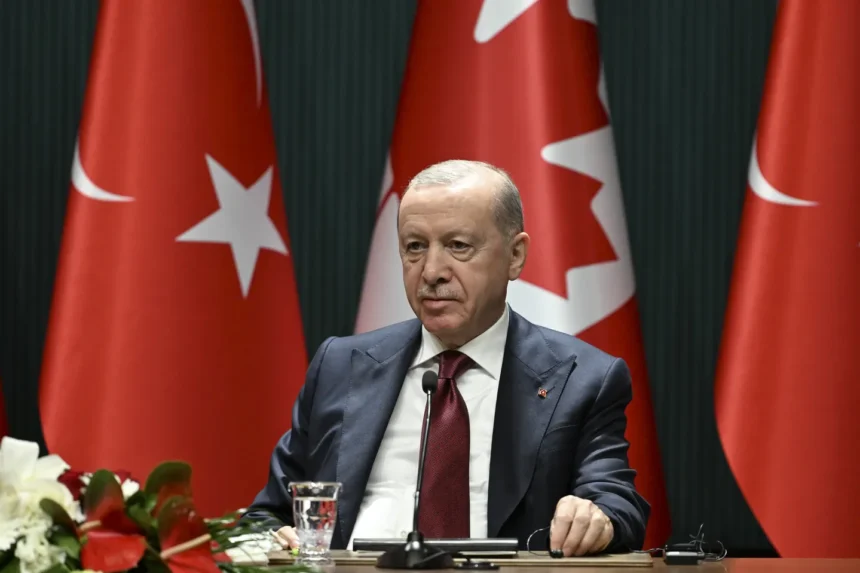
Turkish President Recep Tayyip Erdogan has renewed calls for sweeping reforms of the United Nations Security Council, arguing that the international body must become more just and inclusive to respond effectively to global conflicts and humanitarian emergencies.
Erdogan made the call on Saturday 24th October 2026, in a message marking UN Day and the organisation’s 81st anniversary, urging member states to strengthen the effectiveness of the UN and its principal institutions.
In the message shared by Türkiye’s Communications Directorate on the social media platform NSosyal, Erdogan said the need for a more representative Security Council had become increasingly urgent amid growing international challenges.
“It has become particularly important to establish a more just and inclusive structure for the UN Security Council that can meet the expectations of the international community,” he said.
The Turkish president cited ongoing wars, humanitarian disasters, climate change, hunger, poverty, racism, xenophobia and Islamophobia as major challenges underscoring the continued importance of international cooperation.
Established in the aftermath of the Second World War, the United Nations was founded to prevent another global conflict, maintain international peace and security, and promote development and prosperity. However, mounting geopolitical tensions and prolonged conflicts have intensified questions about its ability to fulfil those objectives.
Referring to Gaza, Erdogan said the deaths of more than 74,000 people in what he described as genocide, alongside conflicts elsewhere, demonstrated the urgency of reforming the international system.
The Gaza crisis has become a focal point of criticism against the UN Security Council, particularly over divisions among its permanent members and the use of veto powers that can block resolutions on major international disputes.
The council has 15 members, including five permanent members — China, France, Russia, the United Kingdom and the United States — each with veto power over substantive resolutions. Critics argue that this arrangement gives a handful of countries disproportionate influence over decisions affecting global peace and security.
Erdogan urged countries to uphold the UN Charter more firmly and support reforms aimed at improving the effectiveness of the organisation’s principal bodies.
He also reaffirmed Türkiye’s support for the UN80 Initiative launched by UN Secretary-General António Guterres to improve the organisation’s efficiency and effectiveness.
Beyond institutional reform, Erdogan said Türkiye was working closely with the United Nations towards its ambition of making Istanbul a UN hub, potentially strengthening the city’s role in international diplomacy and multilateral cooperation.
Congratulating UN personnel serving around the world, the Turkish president reiterated his country’s commitment to efforts to build a more effective and inclusive international system.
His remarks add to longstanding international calls to reform the Security Council, with countries across Africa, Asia and Latin America seeking greater representation in a body whose structure largely reflects the global balance of power that emerged after the Second World War.
However, achieving meaningful reform remains difficult because changes to the UN Charter require approval by two-thirds of the General Assembly and ratification by two-thirds of UN member states, including all five permanent Security Council members.