The latest US move against the United Arab Emirates branches of Egypt’s Banque Misr is another indication that the six-month-old US-Iran conflict has entered a dangerous new phase. Washington is no longer relying solely on military pressure to weaken Tehran; it is increasingly deploying the power of the dollar and the international financial system to squeeze Iran and those accused of helping it survive economically. The proposed restrictions would cut Banque Misr’s UAE branches off from the US financial system over allegations that they helped sustain Iran’s financial networks.
The development is significant because it demonstrates how far the consequences of the war have moved beyond the battlefield. A conflict between the United States and Iran is now being felt in banks in Dubai, shipping lanes in the Gulf, financial markets in London and Asia, energy markets across the world and the economies of countries thousands of kilometres away from the Middle East. The war has therefore become not merely a regional security crisis but a global economic and geopolitical problem.
At the centre of the confrontation is Washington’s attempt to deny Iran access to the international financial system. The United States possesses enormous leverage because of the central role of the dollar in international commerce. By threatening institutions that continue to facilitate Iranian transactions with restrictions on their access to US financial institutions, Washington is effectively asking governments and businesses to choose between their economic relationships with Iran and their access to the American financial system. The Treasury Department has also targeted the manager of Iran’s Bank Melli branch in Dubai and a Hong Kong-based company accused of helping move Iranian funds.
There is, however, a wider question that the international community must confront: where does economic pressure end and global economic destabilisation begin? Sanctions may weaken Iran’s ability to finance its government and military activities, but increasingly aggressive financial restrictions can also create uncertainty for banks, businesses and countries that maintain legitimate commercial relationships with Tehran. If more major economies are forced to choose sides, the conflict could accelerate the fragmentation of international trade and finance.
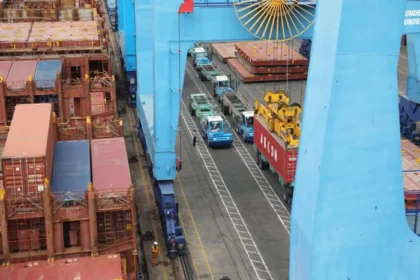
The most immediate global danger remains energy. The Strait of Hormuz is one of the world’s most important energy chokepoints, with a substantial share of globally traded oil and liquefied natural gas passing through it. Disruption in the waterway therefore affects countries far beyond the Gulf. Recent reductions in shipping traffic have already demonstrated how quickly a security crisis in the region can become a global transportation and supply-chain problem.
For Europe, Asia and other major energy-importing regions, prolonged disruption could mean higher oil and gas costs. That would increase the cost of transportation, electricity, manufacturing and virtually every commodity dependent on energy. Airlines could face higher operating costs; factories could become more expensive to run; and households could experience renewed pressure on their cost of living. The effects would be particularly severe for countries that import most of their energy and have limited fiscal capacity to absorb external shocks.
Asia deserves particular attention because many of the world’s major energy consumers depend heavily on supplies from the Gulf. China, India, Japan and South Korea have extensive commercial and energy interests in the region. A prolonged disruption would therefore affect not only their energy bills but also industrial production, shipping and consumer prices. What happens in the Persian Gulf can ultimately influence the price of goods manufactured in Asia and sold everywhere from Africa to Europe and the Americas.
Europe, too, cannot afford complacency. Higher energy costs would place additional pressure on European industries and households, while disruption to shipping could increase the cost and duration of international trade. The war could also complicate Europe’s efforts to maintain stable energy supplies and reduce dependence on vulnerable supply routes.
The developing world faces an even more complicated predicament. Countries that import fuel and food could be hit by higher transportation and production costs at the same time. Governments already struggling with debt, inflation and unemployment could find themselves spending more on fuel subsidies and essential imports. The poorest households would ultimately bear much of the burden because energy-price increases tend to spread through the prices of food, transportation and basic goods.
For agricultural economies, the consequences could extend beyond fuel. The Gulf region is important to global supplies of fertiliser-related commodities, meaning prolonged disruption could affect agricultural production and food prices. The conflict therefore has the potential to move from an energy crisis to a broader food-security challenge.
The financial consequences are equally important. Six months of conflict have already demonstrated that geopolitical shocks can produce significant volatility in oil, currencies, equities and other financial markets. Investors tend to move towards safer assets when war intensifies, while businesses delay investment because of uncertainty. A prolonged conflict could therefore weaken economic growth even in countries that have no direct involvement in the war.
There is also a profound geopolitical consequence. The more Washington uses its financial dominance to compel other countries to comply with its Iran policy, the greater the incentive for countries such as China, Russia, India and others to develop alternative payment arrangements and reduce their dependence on the dollar-dominated system. In the long term, the Iran confrontation could therefore contribute to the emergence of a more fragmented global financial order.
That possibility should concern Washington as much as it concerns the rest of the world. The dollar’s global influence is one of America’s greatest economic and diplomatic assets. But the more frequently access to the dollar is used as a geopolitical weapon, the stronger the incentive for other nations to seek alternatives. Economic coercion may achieve immediate policy objectives while simultaneously encouraging the development of systems designed to reduce American financial influence.
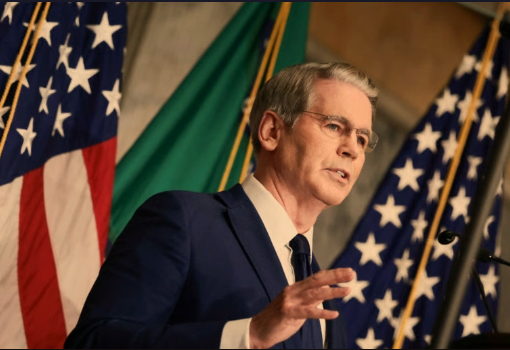
The conflict also presents a serious diplomatic test for the G20. Treasury Secretary Scott Bessent is expected to use meetings with finance ministers from major economies to encourage broader participation in the campaign to isolate Iran. But countries have different economic interests, security concerns and relationships with Tehran. The challenge will be to prevent the international community from becoming divided into rival economic camps.
The humanitarian dimension must not be forgotten either. Economic sanctions and military conflict rarely remain confined to governments. When banking channels close, trade contracts and prices rise, ordinary people often feel the consequences first. Iran’s economy is already under severe pressure, with reports of falling foreign trade and very high inflation. The longer the conflict continues, the greater the risk that economic hardship will deepen among civilians.
For the United States, the central question is whether economic isolation can achieve what military force has not: compel Tehran towards a sustainable political settlement. For Iran, the challenge is how to preserve its economy and international relationships under mounting pressure. For the rest of the world, however, the priority should be preventing the confrontation from becoming an open-ended crisis that destabilises global energy, trade and finance.
The international community must therefore press harder for diplomacy. Military victories and financial sanctions may alter the balance of power, but neither automatically produces lasting peace. The longer the war continues, the greater the possibility of miscalculation, wider regional involvement and further disruption to global markets.
The Banque Misr case should consequently be viewed as more than a dispute involving an Egyptian bank and Iran. It is a warning about the expanding geographical and economic reach of the US-Iran confrontation. A decision made in Washington can affect a bank in Dubai; disruption in the Gulf can raise energy prices in Europe and Asia; higher energy costs can increase food prices in Africa; and financial uncertainty can slow investment everywhere.
Six months into the war, the world has already learned that there is no such thing as a distant Middle Eastern conflict in an interconnected global economy. The United States and Iran may be the principal actors, but the consequences are being distributed across continents. The international community must therefore make diplomacy—not escalation—the next global priority. The world economy has already absorbed enough shocks. It should not be forced to pay an even higher price for a war that has no clear end in sight.