Brazil’s defeated right-wing presidential candidate, Flávio Bolsonaro, has arrived in the United States after leaving Brazil following his loss to President Luiz Inácio Lula da Silva, declaring his intention to lead the country’s opposition from abroad.
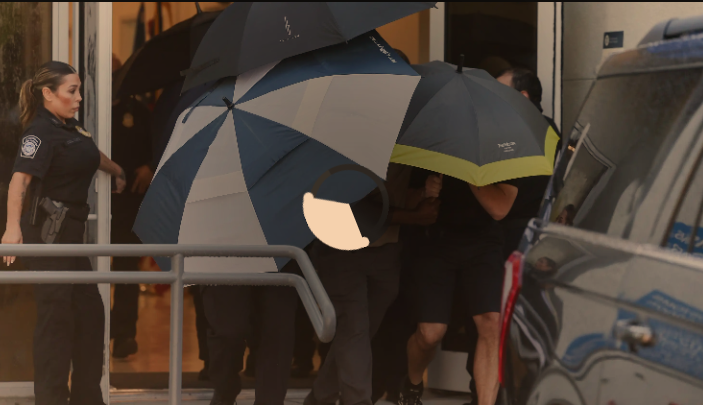
The senator landed at Opa-locka Executive Airport near Miami, Florida, on Wednesday, October 28, with his wife and two daughters, days after losing the presidential election runoff to Lula. His departure came amid a legal investigation and a court order requiring him to surrender his passports.
Bolsonaro said he left Brazil to avoid what he described as political persecution, accusing the government and the Supreme Court of pursuing a campaign of intimidation against him, maintaining that his decision to leave was necessary to protect himself and his family from what he characterised as an impending political crackdown.
“It was not my intention to leave my homeland, but I know exactly where this will lead,” he said in a statement, describing the situation as a familiar pattern associated with attempts to suppress political opposition.
He also thanked United States President Donald Trump and the American people for welcoming his family, insisting that they were safe in the country.
In an earlier version of his statement, Bolsonaro referred to himself as Brazil’s “true president” before replacing the description with “leader of Brazil.”
Meanwhile, Trump confirmed that his administration had allowed Bolsonaro to enter the United States though he declined to provide extensive details about the arrangement, saying he believed the Bolsonaro family had been mistreated and described Brazil’s election as strange, while maintaining that he had stayed out of the contest.
According to CNN, s Trump adviser said the administration had approved Bolsonaro’s entry after his election defeat. Two US officials also reportedly confirmed that visas were being issued to the senator and members of his family though the precise circumstances surrounding their departure remained unclear.
Brazil’s Federal Police had asked the Supreme Federal Court to authorise the seizure of Bolsonaro’s passports after identifying a risk that he might leave the country. Supreme Court Justice Alexandre de Moraes subsequently ordered him to surrender the documents within 24 hours on Monday, but the senator travelled abroad without complying with the directive.
The police said there was no official record of Bolsonaro departing through Brazil’s immigration control points. Reports indicated that he travelled through Argentina before continuing to Guayaquil, Ecuador, and eventually reaching Florida. Argentine authorities later confirmed that Bolsonaro and his family had entered the country with valid documentation and without any legal impediment recorded by immigration officials.
Although Bolsonaro was not under an arrest warrant when he left Brazil, legal analysts said his failure to comply with the court’s order could provide grounds for further judicial action. He is being investigated in several cases, including allegations of corruption and money laundering, which he denies.
One investigation concerns alleged financial irregularities surrounding Dark Horse, a proposed biographical film about his father, former president Jair Bolsonaro. Investigators have examined suspected links between the project and funds associated with Daniel Vorcaro, a disgraced banker connected to the collapse of Banco Master. Another case involves allegations relating to online betting platforms.
His presidential campaign has also come under scrutiny following a Supreme Court order directing federal police to investigate alleged foreign interference. The inquiry concerns claims that Rockbridge Network, a US conservative political organisation co-founded by Vice President JD Vance, was involved in discussions about obtaining foreign financial support for Bolsonaro’s campaign. The allegations remain subject to investigation.
Bolsonaro’s departure has intensified attention on a family whose political influence has survived criminal investigations, electoral setbacks and internal disputes. The senator had emerged as a strong contender to succeed his father politically, but Lula defeated him in Sunday’s runoff, securing approximately 4.4 million more votes.
Lula criticised his opponent’s departure, describing it as shameful and arguing that Bolsonaro should have remained in Brazil to answer the allegations against him. The defeated candidate, however, alleged electoral fraud without presenting evidence and compared his situation to those of prominent political figures who spent time in exile.
The latest development places Flávio alongside other members of the Bolsonaro camp who have relocated to the United States, including his brother Eduardo Bolsonaro who moved there in March 2025 to lobby for US pressure on Brazil, including sanctions and tariffs.
Eduardo subsequently lost his seat in Brazil’s legislature because of his prolonged absence and was sentenced in absentia to four years and two months in prison in June over his lobbying activities.
At the centre of the family’s political fortunes is Jair Bolsonaro, the former army officer and president who built a powerful conservative movement around the themes of God, homeland and family but serving a 27-year prison sentence under house arrest following his conviction over a plot to prevent Lula from assuming power after the 2022 election.
However, his supporters have continued to defend him, while critics regard the conviction as a major test of Brazil’s democratic institutions.
Flávio, 45, had presented himself as a comparatively moderate alternative to his father, seeking to retain the support of conservative voters while appealing to Brazilians outside the movement’s traditional base. His campaign had gained momentum before the runoff, but the defeat has left the family facing renewed uncertainty over its political future. He had also promised to seek his father’s release if elected president.
The family’s influence extends beyond the two men. Michelle Bolsonaro, Jair’s wife and Flávio’s stepmother, has established an independent political profile through her evangelical Christian following and was elected senator representing Brasília. However, tensions emerged during the campaign when she publicly clashed with Flávio over his treatment of family members and later faced criticism from Eduardo over her level of support for his presidential bid.
Other members of the family have also maintained political positions. Carlos Bolsonaro, 43, who previously helped manage his father’s social media strategy and was described by Jair as the family’s “pitbull”, was elected senator for Santa Catarina, Jair Renan Bolsonaro, the youngest son at 28, also secured a legislative seat representing the same state, while Jair’s brother Renato Bolsonaro, 62, won election as a deputy for São Paulo state.
The family’s political trajectory has drawn comparisons to a dramatic political dynasty, marked by ambition, ideological battles, legal controversies and disagreements over succession.
Although the elder Bolsonaro’s conviction had appeared to weaken the movement, Flávio’s rise demonstrated its continued capacity to mobilise supporters.
However, his defeat and subsequent departure have raised fresh questions about whether the family can sustain its influence while several members face legal and political challenges.