Israeli Prime Minister Benjamin Netanyahu’s right-wing alliance has fallen short of a parliamentary majority in the country’s general election, setting the stage for potentially difficult coalition negotiations following the conclusion of the vote count.
With 100 per cent of the votes counted, Netanyahu’s bloc secured 53 seats in the 120-member Knesset, leaving it eight seats short of the 61 required to form a government. The final figures were released by Israel’s Central Elections Committee, according to i24 News.
Netanyahu’s Likud party emerged as the largest single party, winning 27 seats. However, the combined strength of its right-wing and religious allies was insufficient to secure a majority in parliament.
The opposition bloc, led by former military chief Gadi Eisenkot’s Yashar party, won 48 seats, while Arab-led parties collectively secured 19 seats, potentially giving them significant influence over the formation of the next government.
The outcome leaves neither of the two main political blocs with enough seats to govern independently, raising the prospect of protracted negotiations as rival parties seek to assemble a coalition capable of commanding a parliamentary majority.
Arab-Led Parties Emerge as Potential Kingmakers
Arab-led parties have emerged as a significant factor in the post-election political calculations after securing a combined 19 seats.
The Joint List won 11 seats, while Ra’am secured eight. Their combined representation could potentially help the opposition reach the 61-seat threshold if they agree to support a government led by Eisenkot and other opposition parties.
However, such an arrangement could prove challenging, as several opposition parties have previously ruled out cooperating with Arab-led parties, complicating efforts to assemble a viable governing coalition.
The election also marked an increase in support for Arab-led parties compared with the previous Knesset, in which they collectively held 10 seats, according to The Times of Israel.
Likud Alleges Election Irregularities
The election outcome has also sparked controversy, with Netanyahu’s Likud party alleging irregularities in the voting process and possible foreign interference.
According to the Associated Press, Likud claimed that the election had been “stolen” but did not provide evidence to substantiate the allegation.
Election officials have rejected claims of systematic voting violations. Meanwhile, a separate security investigation into intelligence-related allegations is underway, although officials have maintained that it does not affect the election results.
The dispute adds another layer of uncertainty to an already complicated political situation, as parties prepare for consultations over the formation of the next government.
What Happens Next?
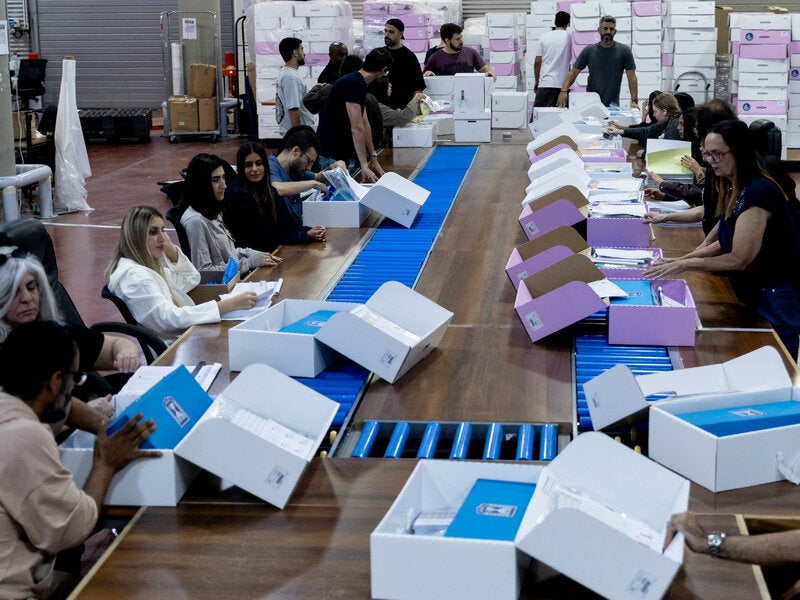
Israel’s Central Elections Committee has completed the vote count, including special ballots cast by military personnel, diplomats, prisoners and hospitalised voters.
The certified results are scheduled to be submitted to President Isaac Herzog on November 4, following the necessary checks and reviews. The newly elected Knesset is expected to be sworn in on November 10.
Herzog will subsequently consult political representatives before assigning a candidate the task of forming the next government.
The designated candidate will need to secure the support of at least 61 lawmakers to establish a governing coalition. The process could involve negotiations among parties with competing political priorities and sharply differing positions on key national issues.
If no candidate succeeds in forming a government within the prescribed period or any permitted extension, Israel could be forced to hold another election, prolonging the country’s political uncertainty.