Morocco’s ambitious drive to expand its maritime infrastructure is intensifying competition for control of West Africa’s shipping and logistics markets, placing Senegal’s planned deep-water port at Ndayane under pressure to deliver on its promise of transforming the country into a regional maritime hub.
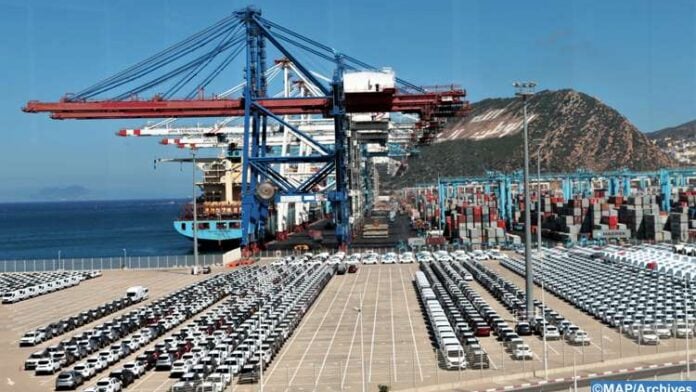
This is as the North African kingdom announced a third expansion of Tanger Med, its flagship port on the Strait of Gibraltar, with the new Tanger Med 3 project expected to add 4.5 million containers to its annual handling capacity.
Once completed, the expansion will raise the port’s total capacity to nearly 16 million containers, reinforcing Morocco’s position in global maritime trade and strengthening its connections to European, Asian and American markets.
The development presents a strategic challenge for Senegal, whose Port of Dakar remains a critical gateway for domestic imports and goods destined for landlocked Mali though the two countries currently serve different segments of the shipping industry, Morocco’s expanding infrastructure and growing access to the Sahel could reshape established trade routes across West Africa.
Morocco Mobilises Billions for Port Expansion
It was gathered that the Tanger Med 3 project will combine public funding with private investment. More than €730 million in public funds has been earmarked for the expansion, while private operators are expected to contribute another €1.4 billion.
Danish shipping group Maersk, through its subsidiary APM Terminals, has signed a concession agreement to develop the new container terminal. Construction is expected to begin soon, with operations scheduled to commence in 2031.
Since opening in 2004, Tanger Med has undergone two major expansion phases. The port handled more than 11 million containers in 2025, demonstrating its growing importance as an international transshipment centre.
However, Morocco’s strategy extends beyond Tanger Med. The country is simultaneously advancing projects on its Mediterranean and Atlantic coasts to diversify its maritime infrastructure and increase its access to regional markets.
At Nador West Med, located more than 400 kilometres east of Tanger, the first terminal is expected to enter service soon.
The facility is projected to handle between 3.5 million and 5.5 million containers annually, while French shipping company CMA CGM has committed to routing three million containers through the port each year.
Nador West Med will also host Morocco’s first liquefied natural gas terminal, adding an energy component to the country’s broader maritime ambitions.
Further south, the Dakhla Atlantic Port is emerging as a potentially important gateway to West Africa and the Sahel. The project, estimated to cost 12.5 billion Moroccan dirhams, was reported to be 62 per cent complete in June 2026, with operations expected to begin by the end of 2028.
Unlike Tanger Med, which primarily serves international shipping routes connecting Europe, the Mediterranean and other global markets, Dakhla is intended to strengthen Morocco’s commercial links with West Africa and the Sahel. The port is designed to handle up to 35 million tonnes of cargo annually.
Sahelian Trade Becomes the Next Battleground
Morocco’s port expansion is closely linked to its Atlantic Initiative, launched by King Mohammed VI to provide landlocked Sahelian countries with access to the Atlantic Ocean.
Mali, Burkina Faso, Niger and Chad endorsed the initiative at a ministerial meeting in Marrakech in late 2023. If the proposed connections become commercially viable, Morocco could offer these countries an alternative route for importing and exporting goods.
For Senegal, the potential implications extend beyond competition between ports. Dakar has traditionally served as an important entry point for merchandise destined for Mali, a major regional market for Senegalese port and logistics operators.
The Dakar-Bamako corridor supports significant commercial activity through road and rail transport, making Mali an important component of Senegal’s regional trade strategy.
However, Morocco’s ambitions face infrastructure challenges and establishing a competitive corridor to the Sahel will require substantial improvements to road networks across Mauritania, where long stretches still need development.
Rabat and Nouakchott have nevertheless formalised plans for a road corridor connecting North Africa with West Africa. Meanwhile, combining port investments with inland transport links, Morocco is seeking to extend its commercial reach beyond its immediate borders.
The success of this strategy will depend on whether the proposed routes can offer traders competitive costs, reliable transit times and efficient access to landlocked markets.
Senegal Accelerates Its Ndayane Ambitions
Against this backdrop, Senegal is counting on the $1.2 billion Ndayane deep-water port to strengthen its competitiveness and attract larger vessels directly to its shores.
Located approximately 50 kilometres south of Dakar, the project is being developed by DP World and represents the largest private investment in Senegal’s history.
Progress on the infrastructure has gathered pace. Dredging was completed on July 27, 2026, thirteen months ahead of schedule, while the access channel stretches approximately five kilometres. DP World expects to deliver the project in the third quarter of 2028.
The port’s principal advantage will be its depth, and with a draught exceeding 18 metres, Ndayane will be able to accommodate some of the world’s largest container ships, which cannot be accommodated as efficiently at Dakar’s existing port, where the draught is approximately 13 metres.
The development could reduce logistical constraints, improve shipping efficiency and help Senegal attract direct calls from major international shipping lines.
The existing Dakar container terminal, operated by DP World, handled a record 850,000 containers in 2025, compared with 265,000 in 2008, when the company took over operations.
Despite this growth, Dakar’s container throughput remains far below Tanger Med’s. The Moroccan port handled more than 11 million containers in 2025, approximately thirteen times Dakar’s reported volume.
The difference reflects not only the scale of their infrastructure but also their distinct business models. Tanger Med operates as a major international transshipment hub, while Dakar primarily serves Senegal’s domestic economy and neighbouring markets.
Direct Shipping Routes Could Redraw Regional Trade
One of the central questions is whether Ndayane can persuade major shipping companies to establish more direct services to Senegal and other West African markets.
At present, some containers destined for the subregion pass through Tanger Med before being transferred to smaller vessels for delivery to African ports. Such arrangements allow shipping companies to consolidate cargo at major international hubs, but they can also add handling stages and transit time.
With its deeper waters and planned modern facilities, Ndayane could offer an alternative for vessels seeking direct access to West African markets.
However, infrastructure alone will not guarantee success. Senegal will need to demonstrate that its port can compete on operating costs, turnaround times, cargo-handling efficiency and connections to inland destinations.
Its ability to maintain efficient transport links to Mali and other neighbouring markets will also be important in determining whether Ndayane can attract cargo beyond Senegal’s domestic requirements.
Morocco, meanwhile, is building a network of ports designed to serve different markets. Tanger Med is strengthening its international transshipment business, Nador West Med is expanding capacity along the Mediterranean coast, and Dakhla Atlantic Port is intended to improve access to the Atlantic-facing markets of West Africa and the Sahel.
2028 Could Prove Decisive
The expected commissioning of Ndayane and Dakhla Atlantic Port in 2028 could mark an important turning point in the competition for West African trade.
For Senegal, the challenge will be to convert Ndayane’s technical advantages into commercial gains before rival infrastructure and transport corridors become firmly established.
For Morocco, the priority will be to ensure that its expanding ports are supported by reliable inland connections capable of attracting sustained cargo volumes from the Sahel.
Neither country is guaranteed victory. Morocco’s larger transshipment network gives it a substantial head start, but Senegal retains an established position in regional trade, particularly through its links with Mali.