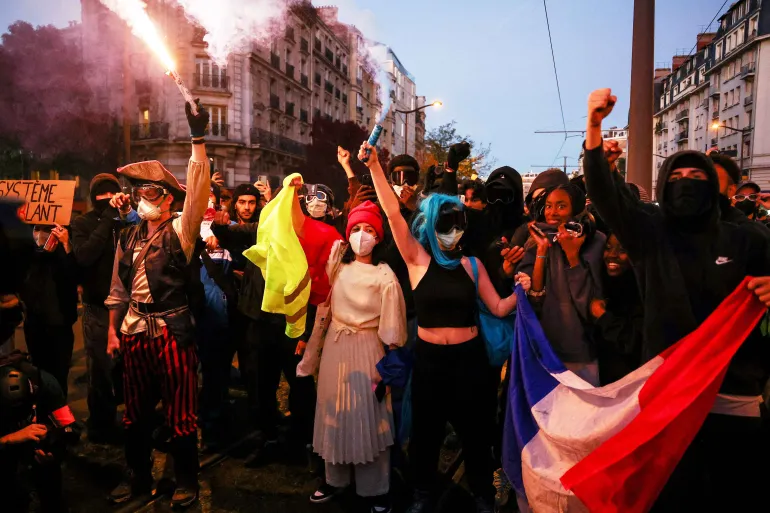
Governments across Europe are struggling to contain a growing wave of protests as public frustration over the rising cost of living, poor public services, housing shortages and fears about the future continues to intensify, exposing a widening disconnect between political leaders and ordinary citizens.
The demonstrations, largely driven by young people, have spread across at least eight European countries, including France, Germany, Belgium, Italy and Spain. Although the protests are driven by different grievances, they increasingly reflect a common perception that governments are failing to deliver economic security, affordable living conditions and opportunities for younger generations.
Alberto Alemanno, a professor of European Union law and policy at HEC Paris Business School, said the movements lacked a single leader or coordinated political programme but represented a deeper loss of public confidence in government institutions. He warned that the demonstrations were less about individual policies than growing doubts about the ability of political systems to respond to citizens’ needs.
In France, students have continued to blockade schools and universities, demanding better educational facilities, more teachers and reforms to the university admission system.
Germany has witnessed demonstrations against the possible return of compulsory military service, while workers in the metal and electrical industries have embarked on strikes. In Belgium, firefighters have protested over inadequate staffing and equipment, while Italian workers and students have demanded improved public services and reduced military expenditure.
Spain has also experienced weeks of demonstrations over its worsening housing crisis, with protesters demanding stronger protections for tenants and affordable accommodation. Although the government has introduced measures to limit rent increases and protect vulnerable tenants against eviction, the policies have failed to satisfy campaigners, who are planning another nationwide protest on November 11.
Rather than addressing the broader concerns, several governments have increasingly prioritised security measures. Italy, under Prime Minister Giorgia Meloni, has introduced tougher penalties for violent participation in demonstrations, including prison sentences of up to five years, while also expanding preventive measures involving minors. The response has attracted criticism from human rights organisations concerned about excessive policing and restrictions on the right to protest.
UN High Commissioner for Human Rights Volker Turk has also expressed concern over the use of unnecessary and excessive force against demonstrators, including children. Human Rights Watch similarly urged French authorities to listen to young people’s demands rather than rely on force to disperse protests.
The growing unrest has exposed a difficult financial dilemma for European governments, many of which are already struggling with high public debt and budget deficits while increasing defence expenditure. Italy’s public debt is projected to reach 138.5 per cent of GDP in 2026, while France’s budget deficit is forecast at 5.4 per cent, significantly above the European Union’s three per cent threshold. Spain, meanwhile, has struggled to secure parliamentary approval for a new budget.
These financial pressures have made it increasingly difficult for governments to meet demands for greater investment in education, housing, healthcare and other public services while committing more resources to defence and security.
Political science professor Donatella della Porta of the Scuola Normale Superiore in Florence argued that the protests had evolved beyond specific economic demands to encompass wider political concerns, including military spending, relations with the United States, the war in Iran and the Palestinian issue.
Experts warn that treating the demonstrations primarily as security threats could deepen public resentment and further weaken trust in democratic institutions. While governments face genuine financial and political constraints, their failure to engage protesters and explain difficult policy choices risks prolonging the unrest.
Alemanno maintained that financial resources alone would not resolve the crisis, arguing that citizens were more likely to accept difficult economic decisions when governments explained their choices and allowed the public to participate in the process.