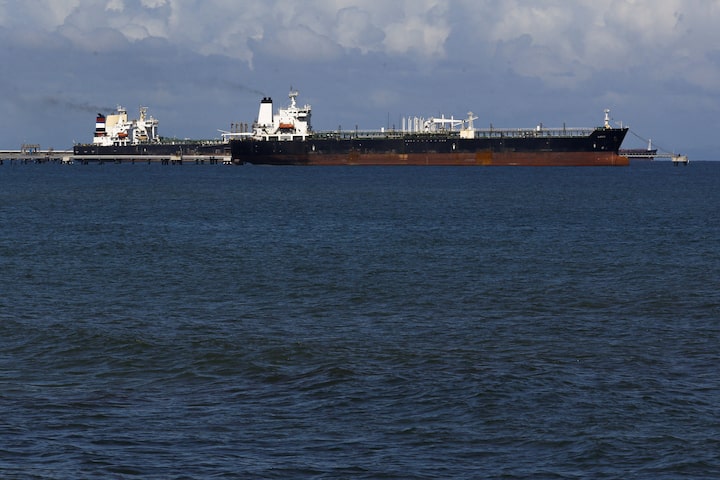
The United States handled more than $12bn in revenues generated from Venezuela’s oil and other natural resources during the first nine months of the year, with nearly 99 per cent of the funds disbursed under an arrangement that gives Washington significant influence over the country’s finances.
A report prepared by accounting firm KPMG and released by the US State Department on Thursday disclosed that buyers of Venezuelan oil and other natural resources paid the proceeds into an account held by the US Treasury before the funds were released to Venezuela’s interim government.
The arrangement was established following the January operation by President Donald Trump’s administration that led to the seizure of Venezuelan President Nicolas Maduro and his wife, leaving an interim administration led by Maduro’s former allies to work closely with Washington.
According to the report, oil, petroleum-based products and natural gas generated more than $12.1bn during the nine-month period, while other natural resources also contributed to the revenue, with gold sales generating $108m, minerals bringing in $22m and fertiliser accounting for $24.6m.
Of the total amount deposited into the US-held account, $12.11bn, representing nearly 99 per cent, had been disbursed, the report stated.
Most of the money was channelled through foreign exchange auctions organised by Venezuelan authorities, while $133m was paid directly to vendors for services rendered to the Venezuelan government.
However, despite the disbursement of almost all the funds, the report made clear that their release remains subject to decisions by the United States.
It stated that the money remains the sovereign property of Venezuela but is held pending allocation for public, governmental or diplomatic purposes, as determined by US Secretary of State Marco Rubio.
The public version of the KPMG report reportedly excluded the identities of companies that deposited the proceeds into the account, following redactions by the State Department.
However, The New York Times reported that commodity trading giants Trafigura and Vitol accounted for the bulk of the deposits. Both companies reportedly received special licences to sell Venezuelan oil shortly after the January 3 operation that resulted in Maduro’s seizure.
The development has also raised questions about the influence of political connections in the allocation of commercial opportunities arising from Venezuela’s oil trade.
Reuters reported on Wednesday that a gasoline trader at Vitol had connections to US Vice President JD Vance, which reportedly helped the company secure its licence to trade Venezuelan oil.
A State Department official, who spoke anonymously, defended the arrangement, describing the report as evidence that the process was working.
The official said the account had, within its first nine months, supported the use of Venezuela’s oil and other natural resource revenues for essential public services, macroeconomic stability and the reconstruction of critical sectors, including energy, healthcare and infrastructure.
Nevertheless, the arrangement places Washington in a powerful position over the management and release of revenues generated from Venezuela’s natural resources, even as the funds are formally recognised as belonging to the Venezuelan state.
Reuters