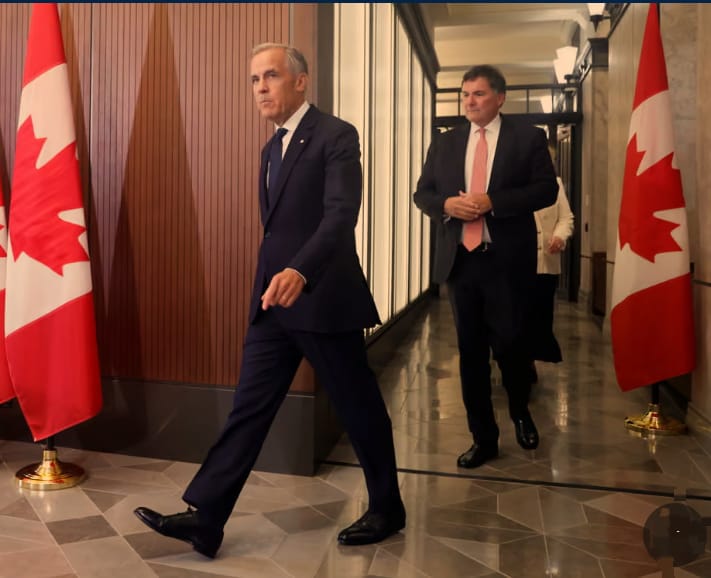
Canada has rejected a US trade proposal it says would undermine French-language protections in Quebec, deepening a growing trade dispute with its largest economic partner.
Prime Minister Mark Carney said Monday that Canada could not accept provisions that would weaken protections for the French language, despite mounting pressure from Washington and the threat of additional tariffs.
Carney said US negotiators viewed some of Quebec’s French-language rules as a trade “irritant”, but stressed that they were rights protected in Canada.
“In Quebec, these are rights,” Carney said, adding that his government would not surrender the protections demanded by Washington.
The dispute escalated after Carney instructed Canadian negotiators to abandon trade talks with the United States last week. Tariffs on a range of Canadian goods have since taken effect, covering about 5% of Canada’s exports to the US, with Ottawa preparing retaliatory measures in early September.
Quebec Premier Christine Fréchette backed Carney’s decision, saying the province’s language and culture were central to its identity and should not be negotiated away under tariff pressure.
The issue centres partly on Quebec laws requiring French-language descriptions on products and promoting French-language content on digital platforms. US officials have criticised some of these measures as barriers to American businesses.
US Trade Representative Jamieson Greer dismissed reports that Washington was seeking to weaken French-language protections, calling them a “funny fake story”. He said the dispute was instead focused on Canadian policies requiring streaming companies to support Canadian content.
Carney rejected that explanation, saying there was a significant difference between the two governments’ positions.
Meanwhile, US President Donald Trump has intensified his criticism of Canada, accusing it of exploiting the United States and threatening higher tariffs on Canadian cars, trucks, auto parts and steel from January.
Trump said the United States did not need Canada and warned that Ottawa would face further economic pressure.
The escalating dispute has triggered a backlash among Canadian political leaders. Ontario Premier Doug Ford accused Trump of bullying Canada and urged Ottawa to respond forcefully to the threatened tariffs.
With negotiations stalled and both sides preparing further measures, the trade dispute is increasingly becoming a wider confrontation over Canadian economic interests, national identity and Quebec’s French-language protections.