The U.S. Treasury will maintain its regular debt auctions despite plans to double purchases of longer-dated government bonds, Treasury Secretary Scott Bessent said on Monday, easing concerns that the buybacks could alter the government’s borrowing plans.
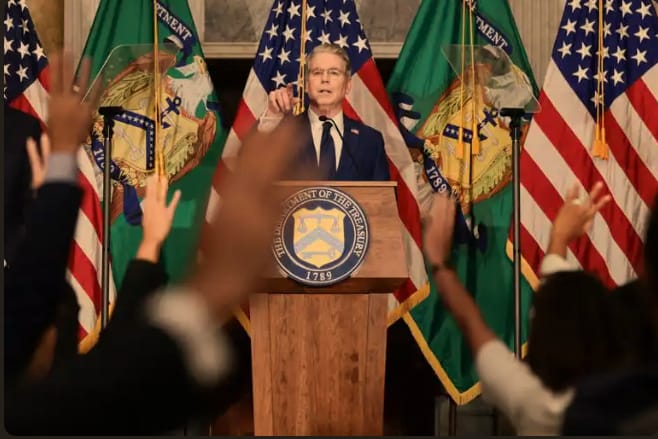
Speaking at a news conference on Iran sanctions, Bessent said the Treasury would “continue with our regular program of auctions” announced earlier this month.
He also said the department has yet to purchase any bonds under the expanded buyback programme, which is scheduled to begin on September 10 with 10- and 20-year securities.
The Treasury last week announced plans to double its quarterly repurchases of longer-dated bonds to at least $4 billion per operation. The move surprised bond investors and briefly pushed down yields on 10-, 20- and 30-year U.S. government securities after yields had climbed to their highest levels in nearly two decades.
The decline in yields, however, was largely reversed by the end of last week, although longer-term yields edged lower again on Monday.
Bessent, a former hedge fund manager with extensive experience in sovereign debt and currency markets, said the buybacks are intended to improve liquidity in a segment of the Treasury market that can become thinly traded, particularly during August.
The Treasury has not disclosed the precise funding source for the buybacks. One potential source is the Treasury General Account (TGA) at the Federal Reserve, the U.S. government’s main cash account.
Using the TGA would avoid the need to issue additional short-term debt to fund the purchases but would reduce the government’s cash reserves. Unlike the Federal Reserve, the Treasury cannot create money and must finance purchases through existing cash or additional borrowing.
The TGA stood at about $940 billion as of last Wednesday, compared with an average of roughly $840 billion over the past year, excluding the sharp increase seen during the COVID-19 pandemic.
The Treasury has increased its cash holdings partly to cover about $166 billion in refunds owed to importers following a U.S. Supreme Court ruling that invalidated a major portion of President Donald Trump’s import tariffs.
Bessent has defended the intervention in the bond market, arguing that the rise in long-term yields was out of line with the strength of the U.S. economy. He has also pointed to the Trump administration’s efforts to reduce government spending as a way of addressing the country’s more than $40 trillion debt burden.
The latest move is part of Bessent’s increasingly interventionist approach to financial markets. Earlier this month, he participated in the first joint intervention in the Japanese yen in 15 years.
On Monday, Bessent also warned countries against maintaining business ties with Iran, threatening secondary sanctions for those that fail to comply. He said the Treasury would make a major sanctions announcement involving a bank later this week.