A worsening security crisis in Libya is threatening a U.S.-led effort to broker a political settlement, unify state institutions and create conditions for greater American investment in the country’s energy sector.
The crisis has intensified in recent weeks, with protests over deteriorating living conditions in western cities, attacks on energy facilities and the assassination of a senior military intelligence official in the east.
The violence has raised concerns about whether Libya can achieve political stability while rival authorities continue to control competing security forces and economic institutions.
U.S. President Donald Trump’s adviser for Arab and African affairs, Massad Boulos, has sought to bring military commanders from eastern and western Libya closer together through joint exercises and bilateral meetings.
Boulos has argued that Libya needs unified and professional military and security institutions capable of protecting citizens and supporting a lasting political settlement.
But the latest unrest highlights the gap between those diplomatic efforts and the security realities on the ground, where armed groups continue to exercise significant influence.
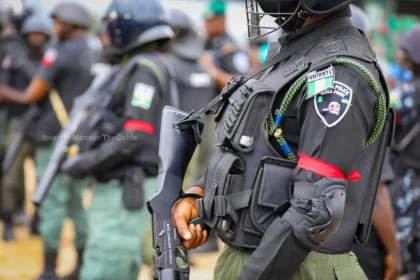
The situation is particularly tense in Zawia, about 25 miles west of Tripoli, where violent unrest and attacks on energy infrastructure have raised fears of a wider confrontation.
Zawia is strategically important because it hosts Libya’s largest operating refinery and sits in an area where armed groups linked to fuel and other illicit trade have significant influence.
Prime Minister Abdul Hamid Dbeibeh has been seeking to reorganise forces under his authority, amid indications that his government could move against militias in Zawia.
However, any attempt to seize the city by force could carry major political and security consequences and risk triggering another cycle of violence.
Mohammed al-Haneesh, a member of Libya’s House of Representatives representing Zawia, has warned that military intervention would be difficult and could come at a high cost.
He said the success of any political settlement would depend heavily on Washington applying balanced pressure to Libya’s rival factions rather than allowing one side to gain an overwhelming advantage.
The growing insecurity has already affected foreign investment. General Electric has evacuated its technical teams from a power plant in Zawia until security conditions improve, underscoring the risks facing international companies operating in Libya.
The withdrawal is a warning for the U.S. initiative, which seeks to attract American companies back into Libya and expand investment, particularly in the energy sector.
Boulos has made some progress, including efforts that contributed to the unification of Libya’s budget after years of division. Yet disputes between authorities in Tripoli and Benghazi over oil revenues and the management of the central bank remain unresolved.
The eastern part of the country is dominated by military strongman Khalifa Haftar, whose forces control Benghazi and much of eastern Libya.
Haftar’s camp suffered a setback with the assassination of Major General Fawzi al-Mansouri, the military intelligence chief and one of his senior aides, highlighting the continuing vulnerability of the security environment.
At the same time, Haftar has sought to strengthen his family’s position by maintaining relationships with foreign powers and promoting the role of his son, Saddam, in Libya’s political future.
Reports have suggested that a possible U.S.-backed compromise could give Saddam a prominent role in the Presidential Council, while Dbeibeh would remain prime minister, although the reported arrangement has not been formally made public.
The U.S. initiative also faces competition from a United Nations-led process that seeks to unify Libya’s divided institutions and pave the way for long-delayed national elections.
U.N. envoy Hanna Tetteh has warned that power outages, public discontent, weak investment and poor coordination are symptoms of Libya’s deep institutional fragmentation.
Analysts also caution that any agreement involving the existing centres of power could fail to address the influence of militias, which have become deeply embedded in Libya’s political and economic system.
The central challenge for Boulos, therefore, is not simply reaching a political agreement but creating the security conditions needed to enforce it. Without progress toward unified security institutions and a reduction in militia influence, Libya’s political settlement could remain fragile and U.S. efforts to unlock investment may struggle to gain lasting momentum.