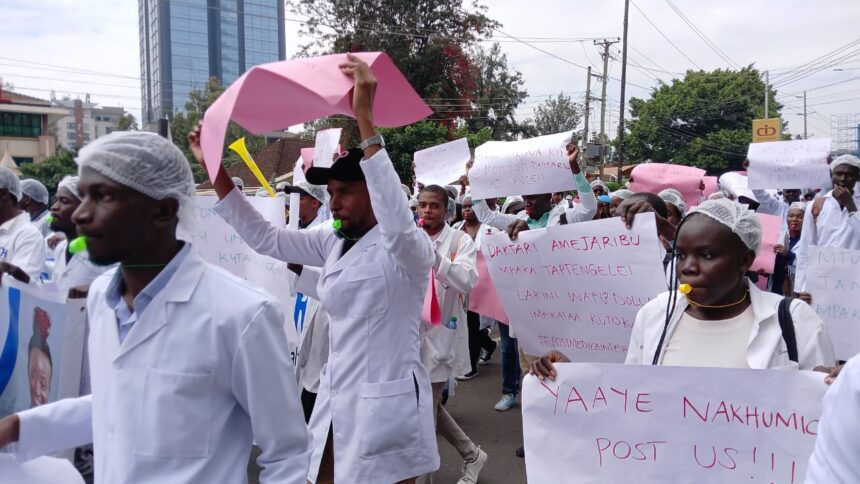
The agreement between Deputy President Kithure Kindiki and county governors to pursue a joint solution to the pay dispute involving Universal Health Coverage workers is a welcome development. But it must be followed by concrete action.
The dispute has reportedly remained unresolved since 2017. That is far too long for a matter involving the people who stand between millions of citizens and the healthcare system.
Kenya cannot credibly pursue Universal Health Coverage while leaving critical questions about the welfare, remuneration and employment security of healthcare workers unsettled.
The proposed joint engagement with the Salaries and Remuneration Commission offers a potentially useful path forward. If counties and health workers can reach a common position before approaching the SRC, the process could become less confrontational and more productive.
But dialogue should not become another mechanism for postponing difficult decisions.
The government has highlighted important achievements, including the deployment of 107,000 Community Health Promoters, the enrolment of millions of Kenyans under the Social Health Authority and the recruitment of thousands of medical interns and registrars.
These are significant investments. Yet the strength of a healthcare system cannot be measured by numbers alone. It must also be judged by whether the people delivering healthcare have fair and predictable working conditions.
Health workers who face uncertainty over salaries, contracts or absorption into county structures cannot be expected to sustain an ambitious national healthcare programme indefinitely without frustration.
The national and county governments therefore need to clarify responsibilities, timelines and funding arrangements. A credible agreement should clearly state who pays, who employs, what workers are entitled to and when outstanding commitments will be implemented.
The planned provision of smartphones and replenishment of equipment for Community Health Promoters is also positive. But technology and equipment cannot substitute for decent working conditions.
The government should therefore treat the current talks as an opportunity to resolve the underlying problems rather than simply defuse the immediate pressure of a strike.
Kenya’s UHC ambitions require a motivated and secure healthcare workforce. Taifa Care can only succeed if those responsible for delivering it are treated as partners in the reform, not as an afterthought.
The message from the latest IBEC meeting should therefore be clear: talks are welcome, but healthcare workers need a settlement, not another round of promises.