President Donald Trump’s announcement of a $54 billion South Korean investment in Alaska’s long-delayed liquefied natural gas project has been challenged by Seoul, which said no firm financial commitment had been made to the project.
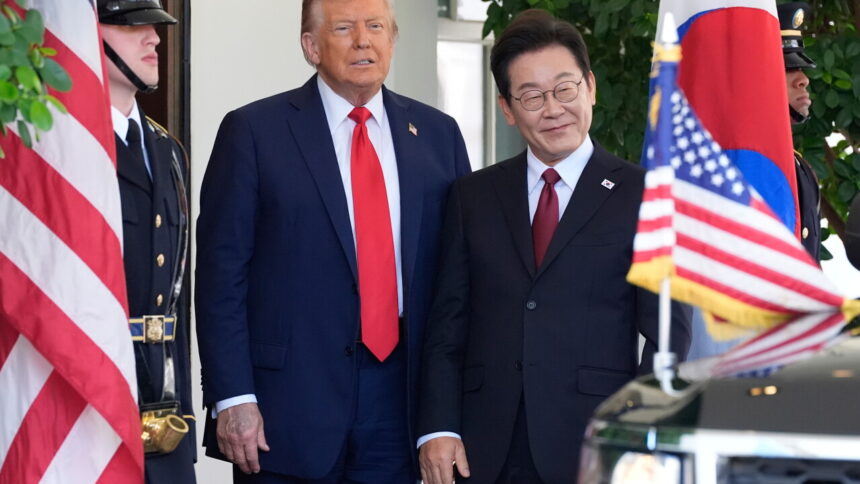
Trump announced the investment at an Oval Office event on Wednesday, September 30, describing it as part of a broader $200 billion South Korean investment package linked to the United States-South Korea trade and investment agreement.
The US administration said the package would include $54 billion for the Alaska LNG project, alongside investments in a 6-gigawatt power generation facility in Texas and eight large-scale nuclear power plants across the United States.
Trump described the Alaska project as a major step towards expanding US energy production, creating jobs and strengthening America’s energy relationship with South Korea and other Asian allies.
However, South Korea’s Trade, Industry and Resources Minister, Kim Jung-kwan, said the language used by the US administration went beyond what had actually been agreed.
According to South Korean reports, Kim said Seoul would proceed with investment in the Alaska project only if its commercial viability was established and the project complied with South Korean legal procedures.
A joint US-South Korea statement similarly indicated that the two countries would begin working on the Alaska LNG project subject to commercial reasonableness, without specifying a $54 billion financial commitment.
Trump, responding to questions about the discrepancy, rejected suggestions that he had announced the deal prematurely and said he was surprised that South Korean officials had questioned the commitment.
He subsequently suggested that South Korea could face higher costs if it failed to proceed with the project, saying he would “charge them more” and later threatening to double the amount, although he did not specify what costs he was referring to.
The Alaska LNG project proposes an 807-mile pipeline carrying natural gas from Alaska’s North Slope to the state’s southern coast, where the gas would be liquefied and shipped to foreign markets, particularly in Asia.
The project is estimated to cost between $45 billion and $55 billion and is designed to transport about 3.9 billion cubic feet of natural gas daily and export up to 20 million metric tonnes of LNG annually.
Trump said the project could create thousands of construction and permanent jobs while reducing energy costs for Alaskan households and generating substantial revenue for the state and local governments.
The announcement also carried significant political implications, coming during a closely contested US Senate race in Alaska between Republican incumbent Dan Sullivan and former Democratic Representative Mary Peltola.
Sullivan, a strong supporter of the Alaska LNG project, appeared alongside Trump at the White House ceremony, where the president praised him and credited the senator with helping advance the pipeline proposal.
“This one is huge for Alaska,” Sullivan said, describing the project as one of the most important developments for the state and saying he had worked relentlessly to bring it closer to reality.
Peltola, despite being a Democrat, has also supported the Alaska LNG project, citing its potential to create jobs and reduce energy costs. She welcomed the announcement and said she would continue supporting the project if elected to the Senate.
The project has, however, remained on the drawing board for decades despite repeated efforts by successive administrations, state officials and international investors to secure financing and buyers for Alaska’s stranded natural gas resources.
Previous attempts have involved potential partners from Japan, China, South Korea and Taiwan, with several agreements and ambitious announcements failing to translate into construction of the proposed gas pipeline and export facilities.
Environmental groups have also opposed the project, arguing that the development of new fossil-fuel infrastructure would increase greenhouse gas emissions and pose risks to Alaska’s sensitive ecosystems.
The latest dispute over South Korea’s involvement therefore leaves the Alaska LNG project facing the same central questions that have surrounded it for decades: whether sufficient financing and commercial demand can be secured to make the multibillion-dollar project economically viable and move it from political promises to actual construction.
Trump’s announcement has renewed political attention around the project, but Seoul’s insistence that it has made no binding $54 billion commitment means the proposed investment remains subject to further commercial and legal review.