Tanzania’s renewed hope of securing a $42bn liquefied natural gas (LNG) investment after years of delays presents a critical test of the country’s political leadership, institutional credibility and commitment to economic transformation. While the prospect of a final agreement offers the promise of industrialisation, employment and increased government revenue, the prolonged negotiations expose a deeper challenge: how to translate enormous natural resource wealth into tangible benefits for citizens rather than another cycle of political promises, bureaucratic obstruction and elite enrichment.
Finance Minister Khamis Mussa Omar said on October 13 that an agreement for the long-delayed project was “almost there”, raising expectations that Tanzania could finally move towards commercialising its vast offshore natural gas reserves. However, definitive agreements remain unsigned, government approval is outstanding, and the project’s financing and construction timetable have yet to be confirmed.
The distinction between progress towards an agreement and an actual investment decision is crucial. For a project of this magnitude, expressions of optimism cannot substitute for enforceable contracts, a credible financing structure and a clearly defined implementation schedule. Tanzania has spent years negotiating the terms of an investment that could reshape its economy, yet its citizens are still waiting for the promises of natural gas wealth to become an economic reality.
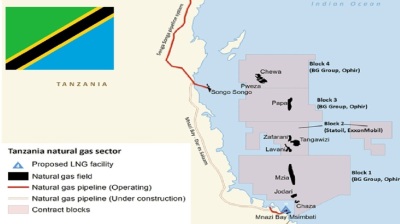
Led by Norway’s Equinor and Shell, the proposed project seeks to develop offshore gas discoveries estimated at 47.13 trillion cubic feet. Other participants include ExxonMobil, Indonesia’s MedcoEnergi, Pavilion Energy and the state-owned Tanzania Petroleum Development Corporation (TPDC). The planned facility in the southern coastal region of Lindi would process gas for export while reserving a portion for domestic consumption.
The scale of the proposed investment makes the project potentially transformative. Nevertheless, Tanzania’s experience demonstrates that possessing a valuable natural resource is not the same as possessing the institutional capacity to exploit it efficiently. The country must now confront the political, administrative and economic weaknesses that have prolonged negotiations and threatened to undermine confidence in its ability to deliver the project.
Tanzania signed a preliminary Host Government Agreement framework with Shell and Equinor in June 2022. Authorities subsequently targeted June 2026 for the conclusion of definitive agreements, but that deadline passed without a final deal. Although commercial, fiscal and revenue-sharing negotiations were reportedly largely complete by September, legal teams were still working on the agreements and accompanying legislation.
The remaining negotiations are expected to conclude during the 2026/27 financial year, which ends in June 2027. Deputy Energy Minister Salome Makamba has also indicated that legislation governing LNG investment could be completed by the end of 2026. These timelines offer a potential route towards resolving the impasse, but they also underscore how easily ambitious deadlines can become another source of public frustration when implementation is repeatedly postponed.
The failures of successive governments must therefore be examined beyond the immediate question of delayed signatures. Although the available information does not establish that every delay resulted from corruption, deliberate obstruction or personal enrichment, years of uncertainty raise legitimate questions about the quality of policy coordination, the consistency of government commitments and the ability of public institutions to negotiate complex investments in the national interest.
A responsible assessment must distinguish between legitimate negotiations over taxation, revenue sharing, environmental protection and national sovereignty, on the one hand, and avoidable administrative failures or politically motivated delays on the other. Governments have a duty to secure favourable terms for their countries, but negotiations cannot become an indefinite process in which officials announce successive deadlines without being held accountable for missed targets.
The current administration must also resist the temptation to portray the project’s eventual completion as an achievement belonging exclusively to the government that signs the final agreement. Large-scale investments are usually the products of years of negotiations, public expenditure, institutional preparation and decisions taken by successive administrations. National development should be measured by the quality of the outcome, not by which political officeholder claims credit for it.
More importantly, Tanzania must ensure that the final agreement protects the country against a familiar danger in resource-rich economies: the possibility that enormous export earnings coexist with widespread unemployment, weak public services and limited opportunities for ordinary citizens.
The $42bn headline figure should not be mistaken for money that will immediately enter government coffers. It represents the anticipated scale of the proposed investment, not guaranteed public revenue. The actual benefits will depend on financing arrangements, construction costs, production volumes, operating expenses, taxation, contractual obligations and the distribution of earnings between the government and its private-sector partners.
This distinction is essential because political leaders can exploit impressive investment figures to create an illusion of prosperity long before the underlying projects become operational. Announcements generate expectations, but citizens ultimately need measurable improvements in living standards. Tanzania must therefore communicate honestly about the investment’s costs, risks, expected returns and implementation milestones rather than allow the $42bn figure to become a political instrument.
The role of TPDC is particularly important. As the state-owned petroleum corporation and a project participant, it is expected to help secure Tanzania’s interests in the development of its natural resources. However, investment specialist Amne Suedi, managing director of Shikana Investment and Advisory, warned in an October 1 commentary that completing the LNG legislation would not resolve every financing risk. Lenders would also examine TPDC’s ability to finance its participation and the creditworthiness of domestic gas buyers.
This warning exposes a fundamental policy challenge. The government cannot simply demand a substantial share of project ownership or revenue without demonstrating that the state-owned company can meet its financial obligations. If TPDC is inadequately capitalised, the government may face pressure to provide additional funding, assume financial risks or restructure the company’s participation.
Such arrangements could ultimately transfer commercial risks to taxpayers while leaving private investors better protected. Tanzania must avoid a situation in which the state assumes disproportionate financial exposure without securing commensurate economic benefits, meaningful oversight or a reasonable prospect of returns.
The government should consequently publish a clear explanation of TPDC’s proposed financial contribution, funding sources, borrowing obligations and exposure to potential losses. Where commercial confidentiality genuinely applies, it should not become a blanket justification for concealing the fundamental financial commitments being made on behalf of the public.
Transparency must be a condition of the project, not an afterthought introduced when controversy emerges.
This is especially important because large resource projects create opportunities for conflicts of interest, politically connected contracting and the diversion of public funds. While there is no evidence in the supplied information establishing that such misconduct has occurred in the LNG negotiations, Tanzania must establish safeguards before billions of dollars begin flowing through procurement contracts, infrastructure projects and associated commercial arrangements.
Independent audits, competitive procurement, public reporting of beneficial ownership where legally appropriate, and effective parliamentary scrutiny should be incorporated into the project’s governance framework. Any official found to have abused public office must face investigation and lawful consequences, irrespective of political affiliation or proximity to the government.
The project must also deliver benefits beyond the central government and a narrow circle of investors or politically connected businesses. The proposed local-content strategy, being developed through a team established by the Prime Minister’s Office, is therefore a welcome opportunity to ensure that Tanzanian citizens participate meaningfully in the country’s gas industry.
However, local participation must extend beyond ceremonial commitments to employ citizens or award contracts to domestic companies. The government should establish measurable targets for employment, procurement, technical training and skills transfer, supported by transparent monitoring and enforceable obligations on project operators.
Tanzanian businesses should have realistic opportunities to supply equipment, provide professional services and participate in the construction and operation of the facility. Local companies will require access to financing, technical expertise and clear procurement information if they are to compete effectively with international suppliers. Without such support, local-content policies could become little more than political slogans while the most valuable contracts remain concentrated among foreign corporations and a handful of domestic intermediaries.
The question of domestic gas consumption is equally important. Although the project is designed primarily to process natural gas for export, a portion of production is intended for domestic use. That commitment must be translated into a practical energy strategy capable of supporting electricity generation, industrial production and other productive activities.
Tanzania should clarify how much gas will be available to domestic users, how it will be priced, which industries will receive priority and what infrastructure will be required to distribute it. The country must also guard against creating an arrangement in which export markets receive reliable supplies while domestic industries struggle with expensive or inadequate energy.
Natural gas can support manufacturing, fertiliser production, power generation and other industrial activities. But these benefits will not materialise automatically. They require investment in transmission and distribution infrastructure, credible industrial policies, a predictable regulatory environment and access to finance. The government must therefore view the LNG project as part of a broader economic transformation programme rather than an isolated export venture.
There are also environmental and social responsibilities that cannot be subordinated to the pursuit of investment. The proposed facility in the Lindi coastal region will require careful assessment of its implications for local communities, livelihoods, coastal ecosystems and land use. The government must ensure that affected communities receive adequate information, meaningful opportunities to participate in decisions and fair compensation where their rights or livelihoods are affected.
Environmental safeguards should be independently monitored, with clear procedures for addressing pollution, accidents and other potential harms. The pursuit of foreign investment cannot justify shifting environmental costs onto communities that may receive only a small share of the project’s financial rewards.
Tanzania must additionally consider the international energy market in which the project will operate. The global LNG industry is capital-intensive and exposed to fluctuations in prices, demand, financing costs and competition from other producers. Changes in energy policy, technological developments and the pace of the global transition towards lower-carbon energy could influence the project’s long-term commercial performance.
This makes financial discipline and realistic projections indispensable. The government should avoid basing public expenditure commitments on optimistic assumptions about future gas earnings. It should also assess the consequences of cost overruns, construction delays and weaker-than-expected demand before accepting financial obligations that could place pressure on public finances.
The experience of other resource-dependent economies offers a warning: abundant natural resources can become a source of economic vulnerability when governments fail to manage revenues prudently, diversify production and build institutions capable of resisting political interference. Tanzania has an opportunity to avoid this outcome, but only if it treats the LNG investment as a means of strengthening the broader economy rather than an end in itself.
A credible revenue-management framework should identify how future government earnings will be allocated among infrastructure, education, healthcare, skills development, industrial investment and other national priorities. Strong oversight would also help prevent successive administrations from treating gas revenues as a discretionary pool for politically attractive projects or expenditure with little long-term economic value.
The government should establish a publicly accessible implementation framework containing the major milestones, responsible institutions and deadlines for the project. Regular progress reports should explain whether agreements have been concluded, legislation enacted, financing secured and construction preparations completed. Any missed deadline should be accompanied by a clear explanation of the reasons and the corrective measures being taken.
Parliament, civil society, independent auditors and the media must be able to scrutinise these developments without being treated as opponents of national progress. Constructive criticism is particularly important for a project of this scale because its consequences will extend beyond the tenure of any individual administration.
Ultimately, Tanzania’s challenge is not simply to persuade international energy companies to invest $42bn in an LNG project. It is to demonstrate that its institutions can negotiate fairly, enforce contracts, protect public finances, resist corruption and ensure that natural resource wealth contributes to broad-based prosperity.
The country’s past delays should serve as a lesson, not a permanent justification for inaction. Its present leadership must demonstrate that it can move beyond repeated assurances and produce verifiable results. At the same time, the government must not sacrifice sound contractual terms, environmental protection or public accountability merely to meet a political deadline.
If successfully developed and responsibly managed, the LNG project could strengthen Tanzania’s energy security, support industrialisation, create employment and expand its role in international gas markets. If poorly negotiated or inadequately supervised, however, it could leave the country with financial liabilities, limited domestic benefits and another expensive reminder of the distance between resource wealth and national development.
The ultimate measure of success will not be the signing ceremony, the size of the investment announcement or the political administration that claims credit. It will be whether Tanzanians secure lasting economic opportunities, better public services, stronger institutions and a fair share of the wealth beneath their waters. That is the standard against which both past failures and present promises must be judged.