Longtime supporters of Venezuela’s late President Hugo Chávez are increasingly questioning the government of interim President Delcy Rodríguez over its growing cooperation with U.S. President Donald Trump, a development that represents a striking departure from the anti-Washington posture that defined much of the Chavista era. For a movement built around resistance to U.S. influence, the speed and scale of this ideological shift inevitably raises questions about whether political survival and economic necessity are now taking precedence over revolutionary doctrine.
One of the most outspoken voices expressing disappointment is Mario Silva, a former state television personality and passionate defender of Chávez’s Bolivarian Revolution. Silva spent more than two decades promoting the movement on his programme, The Razorblade, and was known for his strong personal devotion to Chávez. His criticism therefore carries particular symbolic weight, because it comes not from an established opponent of Chavismo but from someone who once represented its ideological commitment.
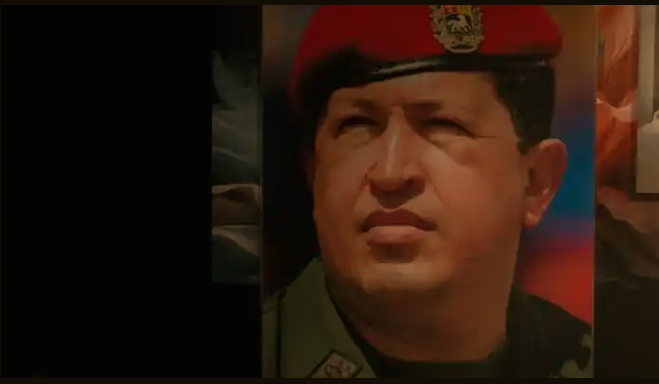
Silva’s loyalty to Chávez was highly visible, with the former president’s portrait frequently displayed behind him during his broadcasts and Chávez’s signature tattooed on his left wrist. Such displays illustrate the depth of the political and emotional attachment many Chavistas developed to Chávez, making the current rapprochement with Washington more difficult for some loyalists to reconcile with the principles they once defended.
Former Chávez minister Héctor Navarro described Rodríguez’s rapprochement with Washington as “utter surrealism,” while other prominent Chavistas have criticised the government over its oil agreement with the United States and Rodríguez’s meeting with Trump in New York. Their reaction highlights the ideological contradiction at the heart of the moment: a movement historically defined by confrontation with Washington is now being represented by an administration seeking closer engagement with the White House.
Silva, whose state-funded television programme was recently cancelled, accused Rodríguez’s government of abandoning Chávez’s legacy and said he felt deeply disappointed by the direction of the country. Former Vice President Elías Jaua and former Caracas Mayor Juan Barreto have also questioned the government’s new course. The emergence of criticism from several figures associated with Chávez’s inner political tradition suggests that the disagreement is not merely personal; it reflects a broader debate over what should remain non-negotiable in the Chavista project.
The criticism follows a series of concessions and policy changes involving Washington since U.S. forces captured Nicolás Maduro in January and Rodríguez assumed the interim presidency. The relationship deepened in August when Trump announced an oil agreement involving 65 billion barrels of Venezuela’s reserves, reportedly representing about 22 per cent of the country’s estimated total reserves. Whatever the political interpretation of the agreement, its scale makes it more than an ordinary commercial arrangement; oil has always been central to Venezuela’s economic sovereignty and to the political identity of the Chavista state.
Rodríguez has defended the arrangement on economic grounds, arguing that Venezuela requires foreign capital, technology and infrastructure to raise oil production. She has said the agreement could generate more than $209 billion in government revenue and, during a September visit by U.S. Energy Secretary Chris Wright, described the arrangement as a “win-win deal.” Her argument reflects a fundamental shift in emphasis—from ideological resistance to Washington towards pragmatic engagement aimed at rebuilding an economy weakened by years of crisis, sanctions and declining production.
The agreement has nevertheless attracted criticism from different sections of Venezuelan society. El País reported in August that economists, opposition figures and some Chavistas had questioned its transparency, legality and implications for national sovereignty, particularly because the detailed terms were initially unclear. The concerns show that the controversy extends beyond the old Chavista-versus-American divide; questions about transparency, legal authority and control over Venezuela’s natural resources can affect supporters and opponents of the government alike.
The criticism, however, does not necessarily represent a broad revolt within Chavismo. Some supporters appear willing to accept Rodríguez’s cooperation with Washington if it protects the movement’s political influence and produces tangible economic improvements, according to sources cited by The Guardian. This is an important distinction: ideological disappointment does not automatically translate into political abandonment, particularly when supporters believe economic recovery could ultimately preserve the political project Chávez created.
Still, the transformation is difficult to ignore. Chávez built much of his political identity around opposition to what he described as U.S. imperialism, while Rodríguez now argues that cooperation with Washington could help revive Venezuela’s economy. The central question for Chavismo may therefore be less about whether Venezuela can work with the United States and more about how far that cooperation can go before supporters begin to see it as a departure from the movement’s defining principles.
For Venezuela’s Chavistas, the emerging relationship with Trump represents a remarkable political reversal. The government may view Washington as a source of capital, technology and economic opportunity, but for Chávez’s most devoted followers, the partnership also forces an uncomfortable reassessment of a political legacy built on resistance to precisely that influence.