India appears to be entering a new phase of industrialisation, driven not simply by traditional factories but by semiconductors, electronics, solar manufacturing, aerospace, data centres and commercial space.
Global investment bank Jefferies describes the development as India’s “New Industrial Revolution”, arguing that a huge domestic market, rising private-sector participation and sustained government support are combining to create new industrial champions.
The assessment is significant because India is attempting something more ambitious than simply expanding existing manufacturing. It is seeking to move into industries that sit at the centre of the global technology and supply-chain competition.
According to Jefferies, the Indian government has created an increasingly favourable environment through measures including opening the space sector to private companies, tax incentives for data centres, production-linked incentives for semiconductors, electronics and solar manufacturing, localisation policies and government purchases of advanced computing infrastructure. The report was dated September 8, 2026.
The space sector is one of the clearest examples. Jefferies said India, already one of a small number of spacefaring nations with globally competitive capabilities, is targeting a space economy worth between $40 billion and $45 billion by 2030. Private companies including Skyroot, Pixxel and Agnikul are moving towards commercial operations.
This represents an important change in India’s industrial model. For decades, space was dominated by the state. The increasing participation of private companies potentially allows India to combine government expertise with private capital, innovation and commercial discipline.
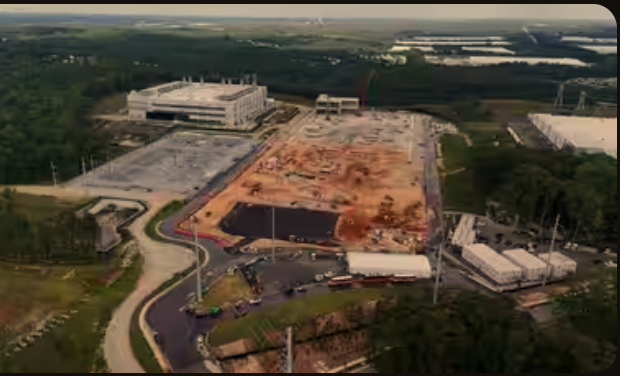
Semiconductors may be even more consequential. Jefferies said India’s semiconductor push is moving from policy announcements towards physical production, with about $20 billion in investment, a chip fabrication plant under construction and several outsourced semiconductor assembly and testing projects moving towards production. A further $13 billion incentive programme is expected to deepen the ecosystem.
That distinction between announcing an industry and actually producing at scale is crucial. India has made substantial progress, but the semiconductor race is extremely demanding. China, Taiwan, South Korea, Japan and the United States possess far deeper ecosystems, while India is still building many of the capabilities required to compete across the entire value chain.
Data centres provide another major opportunity. Jefferies said India’s data-centre capacity has increased fivefold in five years to more than two gigawatts and could exceed 10 gigawatts within the next five years. The expansion could generate an estimated $45 billion investment opportunity across electricity, cooling, construction and telecommunications infrastructure.
The electronics industry is also moving beyond the simple assembly model. Jefferies expects domestic value addition in mobile-phone components to rise from below 20 per cent to about 50 per cent over the next six years.
That could be one of India’s most important industrial achievements. Assembly creates jobs and exports, but the bigger economic prize lies in producing components, machinery, software and intellectual property domestically.
India’s solar industry is following a similar path. Jefferies says the country has become the world’s second-largest solar PV manufacturing base, with more than 35GW of operational cell capacity and another 100GW under construction. It expects more than 90 per cent of the solar value chain to be localised by 2030.
Aerospace is another sector in which India is beginning to exploit its combination of relatively competitive costs, engineering talent and a huge pool of technical workers. Jefferies estimates that Boeing and Airbus already source between $1.4 billion and $1.6 billion annually from India, while Indian companies are increasingly supplying global original-equipment manufacturers and Tier-1 suppliers.
There is therefore substantial evidence behind the argument that something important is happening.
But there is also a reason to resist excessive triumphalism.
India’s manufacturing sector is not yet as dominant in its economy as the phrase “industrial revolution” might suggest. World Bank data put manufacturing value added at about 13.5 per cent of Indian GDP in 2025 though the figure increased from 13.1 per cent in 2024.
That is an important qualification. India is becoming more sophisticated industrially but it has not yet transformed the overall structure of its economy to the extent achieved by some manufacturing-heavy Asian economies.
Indonesia, for example, recorded manufacturing value added equivalent to about 19.1 per cent of GDP in 2025, significantly above India’s 13.5 per cent.
Bangladesh provides an even more striking comparison. Its manufacturing value added was approximately 22.4 per cent of GDP in 2025, reflecting the enormous role of garments and related manufacturing in its economy.
Pakistan, despite its economic difficulties, recorded manufacturing value added of about 13 per cent of GDP, roughly comparable with India. Brazil, another large developing economy with substantial natural resources and a huge domestic market, was lower at about 11.8 per cent.
Nigeria presents a more troubling contrast. Its manufacturing value added was only about 8.3 per cent of GDP in 2025, according to World Bank-based data.
The comparison exposes an important difference between countries possessing large populations and natural resources and countries actually converting those advantages into industrial capacity.
India’s greatest industrial resource may not be minerals. It is the combination of its enormous consumer market, engineering workforce, private companies, technology sector and ability to use government policy to direct investment into strategic industries.
That is precisely where countries such as Nigeria have struggled. Possessing oil, gas, agricultural land, minerals and a huge population does not automatically create industrialisation. Industrialisation requires reliable electricity, transport infrastructure, access to finance, skilled workers, predictable regulation, technology transfer and companies capable of competing internationally.
India still faces many of these challenges itself. Infrastructure gaps, bureaucracy, land acquisition, logistics costs, energy requirements, skills shortages and the need to deepen domestic supply chains could determine whether today’s investment boom becomes a durable industrial transformation.
The bigger question, therefore, is not whether India is doing well. It clearly is in several strategic sectors. The harder question is whether these emerging industries can eventually pull a much larger share of India’s workforce and economic output into high-productivity manufacturing.
That is where the comparison with China becomes particularly important. China did not merely build technology companies; it created enormous industrial ecosystems around electronics, machinery, chemicals, batteries, automobiles, renewable energy and countless intermediate components.
India’s challenge is to replicate that depth while developing industries in which China already has enormous scale.
The opportunity, however, is equally substantial. Companies seeking to diversify production away from China are looking for alternative manufacturing locations, while India’s domestic market gives producers something many export-dependent economies do not possess: a huge customer base at home.
Jefferies may therefore be right about the direction, even if the “industrial revolution” label remains premature.
India is not starting from the industrial weakness of many developing countries. Nor has it yet reached the manufacturing depth of the world’s leading industrial powers.
It is somewhere in between — but moving.
The real test over the next decade will be whether today’s incentives produce globally competitive companies, deep domestic supply chains, large-scale employment and sustained exports after government support becomes less important.
If that happens, India’s current boom in semiconductors, electronics, solar, aerospace, data centres and space will look less like an investment cycle and more like the beginning of a genuine industrial transformation.
For countries such as Nigeria, Brazil and Pakistan, the lesson may be even more important: natural resources and a large population are only potential advantages. The countries that convert those advantages into productive factories, technology, infrastructure and globally competitive companies are the ones that ultimately industrialise.