The United Arab Emirates (UAE) has reaffirmed the strategic importance of the Strait of Hormuz despite plans to diversify its trade routes and energy export infrastructure, as the Iran war disrupts shipping and threatens regional economic stability.
UAE Minister of Economy and Tourism Abdulla bin Touq said the waterway would remain a vital gateway for international trade, rejecting suggestions that alternative routes could render it irrelevant.
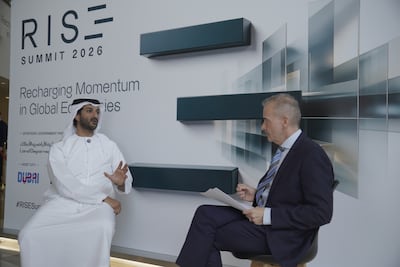
“Hormuz really matters and it will keep on mattering,” bin Touq said in an exclusive interview with The National on the sidelines of the Rise Summit in Dubai.
His remarks directly counter US Treasury Secretary Scott Bessent’s assertion last month that the strait would become “a worthless piece of water” within two years.
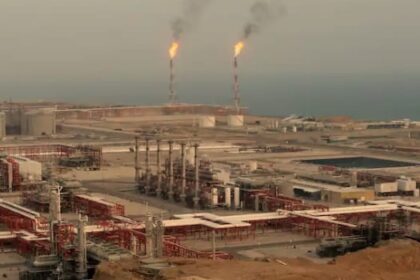
Before the Iran war began on February 28, about one-fifth of global oil and gas supplies passed through the Strait of Hormuz, making it one of the world’s most critical energy transit routes. However, shipping activity has fallen sharply since the conflict began, exposing the vulnerability of countries and businesses dependent on the waterway.
While acknowledging its continued significance, bin Touq stressed that the UAE was not dependent on a single maritime corridor and was strengthening alternative routes to protect its economy against future disruptions.
“The UAE doesn’t have only one road. It has many roads to come to it,” he said.
The government has outlined a strategy dubbed “Zero Hormuz” to reduce its dependence on the strait by diversifying supply chains, developing alternative logistics corridors and expanding infrastructure beyond the waterway.
Under the strategy, the UAE is strengthening transport links connecting the Arabian Gulf with the Red Sea and the Gulf of Oman. Development of ports at Khor Fakkan and Fujairah, on the country’s east coast and outside the Strait of Hormuz, has also been accelerated.
Additionally, the country is developing a pipeline to increase its capacity to export Abu Dhabi crude oil through the Gulf of Oman, providing an alternative to shipping through the strait.
Bin Touq described the approach as an expansion of economic opportunities rather than a retreat from established commercial centres, arguing that alternative transport routes could attract investment and stimulate business activity.
“Redundancy means dollar signs. It means investments,” he said, referring to growing business registration activity along the east coast.
He, however, cautioned against interpreting the strategy as a shift away from the UAE’s traditional economic hubs, insisting that the country’s seven emirates would continue to operate as an integrated economic system.
The expansion of Etihad Rail, which links Abu Dhabi with Fujairah in under four hours, is expected to strengthen connectivity between the country’s commercial and industrial centres.
According to the minister, improved rail connections would enable businesses to operate more efficiently across the federation while allowing investment and economic activity to spread beyond established centres.
Tourism Sector Eyes Recovery
Beyond trade and energy security, the UAE is also seeking to revive its tourism industry following disruptions caused by the Iran war.
Bin Touq acknowledged that tourism typically suffers early during a crisis and takes longer to recover, with the pace of recovery depending heavily on airline capacity and travellers’ confidence in their destinations.
The government is working with other countries to secure the removal of the UAE from travel advisory lists as it seeks to restore international visitor numbers.
The planned resumption of flights by European carriers Lufthansa and Air France by the end of October was cited by the minister as an indication of improving confidence in the country’s aviation and tourism sectors.
He identified November and December as crucial months for the industry, with the final stretch of the year offering an opportunity to recover some of the business lost during the conflict.
Early indicators have provided some encouragement, with hotel occupancy reaching approximately 68 per cent at the end of August. Although September’s figures had not been published at the time of the interview, bin Touq described the emerging trend as positive.
Nevertheless, the recovery will depend on the restoration of air connectivity, the easing of travel restrictions and sustained improvements in regional security.
IMF Forecasts Contraction Before Rebound
The UAE’s economic outlook reflects the competing pressures of conflict-related disruption and continued activity in non-oil sectors.
The International Monetary Fund has projected that the country’s economy will contract by 3.9 per cent in 2026 before rebounding by 7.7 per cent in 2027.
Despite the challenging outlook, the UAE recorded annual real gross domestic product growth of 0.4 per cent in the first half of 2026, with GDP reaching Dh961.9 billion, equivalent to approximately $262 billion. Non-oil business activity was the principal driver of the expansion.
Bin Touq used a football formation to explain his economic strategy, describing tourism as the attacking force, businesses as the midfield and intellectual property and innovation as the defence.
He suggested that while tourism had been weakened by the conflict, businesses had continued to generate economic activity, underscoring the importance of maintaining the strength of the country’s non-oil economy.
For 2027, the government intends to restore tourism’s position as a major growth driver while improving access to capital, strengthening business regulations and expanding the adoption of artificial intelligence across companies and factories.
The minister also highlighted the Dh1 billion Emirates Growth Fund, which seeks to help businesses with annual revenues of between Dh1 million and Dh10 million expand towards revenues of Dh50 million to Dh60 million.
He said the fund was already investing, while the government was also seeking to attract more venture capital into the region to support business expansion and innovation.
The UAE’s strategy reflects a broader effort to balance economic resilience with continued expansion. Rather than abandoning the Strait of Hormuz, the country is seeking to reduce the risks associated with relying heavily on it.
Whether the alternative infrastructure can sufficiently cushion the economy against prolonged regional instability will depend on investment, the effectiveness of new transport connections and the ability of businesses to adapt to changing trade conditions.
For now, the UAE’s position is that the Strait of Hormuz will remain strategically important, but its future economic security must depend on having more than one route to global markets.