Supply Chain Security: Proposed facility aims to meet half of Taiwan’s rare earths demand by 2030 as Beijing’s export controls raise fears of industrial disruption
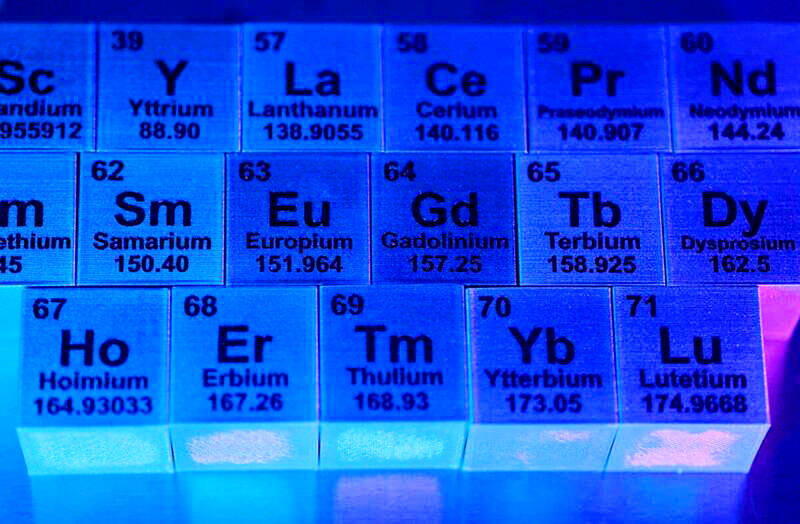
Taiwan plans to build a rare earths demonstration plant capable of producing 500 tonnes annually by the end of 2030, as China’s export restrictions intensify concerns over supply chain vulnerabilities and threaten access to materials critical to advanced manufacturing.
according to report, the Industrial Technology Research Institute (ITRI) is developing the project to strengthen domestic production capacity and reduce Taiwan’s exposure to potential supply disruptions. ITRI president Chang Pei-zen disclosed the plan in a recent interview, saying the proposed facility could meet about half of the island’s annual rare earths requirements.
Construction is expected to be completed by the end of 2028, after which the institute will focus on refining production processes and gradually increasing output towards the 2030 target.
The initiative reflects Taiwan’s broader effort to strengthen industrial resilience amid growing geopolitical tensions and uncertainty over access to strategically important materials.
The proposed facility would represent a significant expansion of Taiwan’s existing capabilities. ITRI currently operates an experimental rare earths production line with an annual output of about five tonnes, meaning the new plant would increase production capacity by approximately 100 times.
The institute intends to locate the facility in an industrial park to facilitate its eventual transfer to a private company. However, funding arrangements remain under consideration and would require budgetary allocations from the National Science and Technology Council.
Discussions are also ongoing over the commercial framework, including the possibility of government price guarantees to provide prospective private investors with greater certainty and encourage participation in the project.
Although Taiwan’s demand for rare earths is relatively modest, the materials are indispensable to several advanced industries. The Ministry of Economic Affairs is seeking to establish a domestic supply chain and expand production capacity in response to growing concerns about China’s ability to restrict exports.
The urgency of the initiative extends beyond the availability of raw materials to the components used in industrial equipment. China’s export controls have exposed vulnerabilities in manufacturing supply chains, particularly in sectors dependent on specialised magnets and other rare earth-based components.
Reuters reported on Thursday that Taiwan Semiconductor Manufacturing Co (TSMC) was exploring alternatives to rare earth components used in factory equipment to reduce the risk of disruptions at its advanced semiconductor plants. The company did not comment on the report.
Rare earth magnets are used in motors that control moving parts in industrial machinery, including equipment deployed in highly automated semiconductor manufacturing facilities. Consequently, restrictions on supplies could disrupt production even when rare earths are not directly incorporated into the finished products.
The proposed plant would build on ITRI’s existing research infrastructure. Equipment at its headquarters in Hsinchu County is used to separate rare earths and convert them into metals, while facilities at its Southern Region Campus in Tainan include equipment for producing high-performance magnets.
However, scaling up production presents substantial technical challenges. Rare earth elements possess similar chemical properties, making their separation a complex and demanding process that requires specialised expertise.
Chang said developing and fine-tuning separation techniques could involve hundreds or even thousands of processing stages, underscoring the time and experience required to establish a reliable commercial-scale operation.
ITRI aims to improve its production processes and achieve its targeted annual output by the end of 2030. Beyond the technical challenges, the institute must also establish an investment framework capable of attracting private-sector participation and supporting the facility’s long-term commercial viability.