The United Nations has ended its political mission in Somalia after more than three decades of involvement in the country’s efforts to rebuild its institutions, resolve political disputes and restore stability following years of civil war.
The United Nations Transitional Assistance Mission in Somalia (UNTMIS) officially ceased operations on Saturday, October 31, following a two-year transition process requested by the Somali government.
The mission said its closure marked the completion of a roadmap agreed upon by Somalia and the UN to transfer its responsibilities to national institutions and other international bodies.
Under the arrangement, the mission’s functions have gradually been handed over to Somali institutions, UN agencies and the UN Support Office in Somalia (UNSOS), which provides logistical assistance to African Union forces supporting the country’s security operations.
UN Secretary-General António Guterres welcomed the progress made by Somalia but stressed the need for sustained international support as the country continues to grapple with political divisions, security threats and humanitarian difficulties.
The withdrawal follows years of strained relations between Somali authorities and the UN mission, whose involvement in the country’s political affairs frequently attracted accusations of interference in domestic matters.
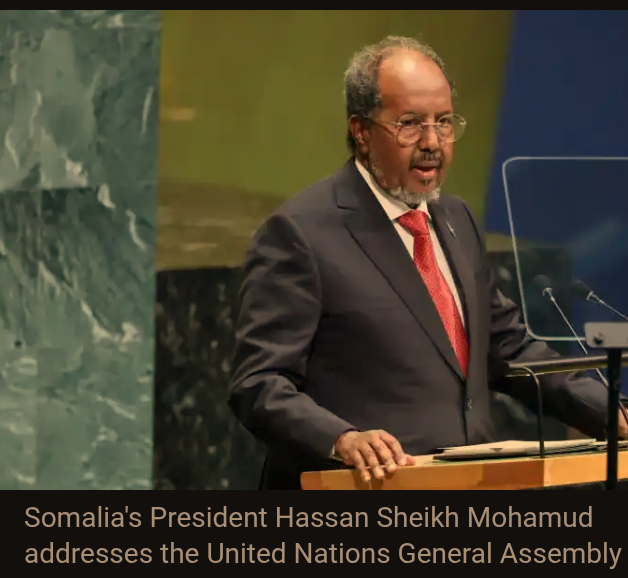
President Hassan Sheikh Mohamud’s administration formally requested the mission’s withdrawal in 2024, paving the way for the transition that culminated in its closure.
At a farewell ceremony in Mogadishu on Monday, Somalia’s Deputy Prime Minister, Saleh Ahmed Jama, described the development as a “day of victory”, declaring that the country was moving beyond what he called the “era of transition”.
However, the mission’s departure comes at a delicate moment for Somalia, with international assistance declining and longstanding political disagreements threatening to undermine efforts to consolidate stability.
According to report, pposition leaders have challenged the government’s interpretation of constitutional changes that would allow President Mohamud and parliament to remain in office until 2027. A dispute that has heightened tensions over the country’s political future, while relations between the federal government and some regional leaders remain strained.
Security concerns also persist, particularly as al-Shabab, an armed group linked to al-Qaeda, continues its insurgency against Somali government forces and their allies.
For years, the UN political mission played an important role in facilitating negotiations between rival political leaders, particularly during disputes over electoral arrangements, being why the closure raises questions about how future disagreements will be resolved, as no replacement mechanism for its mediation role has been agreed upon.
President Mohamud has invited political opponents to participate in talks aimed at addressing the country’s political differences, but major opposition groups have yet to confirm whether they will attend.
Although the political mission has closed, other UN humanitarian and development agencies will continue operating in Somalia. Their activities, however, have been severely affected by reductions in international aid funding.
The consequences are already evident in the health sector as in August, the UN Children’s Fund reported that 205 health and nutrition facilities had shut down because of funding cuts, raising concerns about access to essential services for vulnerable communities.
The future of international security assistance is another source of concern. African Union troops remain in Somalia to support local forces in their fight against al-Shabab, relying heavily on UNSOS for essential supplies and services, including food, fuel, medical support and transportation.
However, that assistance could face a significant setback a United States-backed plan envisaged closing the UN office responsible for providing the logistical support by December 2027, according to Reuters in September.
Such a move could place additional pressure on Somali and African Union forces at a time when the country continues to confront persistent security threats.