The World Bank’s approval of another $500m financing for Nigeria’s Agro-Climatic Resilience in Semi-Arid Landscapes Project (ACReSAL) may offer a lifeline to communities battling flooding, land degradation and declining agricultural productivity across northern Nigeria.
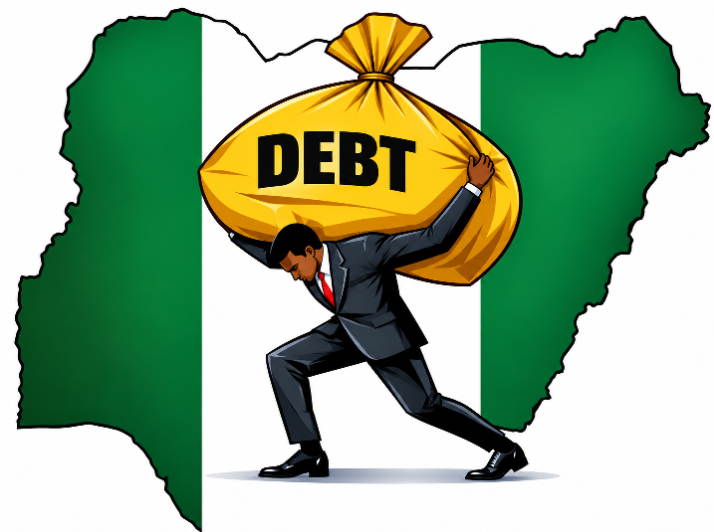
However, beyond the immediate benefits of the intervention lies a bigger question that the Tinubu administration cannot continue to dodge: how much more debt can a struggling economy absorb, and who will ultimately bear the consequences?
There is no argument that Nigeria needs financing to address its infrastructure deficit, agricultural challenges, insecurity and other developmental needs but the argument is not about whether the country needs money to finance critical projects, it is about the cost of repeatedly borrowing, the capacity to repay and, more importantly, the fate of this generation and generations yet unborn.
President Bola Tinubu cannot hide this reality. He can only pretend it never happened, deny its implications or attempt to justify it with ambitious economic projections.
His administration may argue that borrowing is necessary to build a $1tn economy by 2030, but economic ambition without fiscal discipline is a dangerous gamble.
A country cannot sustainably pursue development while accumulating obligations that increasingly threaten its economic future.
Nigeria’s outstanding debt to the World Bank alone rose from $14.34bn in March 2023 to $20.73bn in June 2026, representing an increase of $6.39bn.
This is particularly concerning when placed against the country’s revenue challenges, growing debt-service obligations and persistent economic hardship, which obviously means the economy is already suffering what could be described as an internal injury from years of fiscal mismanagement, excessive borrowing and weak productive capacity.
Former President Olusegun Obasanjo’s recent description of national debt as something worse than leprosy may sound harsh, but his warning about the generational consequences of reckless borrowing deserves serious consideration.
His criticism of the administration’s proposed $21bn external borrowing plan raises a fundamental question: what exactly are Nigerians inheriting from the present leadership?
More recently, former Vice-President and presidential candidate of African Democratic Congres, ADC, Atiku Abubakar also lamented that the Tinubu administration’s borrowing spree could impose serious financial consequences on the next government if he wins the 2027 presidential election.
His observation reinforces the danger of a government accumulating obligations whose repayment and economic consequences will outlive its tenure.
The tragedy is that Nigeria’s borrowing is increasingly becoming a burden that successive administrations may struggle to escape.
It is not enough to point to highways, agricultural programmes, electricity projects or other infrastructure as evidence that loans are justified, Nigerians deserve to know the actual economic returns on these investments, the terms of the loans and how the government intends to repay them without sacrificing essential public services.
The Tinubu administration must understand that development is not measured by how much a government borrows or how many projects it announces. Rather, it is measured by the capacity of the economy to generate wealth, create jobs, improve living standards and meet its financial obligations without mortgaging the future.
Nigeria cannot afford a situation where today’s borrowing becomes tomorrow’s economic punishment. Therefore the government must confront this reality rather than hide behind the language of development and ambitious economic targets.
The question is no longer simply what Nigeria needs to borrow, but what kind of country this generation will leave for those coming after it.